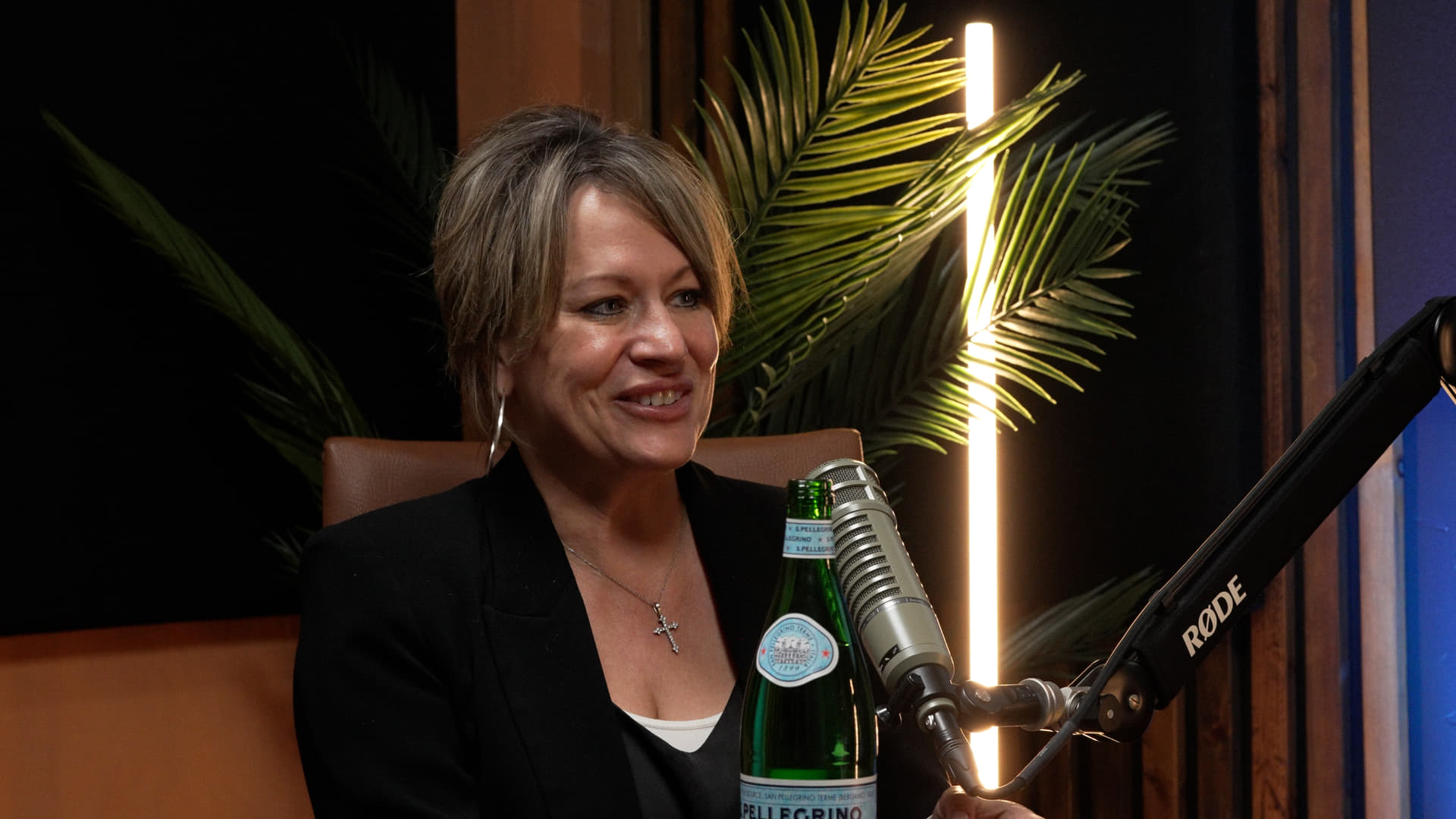
Tiffany Hecklinski on Clinical Research, Resilience, and Building a Business That Impacts Lives
Episode Overview
In this episode of The Personal Side of Business, Jet sits down with Dr. Tiffany Deal-Hecklinski, co-founder and COO of Exalt Clinical Research. Tiffany shares how clinical trials actually work behind the scenes, her personal journey through stage three cancer, and how that experience ultimately led her to build a business that contributes to life-saving medical advancements.
Summary
Tiffany Hecklinski leads a clinical research company that plays a critical role in bringing new drugs and medical devices to market. Her company works within the rigorous framework of the FDA approval process, executing clinical trials that ensure treatments are safe and effective.
What makes her story powerful is how personal it is. After being diagnosed with stage three colorectal cancer, Tiffany experienced firsthand how clinical research saves lives. That moment reshaped her career path—from higher education into healthcare research—and eventually entrepreneurship.
The conversation also dives into what it really takes to start and run a business. Tiffany breaks down the realities of partnership, adapting roles, building a company in a new city, and navigating uncertainty. Her journey highlights that success isn’t about being the smartest—it’s about persistence, adaptability, and surrounding yourself with the right people.
Key Takeaways
- Clinical research clinics execute trials but don’t analyze data—they collect and send it back to sponsors and research organizations
- Most trials involve multiple phases (1–4), each increasing in complexity, length, and number of participants
- Many studies test new uses for already-approved drugs, combining them to treat different conditions
- Tiffany’s cancer diagnosis was the turning point that led her into clinical research
- Entrepreneurship often starts with naivety + courage, not perfect planning
- Strong business partnerships work best when strengths complement each other
- Persistence—not intelligence—is often the biggest differentiator in success
- Building a network is critical, especially when starting a business in a new city
- Small business challenges are universal across industries (hiring, marketing, leadership, growth)
FAQ
What does a clinical research company actually do?
They run clinical trials for drugs and medical devices, following strict protocols to collect data on safety and effectiveness before approval.
Do clinical research companies analyze the data?
No. Clinics like Tiffany’s collect the data and send it back to pharmaceutical companies and research organizations for analysis.
How long do clinical trials take?
It depends on the phase and condition being studied. Some trials last a few weeks, while others—like those studying neurological conditions—can take years.
What inspired Tiffany to enter clinical research?
Her personal experience battling stage three colorectal cancer showed her how critical clinical trials are in saving lives.
What are the biggest challenges in starting a clinical research business?
Understanding the process, building relationships, navigating regulations, and managing business operations simultaneously.
Do you need a medical background to start in this field?
It helps significantly. Tiffany recommends working with or learning from experienced professionals before starting a clinical research company.
What makes a successful business partnership?
Complementary skill sets, clear roles, and open communication—especially during difficult or uncomfortable decisions.
Guest Bio
Dr. Tiffany Deal-Hecklinski is the co-founder and Chief Operating Officer of Exalt Clinical Research. With a PhD in health communication and a background in higher education, she transitioned into clinical research after surviving stage three colorectal cancer. Tiffany combines her passion for research, patient care, and community engagement to help advance medical innovation through clinical trials.
If you enjoyed this episode and want to learn more about how real businesses are built behind the scenes, explore more episodes on The Personal Side of Business.
And if this conversation resonated with you, share it with someone who’s navigating their own entrepreneurial journey.
Click to Expand Full Episode Transcript
Tiffany Hecklinski Full Episode Transcript
Jet: Hi, welcome to Personal Side of Business podcast where every business has a story. Today, I'd like to welcome Tiffany Deal-Hecklinski, PhD, the co-founder and COO of Exalt Clinical Research, which combines clinical research trials and healthcare expertise. Hi Tiffany, and welcome to the podcast.
Tiffany Hecklinski: Hey Jet, thanks for having me today.
Jet: Yeah, no problem. So tell me, what does Exalt do?
Tiffany Hecklinski: So we are a clinical research company and we test drugs and devices that are going through the FDA approval process. So the FDA obviously has quite a specific process for how they get devices and drugs onto the market. And there are clinics like us that execute trials to make sure that these devices and drugs are safe to the public when they come on the market.
Jet: Is there a lot of stages to what you do? Could you explain that for listeners that don't know?
Tiffany Hecklinski: Sure, yeah. So there are four stages of the process, obviously phases one, two, three, and four. And by the time they get to even phase one, these have been testing for a while. And so by the time they get to our clinic, we deal particularly with phases two, three, and four. They've been researched quite a bit.
Tiffany Hecklinski: So by the time they get to our clinic, we're able to tell our subjects, these are the potential side effects. This is what we pretty much know is going to happen if you take this investigational product or use this device. A lot of times what we see is that pharmaceutical companies are actually combining drugs that are already FDA approved to see how those drugs work on something else.
Tiffany Hecklinski: So for example, we work with sleep apnea. And so they may take a drug that's being used for ADHD and bladder incontinence, two drugs that are already FDA approved, and they put them together and use it to see how that affects people with sleep apnea. And so that has shown to work in the past.
Tiffany Hecklinski: And so now they're looking at it and saying, okay, we need to take this through these different phases to get this approved for this indication. So even though they might be approved for ADHD, might be approved for bladder incontinence, we're going to show that it can be approved for obstructive sleep apnea.
Jet: Now after you're done with those trials and research, what happens to all that information?
Tiffany Hecklinski: Yeah, so essentially we don't analyze any of the data. We collect the data. I use a lot of sports metaphors. And so I look at it this way. The pharmaceutical companies are like the owners of a sports team. And then they have their coaches. And the coaches are what we call clinical research organizations.
Tiffany Hecklinski: And the coaches are the ones that come up with the game plan or the protocol, which is what we, the players, the clinical research clinic, execute. So when a clinical research organization contracts us, we execute that game plan. And so we just collect all the data and give it right back to the clinical research organization and the pharmaceutical company. So we don't analyze any of it. We give it right back.
Tiffany Hecklinski: With that being said, we do fall under the umbrella of HIPAA. And so we operate like any other medical clinic where we obviously value patient and subject data and their privacy, that sort of thing. And in no way can our subjects, like there's no connection between the pharmaceutical company, the CRO, and the subjects that come to our clinic.
Jet: And what is the process for that? Or do you request or look for projects you want to work on, or is it the other way around, or is it both in combination?
Tiffany Hecklinski: Yeah, it's kind of both. So we definitely have indications that we are experts in. Sleep is one of them. So anything that has to do with sleep, like obstructive sleep apnea, insomnia, for example. But then we also do things in dermatology, like plaque psoriasis, for example. We're also going to branch into migraine and weight loss.
Tiffany Hecklinski: And so it's something where we look for trials that are testing drugs and devices in those indications. But then also sometimes when you're successful, those CROs come to you as well and say, hey, you guys were one of the top enrollers in the country in this last sleep apnea trial. Can we do another one with you? And so it's kind of both of that.
Tiffany Hecklinski: We're looking for certain trials that we're interested in and that our doctors are interested in. So we have a doctor in particular who is a bariatric surgeon and he is really interested in weight loss drugs. Not necessarily that they work on weight loss, but what are the side effects of that?
Tiffany Hecklinski: So we know with the GLP-1 inhibitors that yes, of course you're going to lose weight, but what else is happening to your body? So he's really interested in us looking at trials and saying, okay, is there muscle loss? What's it doing to the GI tract? Could there be an issue with potentially blood sugar? So that's the kind of thing where there is a drug that's already FDA approved. It's just looking at it through a unique lens.
Jet: Interesting. Now what's the time frame? Is there an average time frame for a lot of these research studies, or does it become less if you're one of the experienced researchers in that field?
Tiffany Hecklinski: So there are a couple different things that could impact the length of the trial. First of all is whether it's a phase one, two, three, or four. A lot of times as you get to phase three and phase four, the trials do become a bit longer.
Tiffany Hecklinski: And you also need more subjects because by that point they're getting close to the point where they're going to get FDA approval. So in those earlier phases, sometimes they're a little bit shorter than they are in the later phases. Also, it just depends on what the indication is.
Tiffany Hecklinski: There are some indications that are definitely looking at long-term effects. So for example, when you're doing central nervous system research, looking at Alzheimer's, dementia, that sort of thing, those can be potentially very long trials, like years. Sometimes when we're looking at something like obstructive sleep apnea, right now we have one and it's four weeks. So it really can just depend on the trial and the endpoints they are looking for.
Jet: No, that's interesting. Could you explain to listeners how you started or how you got involved in this?
Tiffany Hecklinski: Yeah, so I've been in research for a while. After I graduated from college, I worked in higher education. So I got my master's and started teaching in higher education. And so I've been around research from that lens for a long time. But in 2011, I was diagnosed with stage three colorectal cancer.
Tiffany Hecklinski: And once I kind of had that behind me, had some chemotherapy and radiation and surgery and had quite a journey there, I started to do some consulting work at the University of Michigan with their health system and realized that there was really a whole other side to research once you're in on that medical side.
Tiffany Hecklinski: So I kind of had the psychosocial part of it, being a communication major and looking at different communication theories and that sort of thing and being published there. But then once I got to working in the health system, realized, wow, this is a whole other level of research and had the opportunity to work for a private clinical research company and really liked it.
Tiffany Hecklinski: There's a lot less bureaucracy than in higher education, which was nice. And also it was neat to kind of be part of research that you know is going to help people. Obviously I'm alive because of clinical research. I wouldn't be here if there weren't trials like what my company does right now. So it's personal from that standpoint, but that's kind of how I got to be where I am right now.
Jet: It's always interesting when I hear stories of people who either get into certain fields because of something personal that happened to them. Do you think you'd still be in higher education if that cancer didn't happen?
Tiffany Hecklinski: Yeah, a thousand percent, I totally would have been. Because it wasn't like I got out of teaching because I didn't like it. It was just, I didn't really know this was a thing. Like I knew about the FDA approval process and you knew that people had to go through trials to get drugs approved. But I guess I didn't realize that you could actually own a clinic and execute those trials.
Tiffany Hecklinski: And granted, we don't do cancer research, but the trials that we do make a difference in somebody's life. And I don't think I would have completely understood that process or the impact that can make unless I had gotten started doing consulting work at the University of Michigan.
Jet: And from that time where you left higher education to the time where you opened up Exalt, how long was that time period?
Tiffany Hecklinski: Yeah, so it was probably seven to eight years and a lot of that had to do with I went back and got my PhD. So it was a wonderful experience doing that consulting work, but I learned very quickly that doctors like to work with other doctors. And so I had an opportunity to go back and get my PhD in health communication from Indiana University at Indianapolis.
Tiffany Hecklinski: And so that took a little bit of time. I have three children and moved around a lot at the time. And so that process of getting my doctorate took a few years. But it was about seven years, and a lot of that had to do with I really wanted to get that PhD because I knew the importance of having that PhD getting into business like this.
Tiffany Hecklinski: It doesn't mean I'm smarter than I was before. It essentially just meant I jumped through quite a few hoops and I was persistent. That was really more of what it was.
Jet: What were some of the hurdles outside of having to move your family around on the side? What were some of the business hurdles or education hurdles you had to get through to get your PhD?
Tiffany Hecklinski: Yeah, so I think definitely if somebody wants to finish their four-year degree or finish their master's or finish their PhD, I think a lot of it is just persistence and knowing that you do not have to be extraordinary on a standardized test. And so those letters after my name really are there because I worked hard and I didn't give up.
Tiffany Hecklinski: I didn't have a 4.0 in high school. I didn't have a 4.0 in college. I literally picked my degree as a communication major because I didn't want to take math. But once I had to get to the level where I did have to take those classes, I just was like, I'm going to do this. And I was going to work hard and I was going to figure it out and I was going to ask for help.
Tiffany Hecklinski: There were definitely people that I was in PhD school with that were so much smarter than I was, but some of them didn't make it. And it had nothing to do with me being smarter than they were. It was just because I persevered.
Tiffany Hecklinski: As far as opening a business, I'm not from Southern California. I've lived all over the country, but not from here. And so I think one of the biggest barriers for me was just I didn't know a lot of people. And so it was getting out in the community and joining organizations where I could meet people and make connections with people who do know people.
Tiffany Hecklinski: And I kind of feel like that's where I am right now, where I may not know someone, but I know people that know people. And that really to me was a big barrier to overcome. But again, completely doable.
Jet: And what was the decision to come to Southern California?
Tiffany Hecklinski: Yeah, so it was actually my husband's job. So he's a former college football coach. And my dad was a college football coach and an NFL scout. So I've lived 29 places throughout my life. We moved here from Kansas and moved here in 2020. So that was the impetus for the move here.
Jet: Now, can you explain a timeline? So when you were moving because of education purposes, what was going on with your kids and your husband at that time?
Tiffany Hecklinski: So yes to all of those things. Most of it was the kids and I would follow. That's kind of how the coaching world works, where the coach takes the job sometime between Thanksgiving and February-ish, and then the spouse and the kids follow either immediately or later depending on the situation.
Tiffany Hecklinski: I always worked and taught in higher education. I usually had a contract that I had to finish throughout the semester. And then obviously as your kids get older, depending on what they're doing, you're trying to navigate that as well. So sometimes you had to stay behind to sell the house, coordinate the move, find a new place to live, and find schools. So it was definitely a balancing act, and it was different every single move.
Tiffany Hecklinski: There was definitely one time when we left Michigan and he took a job in Colorado. Our daughter had committed to play softball at Indiana University. So the three kids and I moved to Indiana so we could get her in-state tuition, and he was in Colorado coaching. That was actually when I started my PhD. And with that being said, I lived in four places while getting my PhD.
Jet: With all of this moving, do you guys try to set up completely in one place or do you sort of keep in mind that maybe you have to do it again?
Tiffany Hecklinski: Yeah, there are definitely moving stickers on our furniture. Sometimes I don't even have time to take them off. There are definitely boxes that have multiple moving stickers on them. You try to make it a home as much as you can each time you move, but there are definitely priorities.
Tiffany Hecklinski: When you have children, you want to get them settled first. So you try to get their room set up and obviously you have to have your kitchen set up. So your guest bedroom may not be quite as fancy.
Jet: Let's get a futon and a painting on the wall.
Tiffany Hecklinski: Maybe a painting. But yeah, so you definitely have the priorities from there. And sometimes, you know, we moved from Terre Haute, Indiana to Lawrence, Kansas to San Diego in nine months. So Lawrence definitely was not a place where a lot of stuff got unpacked.
Jet: Did you know right away that you were going to be moving again?
Tiffany Hecklinski: No. We had moved to Kansas at the beginning of the summer after the kids finished the school year in Terre Haute. Then I was busy with my boys doing baseball and training for football. And then football season started at the University of Kansas, so you are not getting a lot of stuff unpacked. Then he ended up getting the job here at San Diego State around Christmas, so we really just had the bare essentials unpacked.
Jet: And when you guys are moving to different places and you're setting up, what is that conversation like for the kids?
Tiffany Hecklinski: We know the job. I think when you present information to children, you can either be like, my gosh, we are going on another adventure, or you can be negative about it. I always tried to be positive. And there were times when it was hard, especially when I had a really good job that I loved, but I still tried to be positive about it.
Tiffany Hecklinski: I always looked at it as an adventure. And even though I was sad, I told my kids they were allowed to be sad, but at the same time, we had no idea what was in front of us and this was going to be so great. And I would remind them that if we had never moved to one place, they would have never met certain people. So even though it was sad to move before, the next place was going to be just as great.
Tiffany Hecklinski: And the great thing with technology nowadays is that it's so much easier for kids to stay in touch. Back when I was younger, we had to write letters.
Jet: Yeah, and then it just starts to separate more and more over time.
Tiffany Hecklinski: Exactly. But now all three of my kids have friends all over the country and even all over the world, which is really cool.
Jet: And when you were sort of thinking about getting into clinical research, did you think that you were going to have your own business, or were you just going to get involved somehow?
Tiffany Hecklinski: I didn't think that. I never would have thought of myself as an entrepreneur or a small business owner. I am a fourth-generation educator. Business always felt like this separate thing that other people did.
Tiffany Hecklinski: I was very fortunate to connect with my business partner now. She actually was the one that hired me at the first clinical research company that we worked at, and we hit it off amazingly well. She had always wanted to open up her own site, and because I had moved around so much, I was like, what the heck, why not? Let's do it.
Tiffany Hecklinski: And so probably I was a little naive, which I think is probably pretty common with first-time small business owners and entrepreneurs. But at the same time, there's kind of a blessing to that because you don't know what you don't know.
Jet: Yeah, I think there's always these sweet spots for entrepreneurs and business owners in the beginning where they either just go all in or they overthink it and start to scare themselves away.
Tiffany Hecklinski: It's kind of like paralysis by analysis, right? And I think the other thing too is that because I went into business with a partner, that could have gone one of two ways. But she and I work very well together. It's not perfect, but it's perfect for us.
Tiffany Hecklinski: We complement each other. She's been in clinical research for 30 years, whereas I bring more of a communication and community-service background to things. She knew the nuts and bolts of setting up a clinic, whereas I was better at going into the community, building relationships, and helping grow the business that way.
Tiffany Hecklinski: I love being with the subjects and interacting with them, and I can do that confidently because I know she has the books and the data-driven side covered. And I think she feels confident knowing I have the operations and subject-facing side covered.
Jet: Could you explain one incident where you had to work through something uncomfortable as partners?
Tiffany Hecklinski: Yeah, absolutely. We actually just went through something where we were starting a new study. It was a study that she had kind of been in charge of, but it was tax season and we had a couple other studies going on, and we really needed her focused on numbers, finances, and money.
Tiffany Hecklinski: So we sat down and talked through it and said, okay, we have this study starting, but this is really where we need you right now. It was definitely one of those things where we had to be honest about each other's strengths and what each of us should be focusing on.
Tiffany Hecklinski: Like any small business owner, we all wear a bunch of hats. But that was a situation where we had to admit that finances are not Tiffany's hat.
Jet: She said communication.
Tiffany Hecklinski: Exactly. So let's make sure Dixie has that finance hat on squarely, and I can focus more on subject and patient interaction.
Jet: And then over time, have you guys started expanding into each other's areas out of necessity?
Tiffany Hecklinski: Yeah, absolutely. I think she's gotten more into the operations side, and I've gotten more into the financial side because of necessity. We're growing, but we've only been in business a year and a half. We are making a profit, which is huge, but with that being said, we're wearing a lot of hats and working a lot of hours.
Tiffany Hecklinski: I'm not going to choose to sit down and look at a spreadsheet for fun, but I do understand the importance and necessity of it. And I want to learn. I love learning something new every day, even if sometimes I learn that I don't like it.
Jet: Do you guys have a roadmap for the next couple years, or is it more month by month right now?
Tiffany Hecklinski: I do very well with fuzzy and cloudy, probably because of how I grew up. We definitely do have a map of where we see ourselves and a pipeline of studies that we project will come in, get awarded, and be executed. But at the same time, we know we may have to pivot.
Tiffany Hecklinski: There was a study that we thought was going to start in February, and now it's not going to start until July. So you have to be able to pivot. For some people that's really hard because they want everything to be black and white, and business is often gray.
Tiffany Hecklinski: That can also be challenging with staff, because some people want a very specific job description and want to know exactly what they'll be doing every day, every week, every month. But in a small business, that can change quickly. One day you may need them making recruiting calls, and the next day they may need to help create a Google ad.
Jet: I've always thought of being a business owner as being the captain of a ship. You know where you're going, but there are waves, climate, damage, and surprises along the way.
Tiffany Hecklinski: Exactly. And I think if somebody wants to open a clinical research company, I would definitely have them either visit a site or learn from someone that already has experience with it. This would be a very challenging thing to do without understanding how the clinical research process works.
Tiffany Hecklinski: But I also think it's important, regardless of what kind of business you go into, to have conversations with other small business owners. There are so many similarities between small business owners, regardless of the industry.
Tiffany Hecklinski: Whether you are in clinical research or own a restaurant, a lot of the same issues come up. How do we bring people in the door? How do our team members work together? What kind of culture do we want? How does every single team member impact the rest of the business?
Tiffany Hecklinski: So if somebody wanted to get into clinical research or open any small business in general, I would definitely tell them to have a lot of conversations with a lot of other small business owners.
Jet: Great. Thank you so much. And thank you, Tiffany, for being on the podcast. If people wanted to find out about Exalt, where can they look you up?
Tiffany Hecklinski: Great, yeah. So obviously we're on social media. I'm also on LinkedIn. But our website is exaltresearch.com. And then I'm on LinkedIn and all the social medias through our website and then just me myself as well. Thanks, Jet.
Jet: Thank you.
Related Episodes
- Dr. Deke Marcus – A conversation on leadership, business growth, and navigating challenges with resilience.
- Diana Barbiani – Insights on entrepreneurship, strategy, and building a business with long-term vision.
- John A. King – A powerful story of perseverance, hardship, and finding purpose through adversity.
- Pam Covarrubias – A discussion around personal growth, mindset, and building a meaningful path forward.