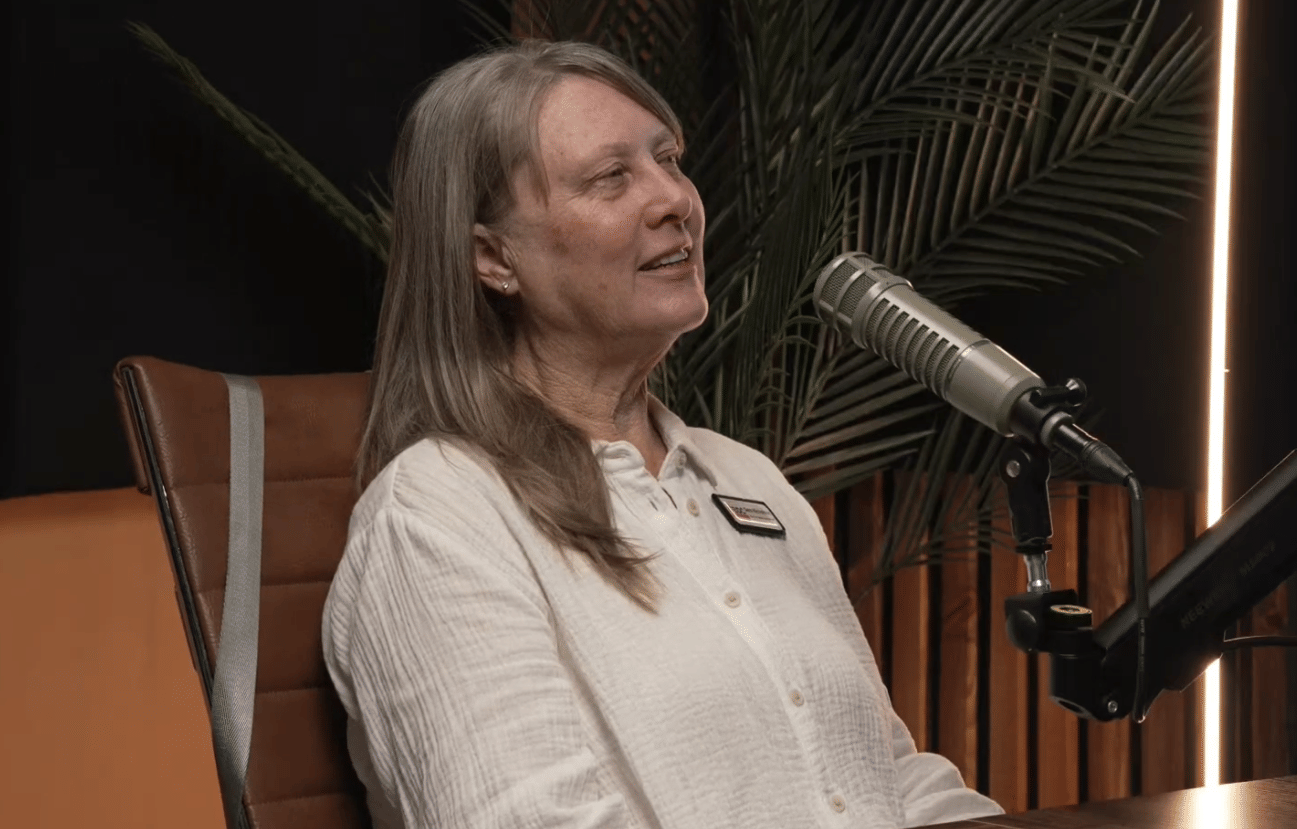
Sara Nicholson Episode Recap
Sara Nicholson on HR Foundations, Hiring the Right Way, and Why HR Is Not the “Evil Department”
Episode Overview
In this episode of The Personal Side of Business, I sit down with Sara Nicholson, Human Resources Advisor with the San Diego & Imperial Valley SBDC. Sara shares her journey from accounting and hospitality with Marriott International to becoming a trusted HR advisor helping entrepreneurs build strong, compliant foundations before hiring.
We discuss HR myths, California compliance, AB5, behavioral interviewing, company culture, AI in HR, and why HR is truly “the oil in the engine” of a growing business.
Expanded Episode Summary
Sara Nicholson did not originally plan to work in HR. After earning a degree in accounting and building a career in hospitality in Hawaii with Marriott International, she transitioned back to the mainland and eventually into HR roles across healthcare, construction, and private industries.
One of the defining themes of her career has been the human connection inside HR. Early in her career, she was often the first person employees interacted with — candy bowl included — and those conversations became the starting point for deeper guidance and support .
Today, at the SBDC, Sara focuses heavily on helping entrepreneurs understand that HR starts before hiring. Foundational elements include:
Proper business entity setup
Licensing and insurance
EIN and state employer IDs
Workers’ compensation
Payroll and timekeeping systems
Employee classification
Workplace safety protocols
She strongly cautions business owners about casually hiring independent contractors in California, referencing the legal changes under AB5 and the risks of misclassification.
We also dive into:
Why HR is not “evil,” but rather a guardian of compliance and boundaries
Why job descriptions and job ads are completely different tools
The importance of behavioral interviewing
How culture attracts better talent than salary alone
Why micromanagement damages workplace trust
The realistic cost of employees (often starting at 25% above base wages)
Sara also explains that AI can assist with organization and documentation, but it cannot replace the nuanced human judgment required in HR decisions.
As businesses grow from 6 employees to 60, HR becomes exponentially more important — and ignoring it can create major consequences later.
Key Takeaways
1. HR Starts Before You Hire
Your entity structure, insurance, EIN, payroll systems, and compliance setup must be in place before you bring on employees.2. Misclassifying Independent Contractors Is Risky
Especially in California under AB5, improper classification can expose you to serious liability.3. HR Is a Strategic Partner
HR is not there to say “no.” It exists to protect the business and establish boundaries that allow both the employer and employee to operate safely.4. Culture Attracts Talent
Businesses that treat employees well often attract strong candidates—even if they pay less than competitors.5. AI Is a Tool, Not a Replacement
AI can help organize documentation and training materials, but human judgment remains irreplaceable in complex HR decisions.6. Stop Micromanaging
Hire qualified people, give them clear expectations, and allow them authority to do their jobs.7. Employees Cost More Than You Think
The true cost of an employee often starts at 25% above wages and can increase depending on benefits and overhead.FAQ
Is HR only for large companies?
No. Even small businesses must address compliance, classification, payroll systems, and workplace policies before hiring.Can I just use independent contractors instead of employees?
Not without understanding AB5 and California labor laws. Misclassification can lead to legal issues.Does AI replace HR professionals?
No. AI can assist with documentation and organization, but HR requires contextual human judgment.What’s the biggest HR mistake entrepreneurs make?
Hiring too quickly without foundational systems in place.About Sara Nicholson
Sara Nicholson is a Human Resources Advisor with the San Diego & Imperial Valley Small Business Development Center (SBDC). With a background in accounting and hospitality, including experience with Marriott International, she transitioned into HR roles across healthcare, construction, and private industries.At the SBDC, she helps entrepreneurs build HR foundations, implement compliant hiring practices, and create sustainable workplace cultures. The San Diego & Imperial Valley SBDC supports approximately 11,000–12,000 unique clients annually and has contributed significantly to regional business growth.
If you are preparing to hire your first employee—or scaling from 6 to 60—don’t skip the HR foundation.
Visit:
https://sdivsbdc.org
And if this episode helped you rethink hiring, compliance, or culture, share it with another entrepreneur who needs it.
If you found this episode valuable, explore other conversations on leadership, emotional resilience, and the personal realities behind professional success on The Personal Side of Business.
Full Episode Transcript(click to expand)
Sara Nicholson – Full Episode Transcript
Jet Bunditwong: Personal Side of Business, where every business has a story. Today my guest is Sara Nicholson. She's a human resource advisor with the SBDC here in San Diego. Welcome to the podcast, Sarah.
Sara Nicholson: Thank you so much for having me. It's a joy to be here.
Jet Bunditwong: You're welcome. So tell us, how did we get here?
Sara Nicholson: HR never was actually on my radar. I got my degree in accounting once upon a time, and that evolved into a career in the hospitality industry over in Hawaii. I had a wonderful career with Marriott International. Then it came time to shift gears and come back to the mainland, and I was able to work in HR in various positions within healthcare industries, private industries, construction, and more.
Jet Bunditwong: What was it that you picked up from being in a corporate setting that carried over into you being a good advisor in human resources?
Sara Nicholson: Clarity of the rules. It wasn't about micromanaging anyone, but understanding labor law guidance, applying common sense, and thinking about the human element. Putting that all together was really attractive and easy to get behind.
Jet Bunditwong: I always think starting in corporate lets you see what’s really right before getting into gray areas. If someone starts out as an entrepreneur and jumps straight into HR, they may not know what’s right or wrong.
Sara Nicholson: I’m very grateful for starting at ground level in the hotel where I worked. I got to be the first person employees saw — they saw my bowl of candy and stopped there. That’s where conversations started. I didn’t have authority to speak for directors, but I could direct people and fine-tune those human connection moments.
Jet Bunditwong: Having HR must help buffer entrepreneurs from dealing with things they don’t want to deal with.
Sara Nicholson: It’s partly a buffer, but really it’s collaboration. HR is the oil in the engine. Many people see HR as telling them what to do, but it’s a partnership. Especially in California, we have extensive labor laws. They exist because people were taken advantage of. HR helps you hire correctly, maintain compliance, and separate employees properly if needed.
Jet Bunditwong: It probably reduces mental and emotional stress for entrepreneurs.
Sara Nicholson: Absolutely. And at the SBDC, 99.9% of what I do is talk about HR foundations — what you need before you even think about hiring. I don’t recommend specific vendors; I educate on what entrepreneurs need to know.
Jet Bunditwong: What foundational pieces should entrepreneurs have in place?
Sara Nicholson: Start with your business entity. Are you set up correctly? Do you have the right licensing? General liability insurance? Possibly errors and omissions? Then your EIN, state employer ID number, workers’ compensation, payroll, timekeeping, employee classification, and workplace safety. There’s a long checklist before hiring.
Jet Bunditwong: Entrepreneurs often feel like the ground is moving fast and they just need to hire someone immediately.
Sara Nicholson: Yesterday. Yes, panic mode. And many think they can just hire independent contractors. But AB5 changed the laws. Misclassification can lead to lawsuits. Please consult an employment attorney before casually classifying someone as a contractor.
Jet Bunditwong: California can be confusing.
Sara Nicholson: Completely confusing. That’s why I created HR boot camps at SBDC. First session: preparing your business for employees. Second: do’s and don’ts of hiring. Job descriptions are critical. Then behavioral interviewing — asking candidates to describe processes instead of yes/no questions.
Jet Bunditwong: Does interviewing change across generations?
Sara Nicholson: Not really. Younger generations are incredibly savvy. They research interviews deeply. Don’t assume they know less. They’re empowered and fearless.
Jet Bunditwong: What’s a major HR myth?
Sara Nicholson: That HR is evil. We’re not evil — we’re guardians of the gate. HR is about boundaries with humanity. There’s black and white and lots of gray. HR is often the “no” person every business needs.
Jet Bunditwong: Is AI going to heavily affect HR?
Sara Nicholson: AI is useful for documentation and organizing training materials. But it can’t replace human judgment. I had a client who thought employees cost 15% more because AI told her that. In reality, costs often start at 25% and go up.
Jet Bunditwong: How can entrepreneurs on a budget attract good employees?
Sara Nicholson: Have your act together. Be organized. Be kind, fair, direct, and honest. Understand benefits and policies before interviewing. Confidence and clarity matter.
Jet Bunditwong: Culture seems important.
Sara Nicholson: Extremely. Culture isn’t about making people happy. You can’t make anyone happy. You create an environment where people flourish. Intentional culture attracts talent — even if pay is lower.
Jet Bunditwong: Does HR get lost as businesses grow?
Sara Nicholson: 100%. I’ve seen companies grow from 6 to 60 employees quickly. If HR isn’t scaled intentionally, it causes problems. Growth requires structure.
Jet Bunditwong: What about a four-day workweek?
Sara Nicholson: California has alternative workweek schedules like four 10s or three 12s, but they require legal compliance and employee votes. It depends on the industry. Administrative roles can adapt easier than service industries.
Jet Bunditwong: What would you tell your younger self?
Sara Nicholson: Be prepared for a solitary work life. HR departments of one carry huge responsibility. You must be proactive, empowered, and constantly learning.
Jet Bunditwong: Final question: Where can people find you?
Sara Nicholson: Through the San Diego & Imperial Valley SBDC at sdivsbdc.org. We serve over 11,000–12,000 unique people annually and help drive significant economic growth in San Diego.
Jet Bunditwong: Thank you so much for being on the podcast.
Sara Nicholson: Thank you. It was a joy to be here.
Jet Bunditwong: …
John A. King: …