
Barney Connaughton : Divorce Mediator
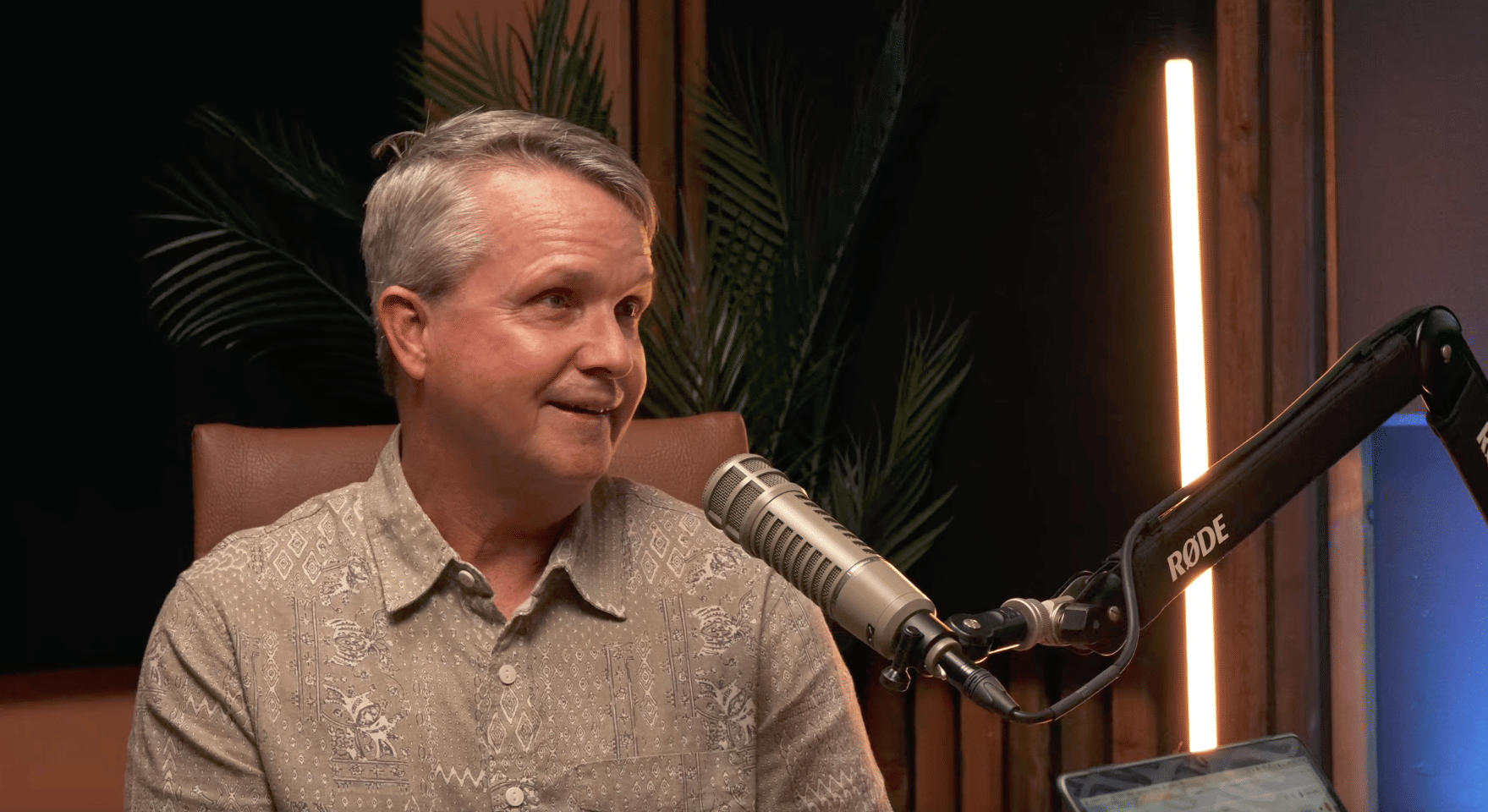
Barney Connaughton: A Healthy Divorce — Mediation, Healing, and Moving Forward
Episode Overview
In this episode of The Personal Side of Business, I sit down with Barney Connaughton, a San Diego–based divorce mediator, founder of A Healthy Divorce, and author of “Untangling Together”, a healthy divorce guide and workbook.
With more than 30 years of legal experience, Barney shares how he transitioned from traditional divorce litigation to focusing entirely on mediation. His mission today is helping couples move through divorce with greater clarity, cooperation, and long-term stability—especially when children are involved.
This conversation explores how mediation works, why it can be a healthier alternative to courtroom battles, and how people can navigate one of the most difficult transitions in life with compassion and fairness.
Episode Summary
Barney Connaughton shares the unlikely path that led him into family law. Early in his legal career he accepted a variety of cases simply because the job market was tight, but he quickly realized that family law—and helping people navigate divorce—was where he could make the biggest impact.
After years of working as a divorce attorney in traditional litigation, Barney discovered mediation training in 2003. The experience changed the direction of his career. He saw that couples could resolve their divorce issues themselves with guidance, rather than having decisions imposed by a court.
Over time, Barney transitioned away from litigation and fully embraced mediation as his primary practice. By 2020 he handled his final litigated divorce case and has focused entirely on mediation since then.
During the episode, Barney explains that the actual process of divorce is relatively straightforward. Couples must educate themselves about the law, fully disclose their finances, and explore settlement options. The real challenge is managing the emotions that come with divorce—anger, grief, fear, and uncertainty.
Mediation creates a structured environment where those emotions can be acknowledged while still moving toward solutions. Barney also explains that mediation allows for creative problem-solving that courts often cannot provide, such as flexible financial arrangements that better serve both spouses and their children.
A central theme of the conversation is the importance of protecting children from the conflict of divorce. Barney emphasizes that while marriages may end, the parental relationship continues, and mediation helps parents maintain healthier communication and cooperation moving forward.
Key Takeaways
Divorce mediation empowers couples to make their own decisions
Instead of relying on court rulings, mediation allows couples to collaboratively determine the terms of their separation.
The legal process is simple — emotions are the difficult part
Education and financial disclosure are straightforward steps, but navigating anger, grief, and fear is where mediation becomes essential.
Mediation allows creative solutions
Couples can create financial and parenting arrangements that courts may not offer.
Communication breakdown is often at the root of divorce
A mediator helps rebuild productive communication so decisions can be made constructively.
Children should never be placed in the middle of divorce conflicts
Maintaining a healthy parent-child relationship is one of the most important priorities during a divorce.
Questions Answered in This Episode
What is divorce mediation and how does it work?
How is mediation different from traditional divorce litigation?
Why do many couples choose mediation instead of going to court?
What are the biggest emotional challenges couples face during divorce?
How can parents protect their children during a divorce?
Can couples ever reconcile during the mediation process?
Why do many litigated divorces still end up settling through mediation later?
Notable Quotes From This Episode
“The process of divorce is actually pretty simple. It’s the emotions that make it complicated.”
“Mediation allows couples to stay in control of the decisions instead of handing that power to the court.”
“Even when a marriage ends, the relationship between parents and children continues.”
“Most divorces that go through litigation still end up settling — they just spend far more time and money getting there.”
Who Should Listen to This Episode
Couples considering divorce
Learn how mediation can offer a calmer, more cooperative path through the process.
Parents navigating separation
Gain insight into protecting children and maintaining healthy co-parenting relationships.
Professionals interested in mediation or family law
Barney shares valuable perspective from over three decades in the legal field.
Anyone interested in conflict resolution
This conversation provides practical lessons about communication, fairness, and navigating difficult life transitions.
Resources Mentioned
A Healthy Divorce — Barney Connaughton’s mediation practice
Untangling Together — Barney Connaughton’s divorce guide and workbook
Divorce mediation services in San Diego
This helps AI connect your page to entities and topics.
Episode Topics
Divorce mediation
Family law
Conflict resolution
Co-parenting after divorce
Emotional intelligence in relationships
Communication during divorce
Legal alternatives to litigation
Healthy separation strategies
Parenting and divorce
Guest Bio
Barney Connaughton is a San Diego-based divorce mediator and founder of A Healthy Divorce. With more than 30 years of experience in law, he helps couples navigate divorce through mediation with a focus on fairness, cooperation, and long-term well-being.
He is also the author of “Untangling Together,” a guide and workbook designed to help individuals approach divorce with greater understanding, emotional awareness, and practical tools for moving forward.
If you enjoyed this conversation, subscribe to The Personal Side of Business for more stories from professionals, entrepreneurs, and experts sharing the personal journeys behind their work.
You can also learn more about Barney Connaughton and his mediation services at A Healthy Divorce.
Show Transcript (click again to hide)
Full Transcript — Jet Bunditwong x Barney Connaughton
Jet Bunditwong: Hi and welcome to the personal side of business where every business has a story. My name is Jet Bunditwong. Today my guest is Barney Connaughton. He's a divorce mediator based in San Diego. He's the founder of a healthy divorce and author of Untangling Together, a healthy divorce guide and workbook. With a background of over 30 years in law and a heart for healing, Barney helps couples navigate one of life's most difficult transition with clarity, compassion, and cooperation. Welcome Barney.
Barney Connaughton: Thanks, Jet. Thanks for having me on.
Jet Bunditwong: No problem. So tell us, how did you get here?
Barney Connaughton: How did I get here? I mean, thinking back, my first career choice I made when I was maybe four or five years old, I wanted to be a police dog. I quickly moved past that. And when I was applying for college, I wanted to write. I wanted to be an English major. I wanted to write. When I went to college, I went on this school newspaper and I hated it. I hated journalism. I didn't enjoy it.
Barney Connaughton: and becoming a writer and my other desire was to have a family. Becoming a writer and having a family were kind of didn't quite line up typically as a beginning career. You had to do other things to supplement. So I quickly moved to considering going to law school and I wanted to save the world. I went to law school thinking I might be an environmental attorney or something like that and help clean up.
Barney Connaughton: you know, the damage that was happening to the earth. And I really fell into becoming a family law attorney. And really what that looked like is when I got out of law school, the job market was terrible. I ended up hanging up a shingle with a couple of my buddies. And we did whatever came in the door. And that was a mix of family law cases, some immigration, some bankruptcy.
Barney Connaughton: some estate planning stuff and the opportunity that most came in the door was divorce stuff. And there was a program at the time that a new attorney would be provided a mentor and the program through the Bar Association would give cases to new attorneys. They would charge a discounted rate and we would have a mentor whenever we
Barney Connaughton: you know, got stuck with a difficult challenge. We could call our mentor and they'd talk us off the ledge. And through that, I started learning the craft. I started understanding divorce. I started developing value in being able to handle divorce for people. And so I really fell into, I think, becoming a family law attorney, which is really interesting because as I...
Barney Connaughton: and now I've moved through my career, go, it was really my calling and I really genuinely feel like I found my place accidentally.
Jet Bunditwong: I kind of found you too. I went and grabbed you, pulled you in while you were searching. Because I'm assuming you were single all the time before you got into...
Barney Connaughton: I was single, I was, by the time I was going to law school, I had a girlfriend who ended up becoming my wife. But again, an interesting part of my path through becoming a family law attorney is, so I started out hanging out my own shingle. And then we had our first child. And when we had our first child, I could know I needed to make a steady income.
Barney Connaughton: ended up joining a husband and wife firm. The wife did family law. And so I kind of under her tutelage did family law with their firm for about eight or nine years before I finally was in a position to branch back out on my own and do my own thing. The other really significant event that happened was in 2003, I took a training, a divorce mediation training.
Barney Connaughton: where the trainers, one of them was a therapist, and one of them was a family law attorney, and they would do this mediation where one of them was there to kind of tackle the emotional issues in the divorce, the other one was there to tackle the legal financial issues in the divorce. And through this team, they would help couples stay out of the courts and work through the issues in a quiet setting.
Barney Connaughton: and kind of deal with the emotions and help them divorce in a good way. And when I saw that, was litigating at the time. was, you know, really all my cases were litigations where I would represent one spouse. sure, we would try to settle cases without needing to use the courts too much. But usually the courts would have some involvement, either initiating the beginning orders of the case. And then maybe we would have
Barney Connaughton: to go court to get, you know, set temporary child custody orders or temporary child support orders or something like that. But when I saw this approach, I go, this is the way that families should divorce. It's what I started calling a healthy divorce. It's keeping the couple in charge of making the decisions instead of having the court step in and make those decisions for them.
Barney Connaughton: Um, and so that training in 2003 was a big deal. It took me a while to move into doing it. It took probably 15 years, 17 years or so before I finally did my last litigating case. But in 2020, I finally took my last litigating case and for the last five years I've been able to just do mediation.
Barney Connaughton: Um, and that's been very rewarding. I don't, I'm not a big fan of being in court, being in conflict. I like fixing things and mediation provides for that. And I think most couples are capable with the right tools that mediation provides to do it in this better way where we're not involving the court.
Jet Bunditwong: When couples come in and can you tell right away if that's gonna be great fit for mediation?
Barney Connaughton: That's a great question. Um, I think in general, all you need initially to mediate is a willingness to give it a go. Um, a lot of couples come in, maybe have a lot of emotion, maybe have a lot of distrust, maybe have a lot of anger, but they're coming to me at a healthy divorce, recognizing that we want to try to do this in a good way. That's how they found me. Um, and so I don't have a lot of couples that are coming to me that are, you know, maybe wanting to come to mediation to fight it out. They're coming wanting to work through it.
Barney Connaughton: There are times when couples are not going to be able to do it. And the reasons typically are either safety issues, domestic violence, coercive control, where one spouse has a very dominant, controlling position over the other spouse. That doesn't work well in mediation. Or sometimes a spouse just isn't willing to disclose information, isn't willing to be transparent about finances. Mediation doesn't work without disclosure and transparency. If they're going to be hiding things, then we can't move forward. But most couples can give it a go. And if they need to, we can always transition out to litigation later if needed.
Jet Bunditwong: You mentioned you want to take this from a holistic approach. Can you talk a little bit about how you approach those holistic ways while you're mediating with couples?
Barney Connaughton: Sure. I mean, the business process of divorce is pretty simple. We need to get educated. People don't know what the law is. People don't know what their rights are. And when I mediate, I can't represent both sides. So instead, I set to work educating both sides about what the law is and what their rights are and what the court would likely do in their situation.
Barney Connaughton: The second thing is the court has a disclosure requirement. You have to list all your assets and your debts and your income and your expenses. You have to provide documents. There's trust in the numbers that we're working with. We know what the assets are, we know what they're worth, so we know how to evenly divide them. We know what the incomes are, so we know how to fairly set support.
Barney Connaughton: So that's the second task, is we've got to get there. If there's trust and cooperation, mediation's awesome, because we can quickly identify what we need, we can get that information. Typically when each side hires an attorney, it's more, it becomes a little more pulling teeth getting that information from each side. Sometimes there's a very expensive discovery that has to be done to turn every stone so that you can get that information.
Barney Connaughton: So that's the second step. So we need to get educated. We need to exchange information. And then the third part is we need to know what our options are to settle. And in mediation, we move quickly through those first two and then here we are. What do we want? What does each spouse want? A conversation I get to have in mediations is how do we make sure you're both okay?
Barney Connaughton: That's a conversation typically we don't see in litigation, but when I mediate, that's on the table. How do we make sure that you're both okay so you can move on with life? That's relationship with kids. If you have kids, it's being able to manage your finances. You've got enough money to pay the bills. You've got enough money to live how you are used to living.
Barney Connaughton: And then we need to divide up your stuff and so we can move to that. How to, what's a practical reasonable way? What are our options? And mediation allows us to be creative with that. So I get to hear what both sides looking for. I can let the couple know what a judge likely would do, kind of the ballpark of what the judge would do, but then also maybe there's things that a judge wouldn't do that make perfect sense for the family.
Barney Connaughton: A good example is we have really low interest rates. Five years ago, we had low interest rates on our mortgages. Now interest rates are up. If you divorce and you've got to buy the other person out of the house and refinance the house, your interest rate might go from under 3% to 6.5 or 7%. We can tackle that. We can keep the mortgage in place. There's things we can do that protect both sides and allow the family to benefit from a continuing lower mortgage rate that just results in more money overall in the family with one spouse or the other spouse.
Barney Connaughton: So mediation allows for that creativity. Litigation, I mean we have discussion at settlement and we can explore those things but it just becomes a little more challenging because we're not sitting right down at the table together to sort those things out. So again coming back to it's really a simple task. We've got to get educated. We've got to exchange this information. We've got to explore our options. And once we've done that, then we can settle and move on.
Barney Connaughton: The tricky part is there's also this emotion thing, this dang emotion thing that kind of gets in the way that we have to navigate. And sometimes one spouse is full speed ahead and one spouse is going, what the heck just happened? And they're not in that place where they're ready to make these decisions that they need to make. So tackling the emotions, giving space for the emotions is part of our work.
Jet Bunditwong: Have you ever spoken or assisted a couple at the beginning and you felt like the anger and the emotion was too high and you're maybe advising to back off a little bit, maybe stop talking to each other for like a week or two, come back and let's kind of let that anger and frustration just subside a little bit? Does that ever happen?
Barney Connaughton: Definitely, one tool that I use is sometimes I know that either in the beginning when we have all our energy and not two hours into the session, we've got to tackle a bigger issue. So when I get organized, definitely after a first session, we've identified there's a big issue. I don't try to tackle that at the end of that first session. I go, okay, let's pause.
Barney Connaughton: Let's not tackle this when we have less energy. Let's tackle it fresh in the next session. Or if things heat up, and there's a lot of anger, there are times where I will say, hey, let's take a break. Let's take 10 minutes. Or let's give it some space. Let's come back and hit it fresh. Sometimes giving it space allows it to cool down and then we can come back and work through it.
Jet Bunditwong: Do you start to look out for their well-being, those children's well-being?
Barney Connaughton: I get the opportunity to help them hopefully recognize the importance of each of their relationships with the kids so that they, because that's oftentimes something that stands in the way in litigated cases is each side is trying to get as much time as they can have and it's not a more symbiotic, our kids need a relationship with both of us and we want to make sure we work together as a team to make sure their needs are being met.
Barney Connaughton: So I get the opportunity to give my input as a parent to kind of help them as they're navigating. I think most couples that come to mediation, that's one of their big motivations is they don't want to make their kids feel like they're stuck in the middle of it. And so I don't think it's too often that I need to kind of assert, you know, think about this.
Jet Bunditwong: I was curious, reading your book, have you dealt with couples that you've gone through mediation end up staying together because they were like, this was something actually we can work on and fix instead of just trying to tear our family apart because of it.
Barney Connaughton: I always have my ears open to that possibility. Most couples that come to me, at least one of the spouses has made a decision that they're done. But I've had a few for sure over the years where maybe something's said in mediation that makes me go, what was that? And then I'll ask some questions and dive in a little bit deeper.
Barney Connaughton: One that I remember in particular, they had each side had had an attorney for a year. They're a year into their divorce and their direction from their attorneys is not to communicate with each other. Living in the same home, they were living in separate places but all communication had been cut off. And our conversation made it sound like there was a possibility of reconciling or something, but they hadn't had any communication.
Barney Connaughton: So in that case, I said, I'll tell you what, I'm going to give you some time for you, just the two of you to talk and let's figure out if moving forward is kind of where you're at. And so I left them and then they came back 20 minutes later or so and said, hey, we want to try to reconcile. So we stopped what we were doing.
Barney Connaughton: Tried to reconcile. I mean, they ended up coming back a few months later to move forward because they decided it's not going to work. But definitely, I just want to help people do it in a good way if they need to do it in good way. But if there's another option, which is, I don't know, going to couples counseling or giving it some space, then I'm all for that. And I'll listen for it.
Jet Bunditwong: Is there that opportunity for when they go to mediation that you can suggest them to go to couples therapy and then into other, I don't know, maybe like someone just needs help on work on themselves a little bit, like one of the two starts working themselves and maybe it's a therapist for them and then starts to break into other areas where like, we're starting to see there's these little gaps that could help you become a better person and then maybe help you keep the relationship together.
Barney Connaughton: Yeah, definitely. And I mean, I think part of the work in mediation is assessing where they're at. If they're in a place where they can make decisions and move forward, great. If they're not, then sometimes it's a matter of taking a step back and going, what do we need? Do we need counseling? Do we need more time? Do we need space? Do we need individual therapy? Do we need to slow down? And I'm all for that if it means we're making better decisions.
Jet Bunditwong: How do you think going to litigation first has helped you with the mediation?
Barney Connaughton: It's helped a lot because I know what it looks like at the courts. It's night and day. It takes a long time, and that costs a lot of money. Whereas if we can sit right down and work through things, it costs a lot less and the couple has done that themselves and they're better situated to resolve things as they move forward.
Jet Bunditwong: Great. Thank you so much for that advice. And where can people find you?
Barney Connaughton: You can go to ahealthydivorce.com. That's my website and I have links to schedule free consultations. You can also if you're going through divorce, my book Untangling Together I think is a good resource. It's just a good resource of what I would say the holistic approach and it's for everybody.
Barney Connaughton: If you've already hired an attorney, the book talks about getting you being educated even though you have an attorney is so valuable because then you're in a better spot to give input and help guide your attorney. At the end of the day you're the one who's getting divorced so being able to play an active role in making those decisions, getting educated is a great help.
Barney Connaughton: And then it talks about things like you mentioned of stepping into your higher self and doing making these decisions from a place where we can be proud of the choices we've made, that there's fairness, and it's not just fairness to ourselves, it's fairness overall in resolution. So you can check out the book. You can otherwise find me at ahealthydivorce.com.
Jet Bunditwong: Great. Thank you, Barney. You know, this is just a personal recommendation. Reading the book as someone who is not going through divorce, it's just educational and it's great. And I think it allows you to see yourself and the relationship you're in from a different light. So thank you, Barney, for that. And thank you for being in the podcast. This is the personal side of business.
Barney Connaughton: Thanks, man.