Anna Sotto – Empowering Immigrant Food Entrepreneurs Through Akitso
Episode Overview
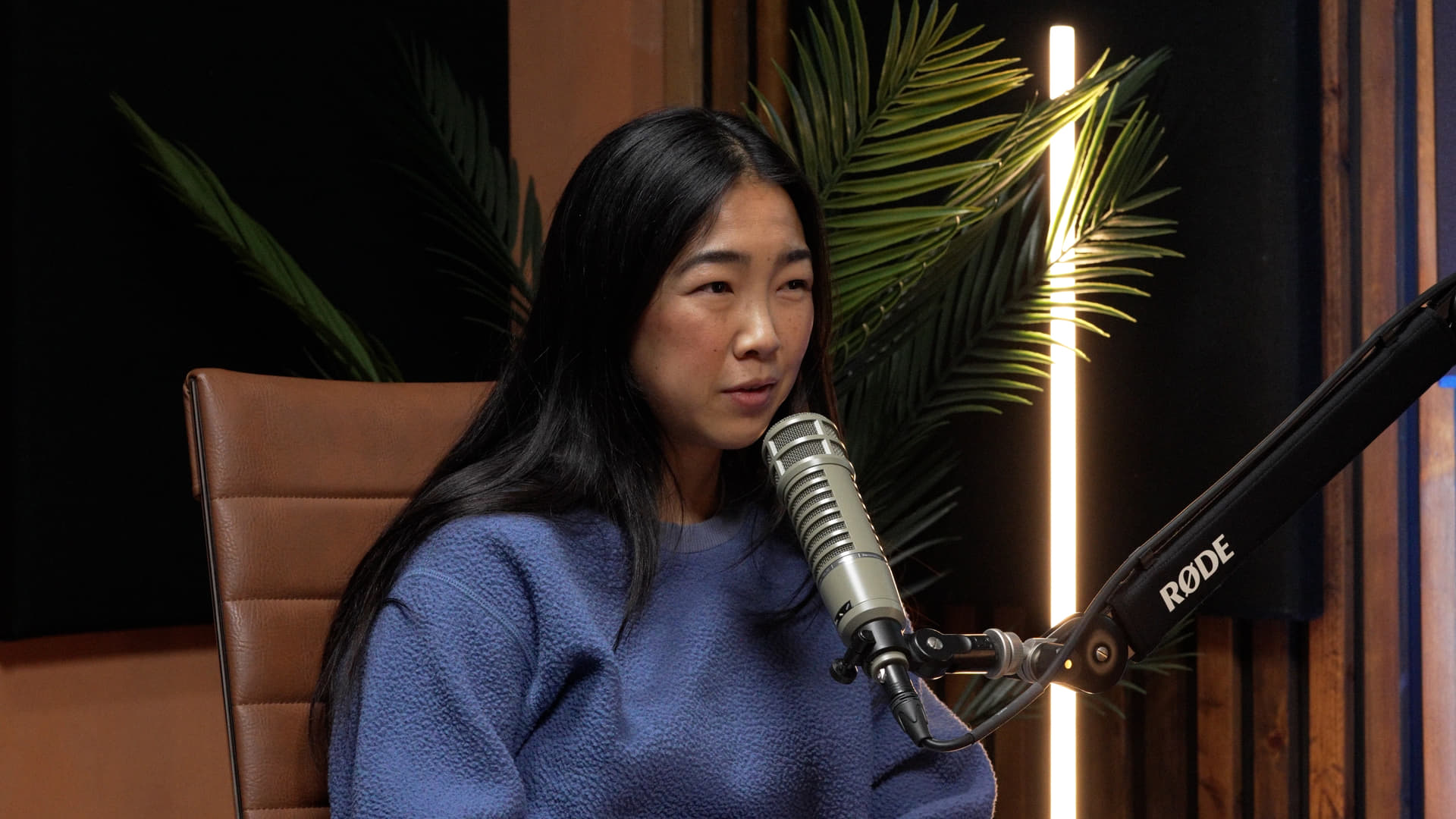
In this episode of The Personal Side of Business, Jet Bunditwong sits down with Anna Sotto, founder of the nonprofit Akitso, a design-driven program supporting marginalized food entrepreneurs in San Diego.
Anna shares the inspiration behind starting Akitso and the deeper mission behind helping small restaurant owners succeed. Drawing from her childhood growing up in a Thai immigrant family that ran a restaurant, Anna saw firsthand how difficult it is for small food businesses to survive without access to branding, marketing, and operational support.
The conversation explores entrepreneurship, immigrant family businesses, restaurant economics, nonprofit innovation, and the emotional side of starting something new while balancing family life.
Summary
Anna Sotto founded Akitso to support restaurant owners and food entrepreneurs who may not have access to professional branding, marketing, and business development resources.
Her inspiration came directly from her family’s experience running a Thai restaurant for nearly two decades. She saw firsthand how difficult it can be for restaurant owners to juggle every part of the business—from cooking and managing staff to pricing menus, handling finances, and keeping up with online platforms like Yelp and social media.
Many restaurants succeed or fail not based on the quality of their food, but because of the systems behind the business. Larger restaurant groups often have teams analyzing pricing, marketing strategies, and brand positioning. Independent restaurants typically don’t have that support.
Akitso aims to close that gap by offering nonprofit support that helps small restaurant owners strengthen their businesses while celebrating the cultural identity behind their food.
Throughout the conversation, Anna and Jet discuss the pressures immigrant family businesses face, the challenges of launching a nonprofit organization, and how entrepreneurship often requires balancing risk, uncertainty, and personal responsibilities.
Anna also explains that Akitso’s mission goes beyond simply improving business operations. Once a restaurant becomes stable, the organization hopes to help owners tell deeper stories about their culture, heritage, and identity through their food and brand.
Key Takeaways
Restaurants Need More Than Just Great Food
A restaurant can have incredible food but still struggle if the business lacks strong branding, marketing, pricing strategy, or operational systems.
Immigrant Family Businesses Face Unique Challenges
Many immigrant-owned restaurants are started by families without formal business training. They learn everything through experience while simultaneously supporting their families.
Branding and Storytelling Are Essential Today
Customers often discover restaurants through social media, online reviews, and digital platforms. A strong brand and authentic story can help businesses stand out in a crowded market.
Entrepreneurship Requires Emotional Strength
Starting a nonprofit or launching a new venture comes with constant uncertainty. Learning to navigate fear and potential failure is part of the entrepreneurial journey.
Community Relationships Matter
Word-of-mouth referrals and trusted community connections are often the most effective way to build relationships with small business owners.
FAQ
Who is Anna Sotto?
Anna Sotto is the founder of Akitso, a nonprofit organization that helps marginalized food entrepreneurs develop stronger restaurant concepts through branding, marketing, and business development support.
What is Akitso?
Akitso is a nonprofit program that works with restaurant owners and food entrepreneurs to strengthen their business foundations while helping them communicate their cultural identity and story through their brand.
Why did Anna start Akitso?
Anna was inspired by her childhood growing up in a Thai immigrant family restaurant. Seeing the challenges her family faced running a restaurant led her to create a program that helps other food entrepreneurs succeed.
Who does Akitso help?
Akitso primarily works with small food businesses and restaurant owners who may not have access to professional branding or business development services.
Guest Bio
Anna Sotto is the founder of Akitso, a nonprofit organization supporting marginalized food entrepreneurs in San Diego.
With a background in branding, design, and marketing, Anna works directly with restaurant owners to help them develop stronger business foundations and communicate their story more effectively to customers.
Growing up in a Thai immigrant family that operated a restaurant for nearly two decades shaped her perspective on the challenges small food businesses face. Through Akitso, Anna is building a support network that empowers restaurant owners while celebrating culture, identity, and entrepreneurship.
To learn more about Akitso and its mission to support food entrepreneurs, visit their website and follow their journey as they continue helping restaurant owners across San Diego.
If you enjoyed this conversation, subscribe to The Personal Side of Business podcast for more stories about the people behind successful businesses.
Click here to expand the full episode transcript
Anna Sotto – The Personal Side of Business Podcast Transcript
Jet: Welcome to the personal side of business podcast where every business has a story. Today our guest is Anna Soto, founder of the nonprofit Akizo, which is a design driven brand and business development program empowering San Diego's marginalized food entrepreneurs to celebrate their identity and foster economic resilience. Hi Anna, thank you for joining the podcast. So tell me about you, what do do?
Anna: Thank you.
Anna: Sure, so I founded Akizo one year ago and essentially I lead the food concept design and development for Akizo. We work one on one with restaurant owners and other food business owners to develop their food concept or refine it if they're existing business. And we focus on using branding, marketing, design to communicate that concept with customers today, which are very heavy social media users, heavy internet browsers, and we help them develop their story and cut through the noise.
Jet: Nice. Now I had met you, I think prior to that, like maybe a few months before it actually started, right?
Anna: Yep.
Jet: Yeah. And funny story, Anne and I met kind of through word of mouth and we were texting each other and I think you just had a baby at that time.
Anna: Yep. The way that I remember it was in line with kind of how Akizo has been going. It's a lot of not full visibility ahead, but like 10 feet at a time visibility. And so at some point we decided that what we were going to do was going to be a nonprofit versus a for-profit. And then eventually learned that to start a nonprofit, you need a board of directors and it can't just be you. And so I think I went to my first networking event. It was like a coffee networking event with the SBDC. And then I met someone there, Wes, who then said, you need to meet Jet. And so I think we kept going to different coffee meetups until one day I think I got your number, texted you, and then I'm pretty sure that the first day I actually met you in person, I asked if you wanted to be part of the board. And you said yes on the spot.
Jet: We had been texting, sort of like fleshing out this idea for a few months and then finally met in person that day. We were like, by the way, yeah, we know each other already. I think we had a mutual connection introduce us. And I think your idea and your inspiration, Trump, want to help restaurant owners, especially because I think it's one of the hardest industries to, I mean, statistically it is, just to be able to function and have longevity is special, right? Akizo is able to offer a lot of things that I think the average restaurant can't get on their own. And then here comes a nonprofit that's able to, hey, we might be able to give you some things that you probably couldn't afford through hiring someone on your own. And then now you're able to have some help through the system and also financially as well.
Anna: Right, and I know my story and what led me to asking you to be part of the board. Obviously there's your side of the equation where you had these life experiences, both personally and professionally, that led you to that day to be like, yes, I'm down. So what was your point of view? Like I started Akizo, so I wanted to do this. What was your backstory and why you were like, yeah, I'll be part of it?
Jet: I think for me, I've, you know, I always tell this story. I was always inspired. I used to work at an insurance office and I sat there one day with this client who wasn't even really my client, but he was needing some service on his policies. And he was, he's a pizza owner in San Diego and he started breaking down into tears. And he was just like, I'm doing this all by myself. I can't take this anymore. And I remember that moment thinking, if I can find a way to actually have my hands in the movement and change of helping the local community business owners. I knew I couldn't do that on my own. So all these opportunities over the past close to 10 years now that I've gotten to work with people, I've said yes to and those yeses have opened my eyes and doors to some more opportunity to connect with people and then to grow with them, which is hard to do, right? I think when you work with multiple people over time, it gets harder to find that circle. And I felt your purpose and just connecting with you even through text at the beginning was this inspiration and this, I could feel the drive for you wanting to do it, right? And then when we met, I always go off of a feeling and I felt that with you, you know, to be able to.
Anna: Great to hear. Yeah. I don't think I actually asked that ever.
Jet: Yeah, I mean, I think for people that know me or some people that sort of know me, they've only seen me in like, you're just doing this because you want to help people. I think everyone that goes and volunteers and starts to put in extra work in the community or just helping people in general, there has to be some greater, deeper meaning. Right. And I think for me, it's just like, you know, I was joke, I'm on the back end of my life. Right. So I have these next, if I'm lucky, 45 more years to try to get everything done, right? And it goes, it flies. So what was your inspiration to start all of this?
Anna: I think there, it was, you know, it was a series of things over several years. But if I had to summarize it into one story where I was like, you know what, someone needs to do this. It was going to a restaurant, like slightly after pandemic years where people could walk around, some with masks, some without masks. We went to a restaurant that was super decorated, very hip, very trendy. There was a natural wine list, which I love. And the decor was very flashy and colorful. There was like polyester silk flowers hanging from the ceiling and this like, you know, kitschy chopsticks in the cliche Chinese pattern thing. And I remember feeling confused and conflicted because on one hand, I was like, this is fun, you know, like music's good, food's fun, drinks are fun, atmosphere is fun. But then on the other hand, I was like, wait, is this cool again? You know, like I remember growing up and feeling like Chinese takeout containers were tacky and, you know, it was unhealthy and it's cheap food and this and that. And so to kind of see those elements be part of a story that was cool made me think, you know, there is an opportunity here to help business owners get in touch with the story and the personality behind their food, but also themselves and their family and all that stuff, and then communicate it to customers so that it really celebrates and highlights all of that in the best light. And you know, after that, I was looking for other agencies that did that. And food branding, restaurant branding is something that is usually very expensive. If you want really good branding, it's really expensive. If you want cheap branding, it's usually not that great. And so I was left to think, so who's helping the small mom and pop shops that can't afford that or don't know how to tell those stories? And so that's when the wheel started to turn. And fast forward, I eventually came up with this idea to start a nonprofit that could fill that gap.
Jet: Nice. When you were starting to come up with this idea, was there a stress that you were thinking this could be wasting my time, crazy, like, or was it always like, I'm not going to put any negative thoughts into it. I'm just going to go and whatever happens happens. I'm good with it.
Anna: Meaning like, could this fail? Oh yeah, like I think all the time, like even today, there's always going to be that voice in your head, whether it's in a meeting with someone or like in a podcast situation like this, or trying to get customers, you know, like, is this good enough? Do people want this? Like, even if it's a good idea, are we gonna make money? And what I have decided is this journey is going to be about creating a healthier relationship with potentially failing and creating a healthier relationship with not knowing all the answers right away. I think as long as I'm able to mute those voices, it doesn't really get.
Jet: Yeah, I think that's one of the hardest things with one, creating your own business, organization, whatever it is and going and starting to be the spearhead of that situation is that there's this fear, right, that starts to eat away at you. And then when things don't go your way, you're like, maybe that's right. But I think those entrepreneurs, business owners, people who are in charge of corporations, organizations, those are the ones that are able to just bypass that and keep going, yeah, this is a part of what happens, right? And I think a lot of people kind of forget that. I've always said that there is this, I made this arbitrary number, but I feel like it works, is there's this 30 percent rule that I have for my life, what I do in business, that that's the area where you're allowing yourself to fail, reset and then relaunch over and over again. And it works. And I think a lot of people go into what they do with, no, this has to be perfect. And it doesn't. I would say, unless you've created and built a thousand businesses, it's probably never gonna get there. You're always gonna have these moments of setbacks and failures, but I think those are the things you learn from and you get better with.
Anna: That's a great perspective. This is like my first business, aside from like freelance and things like that. This is my first ever idea that I'm committing to. And so part of it is, you know, like part of the fuel for me is like this can't fail. Like I've come in too far for it to fail. And while that's a little bit scary, it's kind of needed for me personally to be like, just go for it, just go for it, it's too late to back out. But what you said is really important too, where if it does fail, like it's better that I started and I tried rather than I was so paralyzed by the fear that I didn't do anything at all.
Jet: Yeah, I think that's one of the things that also stops people from starting, right? They're like, oh, it's too much risk. I don't want to do this. And then you're like, there's all these people depending on you. But I think it's also important, and I think luckily I get to work with you on this nonprofit, is that there are people we're starting to surround ourselves and get to know people that are motivated to also help. And I think that's really hard to find in this, right? Because especially for a nonprofit, when you're giving yourself, you're kind of giving your free time, free energy, free mental capacity to be able to help whatever this is that's going to go someplace. But I also think there's these moments where you look at organizations and businesses that have done well. And if you dig in enough into the stories of them, they always messed up. Something went wrong, but they overcame those situations and were able to keep pushing and moving forward. And then that three people became six and six became 12 and it just started growing into this big corporation. And they're like, wow, they just got lucky. I'm like, no, they messed up, they failed too. And they were just strong enough to do it.
Anna: That might actually be a good exercise as an entrepreneur to write the first failures in the beginning. Just to like play out that scenario and maybe after reading it you're like, it's not so bad. And kind of like normalizing that and just bypassing that. Maybe I will try doing that.
Jet: Yeah. I mean, I always, part of what I like to compare and connect to are athletes, right? You always look at athletes because that is for the most part a solo journey, right? It doesn't matter what sport it is, basketball, football, tennis, those people have to wake up in the morning, day in and day out, get into that mindset on days that they don't want to and keep going and go, there's a chance, a high likely chance, none of this works out because the percentages and stats are against me, but I'm gonna keep going in this direction and then push for it, right? And I think when it comes to business, a lot of people look at businesses and say, that person got lucky. They just happened to open a store and everything kind of worked out two years later. I'm like, no, that's not really what happened. They probably went home night after night crying in fear of what's going to happen to their financial situation, their home, their cars, their family, their kids relying on them. And then they're like, no one's there to help me. And I think that moment has inspired me to get involved with a lot of different things. But to see what you came up with, I think that's going to be important in the community, too. And not just in San Diego, but I think as Akizo starts to grow, it's going to start to become either a model for other places or it could just be, hey, we're going to have Akizo in these cities now to be able to help out the local community businesses.
Anna: Yeah, I think that that would be the dream. The part that really excites me too is one, helping real people that with small businesses, usually it's very tied to family too. You're not just helping one person, you're helping like their whole support system that they're responsible for being, their family. So there's that aspect that is really cool. And then there's also the other aspect of once we're able to help stabilize the business through the essentials, a strong business foundation, having a bank account, being in good relationship with their finances, helping them navigate compliance stuff, marketing, all that. Once we're able to help stabilize the business, I think the really fun part too is helping people tell deeper stories with their food. I think not all small businesses, but a lot of them, they usually cater towards certain tastes and preferences that they think are out there. And that could sometimes get in the way of authenticity and creativity. I would like to empower these entrepreneurs once they feel safe and stable to really express themselves and their culture and their flavors. And so that part's really cool too. But in starting Akizo, I'm realizing that businesses are really just all over the map before you can really get to creative expression and culture and all that stuff, sometimes you need to first take care of the taxes and the finances and starting a social media account.
Jet: Did you see that when you were growing up with your family and restaurants that you kind of grew up in? Did you notice that or did you see that? Were you aware of it? That are like, hey, there were some things going on that probably needs to be corrected foundationally in the business.
Anna: Yeah, definitely. So my parents moved to the States in the early 80s. They worked different jobs before they were able to save money and start their own restaurant. And they're from Thailand. I only learned recently because my parents aren't together that my dad's side, which you met recently, he actually comes from a line of noodle makers.
Jet: Where they from by the way?
Anna: I always grew up thinking that my parents opening up a restaurant was super random, but I just learned like last week or so that my dad's siblings, he had 11 siblings by the way, and they're all in Thailand, but each of them have like a noodle business. I think one of our ancestors, this is what he says, I have not fact checked him, they were like nomads on the river and then during World War One came onto Thailand and then opened up a food stand or a noodle shop or something like that. So anyway, that was like a side note that made me feel like, oh my gosh, it's not so random what I'm doing. I almost felt super empowered to be in this space of trying to help regular people open a successful food business. Anyway.
Jet: By the way, so that whole time where you were growing up, did you just think that your family was just like, yeah, you guys just figured out how to run a restaurant.
Anna: Yeah, kind of yeah, it's so weird that growing up like what is normal to you, you don't question. And it's not until you are older you learn about other people that you're like, that wasn't normal. Like that was kind of weird or different about us. But anyway, so my parents opened a restaurant when I was not born yet. So 1990 we had that restaurant for 18 years. And so the first half was poppin', you know, there weren't very many Thai restaurants around, especially in the city that I grew up in. And over time, there were more competitors. Over time, so many things changed in the world, like people's preferences. People get bored of the same thing. I feel like a lot of Thai restaurants are offering the same menu. And then Yelp came on. And I remember my older sister's friend being like, you guys really need to get on Yelp. This is how people are finding the restaurants. And I don't know why we were so, I don't even know if we were resistant to it. It didn't connect in our heads that like, what's Yelp? Let's figure it out. Let's see how we can make this work for us. And then when Yelp became a really big thing, kind of coincided with my family going through a divorce. My dad, who was mostly the cook of the restaurant, he left, and so it was like my mom. And personally, I don't think we ever considered not having the restaurant in our lives. So it was one of those things like, let's just make it work. And it wasn't even a conversation, like, how do we make this work? It's like a, we're gonna make it work type of thing. Yeah, I would wash the dishes, my older sister would be part of it, my mom would kind of figure out the kitchen. And I'm not trying to, I don't wanna talk shit about our restaurant, but it was kind of a mess at that time. And yeah, I think the reviews on Yelp are starting to get kind of inconsistent.
Jet: Now, were they both still involved in the restaurant as they were splitting up?
Anna: No.
Jet: Did your dad leave and then your mom was now running it?
Anna: Yeah. Okay. Yeah. So I think she was like we had a cook, like a chef there. But, you know, we had like another nine years or so. I actually don't remember what year that was. I'll do the math later. But over time, there's like changes in cooks. The economy took a huge turn. My mom isn't, she didn't have like business management training or anything.
Jet: All she knew was this from this restaurant. That was it.
Anna: Front of the house. Yeah, totally. Yeah, they never opened a restaurant before, like started any kind of business. And you know, at that point, it's kind of, not only is it awkward, you don't think to be like, okay, what do I need to do to invest in my own leadership and development so that I could run this restaurant? You know, I don't think she really thought of that. So I know she's not alone. I know there's a lot of businesses where people do have business training. But I do feel if you compare restaurants owned by people like my parents, it's a different ball game than restaurants that are owned or managed by hospitality groups. There's whole teams that come together to not just think of the menu, but like analyze the cost, manage inventory, set the pricing, let alone marketing strategies and social media strategy in particular. With my parents' restaurant, I remember how we would raise menu prices. It would be like, did you guys see that other Thai restaurant around the corner? They're charging like $14 for their Pad Thai and we're only charging $11. What the heck? And then we'll like change the menu to $12 or $13. Mathematical equation. I know not every restaurant, obviously not every restaurant runs like this, but I'm just being real. This is like how we did it. And I also know for a fact we're not the only ones that would change our prices like that. There's opportunity, I think, to offer restaurant owners like, hey, here's one way you can calculate menu price changes so that you could feel more confident about the pricing that you're putting forward. A lot of people feel nervous that they're going to lose their customers by changing the price, which is a fair concern. If you sit down and do the math and be like, whoa, these are the costs to produce this plate. If I continue charging it at this amount, I'm basically like paying people to eat my food. And like, if you're okay with that, you can continue to do that. But once you know, you might be like, yeah, we should charge an extra dollar or two on this thing.
Jet: Yeah, and you've brought it up twice now and I think this is one of the underlying fears for especially immigrant families that start restaurant businesses. You've mentioned there are basically outside influences, right? So you're having the economy, you're looking now at other people, what they're doing, and it starts to influence what you're doing inside the restaurant where I think, for the most part, I would think like seasoned restaurant owners start to have some sort of like, I have to stick to my guns with this, where I think where families that are like, we have so much riding on this. And it's not just immigrant families, I think, like American families as well. I think my point is immigrant families will start to really dive into that. There's like, what is everyone doing? We're not having a system for ourselves. It's just trying to keep up with the Joneses, try to get as many customers. But you're right. When they look at their menu and their costs, it might be upside down. And you're like, what are we doing here? Wanted to get back to when you were talking about, when your mom was now running it, did you start to see a stress in her that was different or was she one of those moms that was like, hey, I'll take this on and just keep going and don't worry about it. Or did she start to talk to you guys? Was there any other conversation that you heard her to the cooks or anything?
Anna: Yeah, it was not compartmentalized, but I was very young at the time. I must have been in high school or earlier than that really. It was mostly my older sister who was bearing the brunt of having to help co-run or really lead the restaurant effort. So she had a different experience. For me, I would have ideas, you know, like, why don't we try this special or this marketing thing? But I had no credibility. You know, I was like a teenager, if that. And I think part of what fuels me to do Akizo now is I'm older. I have experience in the work field. I am a consumer that eats food. I pay attention to trends. I have design, branding, marketing background. And so I feel like I've done my time to earn more credibility and knowledge to share. And so even though I can't go back in time to help my mom and my sister with our restaurant, I feel super amped to help others that might feel similar in our shoes where it's like, can't not have the restaurant, but whatever is happening right now is not really working anymore. And I'd be happy to help those that aren't in that state too, where it's like, people that are curious about how they could potentially do better or reach other customers, et cetera.
Jet: Yeah, and I think that is a great point, right? Because there's restaurants that probably don't have the capacity to do that. They're just like, I mean, I hope this all works out. I hope my Google reviews all work themselves out. I hope my marketing, my website, everything works themselves out. And then it kind of doesn't. And then you're like, why has our neighboring restaurant that offers the same food, same type of atmosphere doing better? It's because they might have that extra someone working it or they paid someone to do that. And I think that's where it's a tough place for business owners in general, especially restaurant owners who are like, okay, we're going to put all our money into this area and all our chips are in this. But then you're like, well, you kind of forgot about this area, right? And I sympathize with that because that's a really tough place for business owners, restaurant owners to have to choose. And so the evaluation a lot of times gets sort of thrown to the wayside and you're like, why didn't we just look at this, pay attention to this as it was going and then that could have helped our business go up. And it's never a perfect thing, right? I'm sure with marketing, with branding, with trying to create a system for a restaurant, there's never 100 percent surefire ways to do it. But there's been proven ways that are pretty close. And then people say let's stick with this is what we know. And I think part of the tough part that a lot of people forget is they want to reinvent the wheel, right? They were like, I can do this better. But then you look at, one of the things that I had listened to in a business podcast was they were like, sometimes if you don't have that budget, you don't want to reinvent the wheel. You want to look at businesses like yours that you can pull information off and go, let's use this a little bit to kind of get me going. Once I have money now I can focus money into paying someone, hiring someone to do that position. But some people are like, you know what, our food is gonna sell itself. We're gonna not have to do anything online and we're good. And I think in 2025, it's really difficult to sort of have that being a back burner while someone else is really putting forth the effort. With food costs and payroll going up and all these extra costs that are so expensive. The ingredients needed to make food right now cost so much. There's this variable that goes up and down from week to week. And they're trying to keep up with it when people aren't doing those inventory, keeping up their food costs and then making notes and then data sheets, whatever it is. And just, we're just going to eyeball this thing. I think that's another way that restaurants start to lose focus and then something happens along the way and becomes six months, eight months, nine months. And then all of a sudden they're like, I don't understand why we're not making money. So, you know, and I've talked to and met with a lot of different general managers of restaurants, people who own restaurants. And it's always this commonality of this singular way of looking at the business, right? And I will say this, it is not their fault. It isn't. It's just because the mental, emotional and physical capacity for a restaurant owner to be able to do all that is insane. There's no way anyone could keep up with all of that in a day, let alone weeks, month and it starts to compound and starts to be like, we never kept a track of how much we were paying for tomatoes. And now it went up over time and now we're like, we only have two dishes with tomatoes in it. Why are we even carrying that?
Anna: That sneaky subscription that you've been paying for for a year that you didn't know you were and you never use and you're like, my gosh, I've been throwing away hundreds of dollars. And if I knew I would have just canceled it.
Jet: Yeah. And everyone sticks to their guns, right? They're like, yeah, this is cool. Well, we can make this work and we'll figure this out later. And then later it becomes, whoa, this happened into 10 different areas of our business. And like I said, it's tough, right? And this is part of the sympathy that I have for businesses is you're essentially, if you're, let's just say, kind of like your family, right? You have maybe husband wife that are doing this. You've got kids involved that are helping with the business. And maybe everyone else is just coming in for their paycheck from their shift. They go out and we have to try to figure this out. And we haven't built a system or we haven't even talked to someone that could help us look at this from an outside perspective to see if we're doing the right things. And they just keep going with it. And then all of sudden it becomes this sort of like, I feel like it's like a volcano that's waiting to erupt, right? And it can only go up to a certain point. And then finally you're like, oh my God, we don't know what we're doing. Like it's a little bit too late, right? And then debt comes in and then it starts to snowball into these crazy situations where I've known people that have sold their house in order to keep the restaurant. I've known people that are taking out multiple loans in order to stay afloat and then those loans start to become, that's one of those things that you can't sleep at night. Now you're trying to figure out what other jobs you have to do to keep that going. Right. And so it's a tough place, I think, to not try to learn what has worked in other restaurants or worked in other restaurants which I've seen people who open up restaurants that don't ever have experience in restaurants, right? You'd be like your family, they're like, we're good at doing this thing, we're great chefs, but we decided we're gonna open up restaurant.
Anna: Yeah, yeah. It's one of those things where if your business is not doing super well, to have someone from the outside come in and say, you know, got to do a new system. A, it's more work or that's how you're perceiving it. And then B, it's scary because they might see how bad it is. You know, and the healthy way to look at that is once you know the number, you'll know how to tackle it. And then instead of it being this like big, scary, shadowy monster, it's gonna have a name and a size and you know, a way to actually get rid of it. So I think the part that's tricky about Akizo is you're offering services and support, and you're also figuring out what kinds of services and support that each person needs because everyone is so different. And then there's also that psychological component where they have to trust you to let you in at all. For us, a big part of it is building word of mouth and referrals because a lot of small businesses that we would like to help are going to be a little sussed out about people coming in and trying to make too many changes on their business. So I think that component is tricky, but definitely worth figuring out.
Jet: Do you think if Akizo was alive during the time that your parents had their restaurant, do you think your parents would have let Akizo in?
Anna: I'd like to think so. If I had to think of Akizo as like a brand and a personality for it to work, it's the archetype of like your daughter that's gonna come help you. Your daughter that speaks English, can do the computer stuff, could read the rules, translate, and then get it done for you. So the way that I'm trying to build Akizo, I actually do keep in mind, like, would this have helped my family's restaurant? And yeah, I think that's what keeps me going too.
Jet: Yeah, I think just working with different business owners over time, that's one of the hardest things is to crack open a door and then start to the person opening the door feel comfortable with someone else coming in, right? What do you think has been something from your experience in your childhood that's been able to help you crack open those doors. Like what do you think of certain things when you're talking to people or do you, it's like there's a feeling that you're getting when you're talking like this person's gonna let me in.
Anna: I think the strategy right now is instead of appealing directly to that business owner, it's appealing to someone that will make that referral to that business owner because I think they are more likely to bring me in if they heard it from a friend or a colleague or another community organization that they've already trusted to be like, hey, there's this nonprofit, they do this. I think you should try talking to them. I feel like that would really effectively disarm them. Same with our restaurant. If I walked into our restaurant, and I actually remember people doing this, like coming into the restaurant with some kind of one pager and like, hey, this is what we could do for you. It's immediately, the manager's not here. Please come back another time. And that's actually happened to me trying to sell Akizo services to restaurants in San Diego. But if someone from the Thai temple that my mom is part of goes like, hey, have you heard of this nonprofit? They'll do like your website for you. She'll probably call them maybe, you know? Or if the daughter of the restaurant was trusting them and told them. I feel like that's how it's going to work until Akizo starts acquiring more and more clients and we could point to more and more restaurants that we've helped. I think the word of mouth is the strategy that I'm currently putting my chips in.
Jet: Yeah, I agree with that too. I think especially in this day and age, there is a lot of, yeah, especially online, right? So online becomes this digital jungle that you have to figure out what's real, what's not. And then now you're having the people that are like, should I trust this? And it's interesting you say that because no matter how far we get in technology, those personal connections will always supersede any other way, right? Because it's just this trust value. And I think especially with restaurant owners, that trust value is even more important because you're like, I'm going to let someone come in and pretty much look under the hood and see if everything's working correctly.
Anna: It's invasive. Yeah.
Jet: Yeah. And I think it's tough too, because there are certain types of personalities and people that can make that more effective, right? So I think like if you were to go in there and just be like, by the way, this is what we're doing, all this stuff, it's a different feel than like, I want to help you guys. People can feel that. And I think that's one of the things that helped me connect to you, because I was looking for that. I'm always looking for that with other people that I want to be like, are we on the same sort of vibe and mindset where I think a lot of people just go in there, okay, I'm just gonna sell this. If it works, it works. And it's a product, right? Where I think your history, your childhood and everything you've brought up to this point has really been more of a passion and a desire than just to be, okay, we're just gonna go in there and hope that it works out for the best.
Anna: Yeah, thanks for saying that. It's true.
Jet: Okay, so one of the things that I have been curious about you too, because you had a baby, you're married and you're trying to create this nonprofit organization. Tell me the stresses that come along in your personal life as you're trying to do this. What happens from week to week? Do you ever sit down with your husband and go, okay, this is what's happening. Like we do, or to say, you know what, I can't deal with your stress. How does that work? And you have a baby, you know. Tell me like the ins and outs of your regular day.
Anna: Sure. Well, first of all, I live with my mom, which, you know, the American way is you're 18, you move out of the house, you get married, and it's very nuclear family-esque. And I've always known from the get-go that my mom was probably gonna live with me. And for whatever you lose in terms of privacy and space, it's a lifesaver to have family so close to you and supporting you because it's not just my mom, but it's also my little sister. So I get the privilege of being able to run out and do a little podcast and knowing that my daughter is fine at home with her grandma. But to over glamorize that is not totally the right picture to paint also. It's pretty disorienting and discombobulating to be juggling, trying to be present with your mom at home, because I do work from home and my desk is actually in the living room in the corner and the Wiggles is playing for three hours straight. And my mom trying to talk to me because if I'm not paying attention to her, she starts getting sad that we won't spend enough time and then there's like my daughter that's like running around and wanting attention at random points of time. I mean, I just have to zoom out big picture and look at the situation to see that this is great. This is great. You know, you get to be home around your loved ones. This time is finite. People are going to grow up. People are not going to be around all the time. So zooming out is kind of like my coping mechanism. But zooming in, like when I'm stressed, it is tiring to juggle so many different hats to be like, you know, to be a wife and prioritizing quality time after the nine to five grind that my husband has to do. And then trying to be like this mid-thirties person trying to chase their dreams and being in the early days where it hasn't quite monetized yet. You know, there's like that aspect. And then there's like, of course, being a mom of like a one and a half old baby. So it is really crazy. But essentially it's just like you can't get too buried into the unideal parts of it. And having family to help is really great.
Jet: Do you, are there days where you start, you have to do like a sort of a Tetris-like priority of like what's going on? Is it baby, talk to this person, this person in the family and make sure I haven't really connected with this person in a while. Does it start to, do you have days like that where you're just like, okay, I have to figure this out right now. Meanwhile, the business needs the attention.
Anna: Yeah, definitely. There's days where, you know, at the end of the day, I'm like, wow, that was like not really the best use of time in general. Like, oh wow, those priorities were like, I didn't intentionally prioritize them. I kind of just went with the flow of the day. And then again, like zooming out, it's like, is the point of life to really just be 100 percent productive every day, day in, day out? I would like to be, because I subscribe to this idea, this philosophy that you can invest in yourself and build a business without grinding to the point where you have like a bad relationship with your loved ones, you can't take care of yourself, you know, like taking care of business at the expense of your personal life. While I think that could be a route to pursue your professional aspirations, like that can't be the only way to get there. But there are some weeks where it's like these priorities are really important and maybe I need to go to a coffee shop every day just to be out of the house or something.
Jet: Great. And to kind of end things off, if the business owner were to come to you and ask for one piece of advice, what would you tell them? And it could be anything, business advice, personal advice, something emotional. What would you tell them?
Anna: Hmm. I think what works for me, and maybe this would work for other people, is to imagine a child version of yourself. Imagine, you know, can pick whatever age comes to mind. Maybe it's your 10-year-old self, like an awkward 14-year-old self, or it's a six-year-old version of yourself. Imagine that sitting in front of you, telling you that it's their dream to start this business because XYZ. And give that a pep talk. Give that version of you the pep talk because I think everyone is gonna need to hear different things, but the spirit of it all is gonna be like, you could do it, you deserve it. If you fail, it's probably, you know, just try. So it's probably gonna somehow result in that. And if your advice isn't along those lines, then we'll have to work on being nicer to ourselves. But I think the only way that we're going to start good businesses for the right reasons and contribute to this world where business isn't this scummy, greedy thing is if we're being nice to ourselves.
Jet: That's amazing. Well, thank you so much, Anna, for coming on the podcast. Where can we find, can give the website for Akizo and where can we find you?
Anna: Yeah, so the website, check the Instagram and the LinkedIn. It's going to start growing with posts. I am committed to being more approachable and discoverable online because that's how I'm going to connect with people. And yeah, I don't know at all if like, I don't know who's listening to this, but if you're someone who cares about the work that Akizo is doing and you have ideas, I'm a real person with an email that's listed on the website, send me a message and I would love to have as many people supporting us in our corner as much as possible because I think that's what it's going to take.
Jet: Awesome. Thank you so much, Anna. And Akizo is A-K-I-T-S-O in case you need to spell it out. All right. Thank you. And for listening for the Personal Side of Business podcast with Jet Bunditwong, have a great day.