
Joe Mendoza – From Real Estate Success to Reinvention and Impact
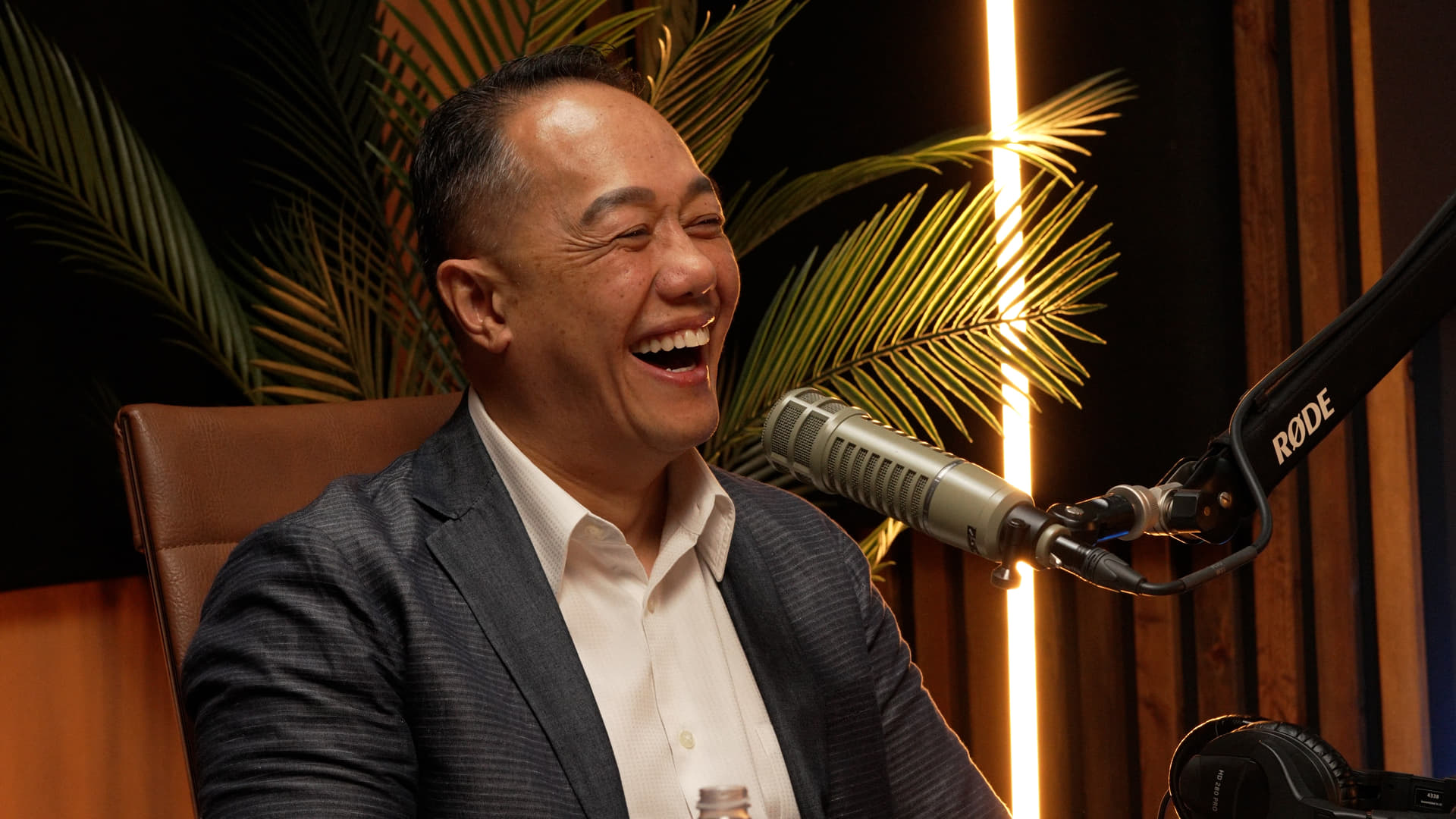
Episode Overview
In this episode of The Personal Side of Business, Jet Bunditwong sits down with investor, commercial real estate broker, business coach, author, and speaker Joe Mendoza. Joe shares the personal journey behind his entrepreneurial career — from being inspired by his father’s side hustles to building a multimillion-dollar real estate portfolio, losing much of it during the 2008 financial crisis, and rebuilding his life and business with a completely different mindset.
Joe also discusses the realities of real estate investing, the importance of mentorship, the differences between residential and commercial real estate, and the lessons he learned from experiencing both major success and major setbacks.
Throughout the conversation, Joe emphasizes the importance of resilience, personal growth, and using success to create impact beyond financial wealth.
Summary
Joe Mendoza’s entrepreneurial mindset began early in life. Growing up in a military family, he watched his father constantly pursue side businesses to support the family. That exposure planted the seed that entrepreneurship could create opportunities beyond a traditional nine-to-five job.
As a teenager, Joe attended a real estate seminar that changed his trajectory. Inspired by successful real estate investors, he decided early that real estate would be his path to financial freedom.
After college, Joe initially pursued a career as a stockbroker but struggled with licensing exams and lost his position. He then worked as a bill collector, where he became the top performer in the nation. Despite the recognition, the income did not match his ambitions, which motivated him to revisit real estate.
While working his day job, Joe began building his real estate career at night. With mentorship and persistence, his production rapidly grew. Eventually, he sold over 100 homes in a single year and ranked among the top agents in Southern California.
During this period of success, Joe expanded into investing, syndications, and development projects. Through strategic property acquisitions and reinvestment, he turned a relatively small investment into over one million dollars in less than two years.
However, the 2008 financial crisis dramatically changed everything.
Joe went from millions in assets to starting over almost from scratch. The crash forced him to rebuild his finances, credit, and confidence. While the experience was difficult, Joe now views it as one of the most important turning points in his life because it changed how he defined success.
Rather than focusing purely on wealth accumulation, Joe shifted toward impact, mentorship, and helping others build their own businesses.
Today Joe works as a real estate investor, broker, coach, author, and entrepreneur. He teaches others how to invest, scale businesses, and create financial opportunities while also building a meaningful life.
Key Takeaways
Entrepreneurship often begins with early exposure to opportunity
Joe Mendoza’s entrepreneurial mindset developed while watching his parents run small side businesses. Those early experiences helped shape his understanding that financial independence often comes from building businesses rather than relying solely on traditional employment.
Mentorship can dramatically accelerate success in business
One of the turning points in Joe’s career was working with a successful real estate mentor who helped guide his early deals and build credibility in the industry. Mentorship can shorten the learning curve for entrepreneurs entering competitive industries like real estate.
Real estate investing can create significant wealth — but it requires discipline
Joe’s early success in real estate allowed him to build a large portfolio and generate substantial income. However, market conditions can change quickly, and success in real estate requires careful strategy, financial discipline, and risk management.
Financial setbacks can lead to powerful personal growth
The 2008 housing crisis forced Joe to rebuild his finances and career. While difficult, the experience changed his perspective on money, success, and the importance of resilience in entrepreneurship.
Understanding financial numbers is critical for business owners
Joe emphasizes that entrepreneurs must understand profit and loss statements, balance sheets, and business metrics. Without these numbers, it is difficult to scale a company or make informed investment decisions.
Long-term fulfillment often comes from impact, not just wealth
Later in his career, Joe shifted his focus toward coaching, writing, and helping other entrepreneurs succeed. Creating impact and helping others grow became a central part of his definition of success.
FAQ
Who is Joe Mendoza?
Joe Mendoza is a commercial real estate broker, investor, business coach, author, and entrepreneur. He has built multiple businesses in real estate and investment while mentoring entrepreneurs and real estate professionals across the country.
How did Joe Mendoza get started in real estate?
Joe’s interest in entrepreneurship started early while watching his parents run small side businesses. As a teenager, he attended a real estate seminar that inspired him to pursue a career in real estate investing and brokerage.
What happened to Joe Mendoza during the 2008 financial crisis?
Like many real estate investors during that time, Joe experienced major financial losses during the housing market crash. The experience forced him to rebuild his finances and approach business with a more disciplined and strategic mindset.
What does Joe Mendoza do today?
Today Joe works as a commercial real estate broker, investor, business coach, and author. He also runs a commercial real estate investor community where he teaches people how to build wealth through investing.
What advice does Joe Mendoza give to new real estate investors?
Joe encourages new investors to focus on education, mentorship, and understanding financial numbers such as profit and loss statements. He also emphasizes learning creative financing strategies and building strong systems to scale a business.
Why Joe Mendoza’s Story Matters
Joe Mendoza’s journey illustrates one of the most important realities of entrepreneurship: success rarely follows a straight line.
His story highlights the emotional and financial highs and lows that many entrepreneurs experience. It also demonstrates that resilience, learning, and adaptability are often more important than early success.
By sharing both his achievements and setbacks, Joe provides valuable insights for entrepreneurs who want to build sustainable businesses while maintaining perspective about what truly matters.
Guest Bio
Joe Mendoza is a commercial real estate broker, investor, business coach, author, and entrepreneur based in Southern California. Over the course of his career, he has built and rebuilt multiple businesses while mentoring entrepreneurs and real estate professionals across the country.
Joe has extensive experience in residential and commercial real estate, investment strategies, and business scaling. He also coaches high-performing entrepreneurs and real estate professionals, helping them grow their businesses through systems, financial discipline, and strategic leadership.
In addition to his work in real estate and coaching, Joe is also an author and publisher who produces educational content for entrepreneurs and investors.
If you enjoyed this conversation, be sure to listen to the full episode of The Personal Side of Business featuring Joe Mendoza to hear more about his entrepreneurial journey and insights on building wealth through real estate and business leadership.
You can also connect with Joe Mendoza through his social media platforms and real estate investor community.
Click here to expand and read the full episode transcript with Joe Mendoza
Full Episode Transcript: Joe Mendoza
Jet: Hi, and welcome to The Personal Side of Business podcast, where every business has a story. Today, I'd like to welcome Joe Mendoza. He's an investor, commercial realtor, a business coach, an author, and speaker. Welcome to the podcast, Joe.
Joe Mendoza: Thank you so much for having me. Really a pleasure to be here.
Jet: Welcome. Tell us, how did you get here?
Joe Mendoza: Wow. How far back do you want me to go? All right, all right. I'll try and keep it short and sweet. So my dad was in the military. So I was pretty much born and raised here, but all throughout my life, I saw him doing side hustles. So he was in the Navy and barely making ends meet. So he was what we call an entrepreneur. And he was doing all these different things like puka shells. My mom was doing Avon, and I would see him like, whoa, what's going on here? And then when I got older, I figured out that, hey, I need to probably do something more than just the average.
Jet: Far back as you want to go.
Jet: Yeah, yeah. And so that inspired you to get into something bigger than just a nine to five.
Joe Mendoza: Yeah, yeah. So I kept paying attention and throughout my life, my dad would always say, hey, you got to be rich. You got to be rich. You got to be rich. And one day I was about 17 years old in high school and I went to my neighbor's house. We called everybody uncle back in the day, as Filipinos. So I went to my uncle's house and he goes, hey Joe, I got a couple of tickets. Do you want to go? And I'm like, what's it about? He said real estate. And I'm like, real estate? Wow. Real estate equals rich. So I went to this event here in Chula Vista. And as I mentioned, I was in high school and it was Robert Allen. And I got so pumped up because he was all over television, nothing down in the nineties. He wrote several books and just really inspired me. So when I went to that event, I said, I'm going to go all in on real estate and never really looked back. I mean, there was a couple of things that happened in the economy at the time that to me, that was a red flag, but others would say it's an opportunity. Like 2008, you know, a lot of people got humbled and lost a lot of money, but in that same market, Jet, guess what?
Jet: You can get rich off of it.
Joe Mendoza: People got rich. I mean, the movie The Big Short, people crushed it. And so, yeah, that's kind of the long story short, how I got into real estate, became an entrepreneur, and it just kept evolving from there.
Jet: Were you in residential first and then got into commercial?
Joe Mendoza: Yeah. So I originally wanted to be an investor. Robert Allen was an investor. I wanted to be an investor. So that was kind of my path that I wanted to go. However, I thought, hey, 17-year-old kid, who's going to really believe me? So I thought, you know what, let's go to Southwestern College while I'm in high school to build up some credibility. Maybe I'll get my license. And so I started going down that path. And as I mentioned, the market was starting to really tank and all that. And then I got spooked. And I said, hey, you know what, let's just go to San Diego State, do my thing, and I'm going to go from there. So I went to San Diego State and I started studying business. When I got out of college, I was going to be a stockbroker and I actually landed a job. And The Wolf of Wall Street, that was kind of my life. Not that extreme, but it was there. I mean, I had other friends that were in that group that were very extreme, you know, living the life, custom suits, nice cars, just bling bling all over the place. And I was really going down that path. Unfortunately, I'm not very good at taking tests and I failed one of the tests and I got fired. And I was like, my God, what do I do? What do I do? And it was hard to land a job in that field. So I ended up being a bill collector and that was the only job I could get at the time. And I was doing that for about four years and I became top in the nation, Jet.
Joe Mendoza: And what was wild about it, so you get that prestige. However, the paycheck didn't match it. Top in the nation at the time, I was making about $30,000 and I was like, whoa, this is not going to still level up mom and dad. And I'm like, this isn't working out. And so I talked to one of my buddies who happened to be in real estate prior to me being a bill collector. I go, Ronnie, this dude you talked about before, introduce me. I want to know this guy. And so we went over to his office and it happened to be a 100-unit producer of real estate. He was doing 100 deals a year as a real estate agent and became my first mentor.
Jet: In Southern California.
Joe Mendoza: Yes. He's still around and he's here in San Diego. And anyway, he took me under his wings and I kept my day job as a bill collector while doing real estate at night from six to nine, six to nine, six to nine. And I was doing one day, then two day, then it started to evolve. Then six months into it, I go, hey, honey. I talked to my then fiancée, girlfriend, whatever. I go, I want to do this real estate thing and I want to go full time, but there's going to be ups and downs, ups and downs. Could I have your blessing? And she's like, yeah, go for it. And that was all I needed. And so I went in. And I started taking listings after listings and I started making money. I went from 12 units while I was part time. Then I went another 12 units because I got married, got a little distracted. I went to 20-something units, 30-something units, 50-something units. In 2005, I sold 113 homes in San Diego County and was number seven in all Southern California, top 1 percent nationwide. During that interim, simultaneously, people were approaching me on, hey, you want to do fix and flips? I'll run it, do that. And learned about syndications and that started to evolve into commercial real estate because at the time I was making all these commission checks and some of them I would start deploying into property.
Joe Mendoza: One of my second properties that I ever bought in Chula Vista, Sunbow, I pulled out $113,000 cash and then I redeployed it. I bought a fourplex, a single family, a couple condos in downtown. I turned that $113,000 into over a million dollars in less than two years. And then it just started skyrocketing. And then my friends started approaching me about apartment condo conversions. I got heavy into Vegas, did a 60-unit over there, did a few apartment complex condo conversions here in San Diego, and then some land development. And then I went from 2005, I was making about 1.1 net, sold over a hundred homes. And I go, wow, if I can do this, how about trying 10 million to 100 million? And so I started getting more into syndications, capital raising, and I learned that whole game. Unfortunately, shortly after that, 2008 came along and it humbled me. Right. I went from over 9 million in assets to just next to about nothing. And I had to literally start over. So from probably 2010 to 2014, it was a very humbling experience. I had to build up my credit, build up my cash, build up my courage to get back into the game. And in 2014, I was able to qualify again on normal financing. My credit was good. I had enough for the down payment, but I started over.
Joe Mendoza: So I bought a house up in the San Marcos area, brand new construction, and built up my courage a little bit. And then I go, wow, this is working out. And I started making more money, got back into the real estate, started pushing really hard. And then I ended up saving some more cash. I bought another house that I'm currently in now. That skyrocketed. I used some of that cash. Then I bought some storage units, some single family, some multifamily. And here we are again to where I'm a little more conservative than before, but I could say redemption.
Jet: Yeah, and back then when you were doing it, before it hit 2008, I'm assuming the gains were, and tell me if I'm correct in this, were easier to come by in terms of every time you’d get a home, you had more opportunity to do something with it, where I think now because if you were trying to get in, it's a lot harder, right?
Joe Mendoza: I agree a thousand percent. So one of my mentors, he taught me about, and I'm glad we're recording this because to the younger folks or anybody getting into real estate, they should pay attention to this. They call it the alligator. Okay. The alligator in investing is when you're eating up your profits and you have negative cash flow. You're feeding into that property to kind of keep it afloat. Prior to 2008, if I was down 300, a thousand, 2,000, quite frankly, I didn't care because what was in my favor is exactly what you mentioned. Appreciation was going up 10 percent, 20 percent, 30 percent per month. And I was like, hey, you know what? I could walk on water. And so I started doing that. And these properties that I bought, I mean, I bought a condo in downtown. I knew about what was happening in downtown because I was studying some with the San Diego City Development Committee, and they were talking about land going up, skyscrapers, what have you. And so I kind of had that in the back of my mind. One of the high-rises I bought, I bought it for $450,000. Two years later, the moment I closed escrow, I put it on the market and I flipped it for $650,000. I made $200,000 like that. And all this appreciation was, I mean, that was one of dozens of stories that I was crushing it.
Jet: Yeah. And when you're going through that invincibility moment and then you get humbled, what is your mindset now in 2025? Do you think about it once in a while?
Joe Mendoza: Oh, absolutely. Oh my gosh. So I'm very diversified, as you mentioned, right? I'm a true entrepreneur, just like my parents. And so I also have some crypto. I've got some stock. One of these stocks I recently picked, I'm up probably not 30 percent, not 300 percent, like 30,000 percent.
Joe Mendoza: And I'm crushing it. And so you get this like, whoa, but I got to tame that tiger a little bit because you know what? I got to make sure to stay humble, stay hungry. Right. And this time of age, you know, we live in these different sections of our life where you got to really know where you are age wise. And I'm pushing towards the latter chapter where all the strategists out there, the CFPs, the certified financial planners will tell you, be more cautious, be more conservative. And so that's where I'm at. I'm in my 50s now where it's like, hey, you know what? At the end of the day, I'm not taking nothing with me. And so at the end of the day, yeah, it's to me, just a game. And I could play that game whatever way I want to play it. But at this point, I'm more about impact. That's why I write my books. That's why I'm here on a podcast. That's why I do YouTube. To me, that is being wealthy beyond your means. You can make an impact to anybody that you don't even know.
Jet: Yeah, yeah. And it's interesting because I was just talking to a friend about that the other day where, you know, I'm now 46 and about to turn 47. I feel like if I'm lucky, this is the second half of my life, right? If I get to 90, great. This is the second half. And I think the wealth comes from feeling emotion from different things. Where I think when you're younger, 20, 30, you're trying to make that money. You're trying to get into things that are going to make you feel better, I think, in the practical world. And now, I think feeling happiness and being able to help people and being able to give inspiration to other people has really been my driving force in this, right? And I think this is part of the reason why I started podcasts as well, is to get people to hear from and get inspired by other people like yourself.
Jet: And I think it changes the way that you're seeing life. Right. You're like, I can't take it with me. None of this matters if I don't leave some sort of legacy where I think people can remember you and say, you know, he was a great person. He actually helped out the community. He wanted to do something better than just taking money for himself, right? And I think it takes a little bit of self-reflection also. Because you sit there and you're like one day, what am I doing now?
Joe Mendoza: That was by far the biggest lesson of 2008 in the mortgage meltdown because you nailed it. When I was accumulating all that stuff, the Mercedes, the 911, the Land Rover, the 5,000-plus-square-foot home, I made it mean who I am. And that was a blessing in disguise because I figured out that that's not who I am. And for the folks, your listeners out there, my dad also, you know, when I was growing up, he used to say food, shelter, clothing, food, shelter, clothing. That's very, very basic. And some of the listeners, that's where they're at. And if you study Maslow's hierarchy of needs, that's where most people are at. And where I'm at, where you're at, is this thing called self-actualization, which is the highest pinnacle you could ever achieve. And at that point, when people start to realize that all this stuff, like I said, disappears when you're gone, you can't take nothing with you. I mean, that's when you start to live a fulfilled life.
Jet: Yeah, and do you think that if 2008 didn't happen, you would be a different person than you are today?
Joe Mendoza: Oh yeah. By far. That's a great question. You heard of all these professional athletes and people who hit the lotto and then all of a sudden they're way worse than before. Absolutely. That probably would have been me. Yeah. Because, you know, the blessing for them is if they're still alive and they could still have that wake up call. Because if they don't, they end up like, you know, no disrespect, like Junior Seau or Robin Williams that take their own life. You know, and to me that's tragic. And so, yeah, if 2008 didn't happen, I would have never written this book. I would have never done all these other things that I would have done and played this impact that you and I are playing.
Jet: And do you think it's manageable now in 2025, especially in Southern California, for someone to get into real estate?
Joe Mendoza: Great question. Southern California specific, that's a very, very, very good question.
Jet: And to the listeners out there, the reason why I bring up Southern California is just because it is, you know, number two in median pricing for homes and real estate, and it's super competitive. A home has gone up so much in just a handful of years that it's difficult now. You know, you're trying to finance a million-dollar home, maybe for a three-bedroom, two-bath, right? So just bringing that context.
Joe Mendoza: Yeah, so San Diego was voted the number one most expensive city in the nation. Cost of living, affordability. For somebody to just be a regular homeowner, it's tough. It is very tough. However, at the end of the day, I think the goal for anybody is to become a business owner investor. And if you come in with that mindset, that goal, I'd say hang around some really great people that have the mentorship, the training, the experience. And I'd say it's not going to be easy, but it's definitely attainable. You're going to have to pay your dues. And I always say first you learn, then you earn. And I say it could still happen here.
Joe Mendoza: If you go into investing, be a wholesaler, be a real estate agent, start to earn these tips and then when you have enough for a down payment, then you start getting into the other stuff, the multiple units and the commercial real estate, what have you. However, if you really want to play the biggest level, creativity. Because if people understand subject-to, assumable financing, all these different strategies for businesses or buildings, then it's infinite possibilities because if you're talking to any lender out there right now, they'll say, hey, when you hit 10 loans on your credit, you're unbankable. And so that limits you. And so with subject-to, assumable financing, creative finance, all that interesting stuff that we see on YouTube or on television, that's where you need to master. And I would tell anybody if I were to start all over again, I would master that, study that like none other. On top of that, I would also tell people, learn about a P&L, an income statement, a balance sheet. Learn about that.
Joe Mendoza: Because when I was a realtor, nobody taught me that. Not a single soul. I coach, right? I coach some of the top in the nation. I go, show me your balance sheet, show me your P&Ls. What is that? They don't understand. And that's tragic because they're making all this money. Then I'm looking at like, okay, what's your profitability? Let me see your profit margin. And they're barely making it. And they're using credit cards for their advertising. And then when that's tapped out, they use business credit. Then when that's tapped out, they're like canceling coaching because they can't afford me. And it's just a vicious spiral. So understanding creative financing, understanding accounting, P&Ls is where I would focus the most to anybody else.
Jet: And that's what you gain from the business courses in college. You think that carried over?
Joe Mendoza: Pardon? Well, I did study business at San Diego State. Long story short, I ended up with a public administration degree. Yeah, it might be boring to some, you know, accounting 101 or 201 and understanding income statements and, you know, accounts receivable, accounts payable. Yeah, that is kind of boring. But when you start to really understand that, like I'm acquiring businesses. I have several businesses right now. And that's the first things I look at. I want to see their income statement. I want to see their P&Ls. When I'm looking at a multifamily, when I see shoebox accounting, well, this can't be a bankable property. This is going to be creative financing because the bank's not going to lend on that. And so I'm right away going into finance.
Jet: Nice. And what was the transition from residential to commercial? What finally made you do that? I feel like it's more full time on the commercial side.
Joe Mendoza: I'm a very unique breed of what we call a resi-mercial where I don't want to turn away my friends, family, especially if I love them and they trust me and they only want me. I mean, I want to serve them, right? And I'm resi-mercial in a sense where I will help commercial as a broker, but my highest priority is as an investor. Okay. So whenever I teach anybody, when I'm mentoring them or coaching them, I go put on two hats. Put on first your investor hat and then maybe your realtor hat. Listen for clues. If somebody's really super motivated, they need to sell, well, I'm going to try and figure it out as an investor. If they want to sell and there's not a super high priority, that sounds like retail. So I'll put my broker hat on.
Jet: Yeah. And what is a lifestyle or work style difference of a residential career?
Joe Mendoza: Great question. So first off, let's start with clothing. So it's funny because lately now that I'm being more and more into commercial, they're more business casual, right? And I was always taught in residential, man, you got to beef it up. You know, you got to have that suit and tie, maybe a custom shirt, custom suit, fancy car, blah, blah, blah, blah, blah when you're making nothing, right? And so that's one of them. Commercial real estate, they have banker hours. So Monday through Friday, nine to five, they're not answering the phone after hours. They're not working on the weekends. You'll find the rare breed that will pick up late at night or weekends. I love those agents as commercial agents. Understanding the numbers because it's more driven by numbers. Does this pencil out? Commercial real estate. Residential, I hate, does this garage tickle my fancy? For usually the spouse, the wife, it's kitchen, right? And master bedroom. For the garage, it's the man cave. For the man, it's very emotional. And so that's a big part of the differences there.
Jet: Yeah. And are the work hours extremely different if you were to add them up in a week?
Joe Mendoza: I would say that's a great question too. Residential agents, I respect them a lot because when you really see somebody who's making significant income in residential, they are working their tails off. Twenty-four seven almost. They're working on vacation. They are grinding. Okay. And when you look at the income, this is where the differential is because I happen to be with eXp Realty. They have eXp Realty, they have eXp Commercial. I've done both. I'm one of those rare breeds again that has tiptoed in both sides of the equation, where if you look at the volume, the sales, even the top, top, top commercial broker, at least in our company, the residential agent blows them out of the water.
Jet: Oh yeah, I would assume that commercial would be higher in revenue, but is it because it's rare to close a deal as opposed to residential where that can happen?
Joe Mendoza: Exactly correct. One of my clients a while back, I don't want to name drop too much, but one of the biggest commercial brokerages in the country was my coaching client. And his dad was one of the founders of the company. And I go, why aren't you doing commercial exclusively? And he goes, Joe, you know what I did? I tried it. And what they say, feast or famine, that's what happens is some commercial agents don't have the stomach, the wherewithal to handle commercial real estate. So they don't last. They either make 100, 200,000 on one pop and they live off of that the whole year. But with a residential agent, it's 10 or 20,000 here and there, but you're doing volume and units.
Jet: Yeah, to be that hybrid is, if you can, license wise is probably better, right?
Joe Mendoza: I would recommend it. If anybody's exploring real estate, be a hybrid. Definitely be a hybrid because you should be your number one client ever. If you're going to get into real estate brokerage, you should be the number one buyer. You should really understand that and then go from single family to commercial real estate as quickly as possible.
Jet: Wow. And what was your transition into getting into coaching and being an author? Like what finally made you say, I have enough information in my brain or experience in the workplace that I can now start to share it?
Joe Mendoza: That was by accident and then seriously. So the author side, I've always wanted to write a book. And so that was triggered. I co-authored a book prior to COVID. When COVID hit, I was like really freaked out. I was spooked like most people were. And I said, hey, you know what? If this is the last that's ever going to happen and I'm gone tomorrow or a month, let me finish this bucket list book that I've had in my head for years. And so I wrote two books during COVID and pumped them out, self-published, got them out there, they're on Amazon. That was what triggered it, COVID. How I became a coach, as I mentioned, my unit production was almost doubling every single year. And I happen to run into who's still my mentor coach right now. I ran into Tom Ferry in Chula Vista and I saw him at the San Diego Country Club and I was coachless. I didn't have a coach at the time. I was doing about 50 transactions a year. And I said, hey Tom, I want to go to 100 transactions. I want to go from half a million to a million. I want you to be my coach. He goes, Joe, you're on.
Joe Mendoza: And so in 2005, that's when I did over a million net because I also was fixing and flipping that year and I did 113 units. And he goes, oh, you're pretty darn good. Could you be one of my coaches? And so he personally asked me and I was like, I'll be honored. And so I've been a coach for Tom for going on over 14 years now.
Jet: Wow, wow. And when you're building that coach-to-client relationship, what are you ideally looking for in a client if you can map it out your way?
Joe Mendoza: I do actually. I do actually map it out my way now because my time is very limited and time's the most precious asset you could have. So at this point, I want the big thinkers. I want the business owners. I want the team builders. I don't want anybody thinking small. I want somebody who's very hungry and very humble. If somebody has a big ego and is too arrogant, see you later, alligator. I don't want that person in business with me. I don't want to be coaching them because if their ego is so big, it's hard for them to learn because they're thinking like, I already figured it out. I already know that. And so it's very, very hard to coach that because I look for blind spots. I mean, some of my clients are way, way, way more productive than me. I have a client that's doing over 400 sales a year. We'll do 500 this year. I have a client who's worth way over 11 million in liquidity assets. I mean, I have giants. I coach giants. One thing that they love and respect about me is I could call them out where I'm going to know every person has a deficiency. I don't care if it's jujitsu, judo, or business, real estate, I'm going to catch it. And when I catch it, I'm going to exploit it. And then when I exploit it, I'm going to turn you into a better person.
Jet: Yeah, I think that's the hardest part for people. And I'm sure as a coach, you start to see this, that people don't want to see that deficiency in them, right? Or that weakness because it's something you have to explore in order to get better. When you're talking to someone as a client, do you go hard in or is every person a different situation? You have to sometimes be delicate, sometimes be rough. How does that work?
Joe Mendoza: I tell them upfront that I am not a military style coach. So I'm not going to be grinding you every single time. But I do tell them that, hey, when I'm going to call you out, I'm going to call you out. And with all due respect and love and admiration, this is to get you better. And they're cool with it. So once in a while, yeah, I'm tough. But I'm not military hardcore style.
Jet: And then when you have that relationship where it's starting to get really rough and they're not responding well to you, is it at that moment you're just like, I'm done? Like this is good, it's just not a good fit for us.
Joe Mendoza: Yeah, so a lot of my clients will stay with me on average three to five years. I have some clients that push over 10 years and every single week they're with me. When I see that they're not growing, they're not listening, they're not doing their homework, I'll give them a little bit. I'll give them a little bit of grace. But after that, if it reaches to that point where they stop showing up, they stop responding to my texts, that's a clue. And at that point, I'll just say something like, hey, you know what? At this point, you know, I've done what I can. I've taken you however far I can, but there's so many other coaches out there. Maybe you need a different voice, a different strategy, you know, because like even kids, right? They hear their parents talking to them all the time and it's falling on deaf ears. They hear their teacher almost say the same thing. So everybody's like that, even a coaching client.
Jet: And going back to strategy, I wanted to ask this. I'm sure you have clients all over the country, correct? What do you prepare for that strategy in order to coach them for, say, someone in Florida or someone in Michigan versus someone in California?
Joe Mendoza: I coach them where they're at. So if I'm understanding the question, I like to help people scale up. And so whether they have one admin assistant, one buyer agent, if we're talking investing, they have an acquisitions assistant, I'll coach them where they're at. But at the very, very beginning, I want to see the metrics. I want to see their key performance indicators. What are your P&Ls? What are your production numbers? What is your marketing budget? I want to see everything laid out. And if they don't have anything, we got to figure it out quick.
Jet: So you're always living off of the numbers. That's big. It doesn't matter where you're located.
Joe Mendoza: Yeah, whether they're commercial real estate, residential real estate, investor, fix and flipper. I want to see the numbers because the numbers don't lie. And when I have the numbers, I could scale. I could help them scale because a lot of people, they say they have a problem. Well, it's very, very, very simple. And people, if they get this, it's game over. It's usually people or systems. And that's it. When I can figure out is this a people problem or a system problem, now I could help you scale. So I got to really identify those metrics right away. And then sometimes it's them. Where okay, with realtors, they get into real estate, they have no management experience. They're great at sales. They're terrible at running a business. They're terrible at accounting. They're terrible at managing. And so a lot of them, they're taught to scale, they start to scale, but all of a sudden they fail because it's not sustainable.
Joe Mendoza: There are other models out there, other types of trainings. Gino Wickman, right? They have that book Traction. People have to really understand, are you a visionary or are you an integrator? And most realtors, most leaders, they're visionaries, and they fail to hire an integrator, a COO, a director, and that's their tragic downfall. And so I see that a lot.
Jet: And is there a variable that you can think of that could change or affect numbers in such a way that you're like, there's nothing we can do about this? Is there ever something like that in real estate?
Joe Mendoza: As far as an agent or investor?
Jet: Let's do investor. Let's do investor.
Joe Mendoza: Okay, so is there any variable that's hard to change?
Jet: Like that's outside of the control. You're just like, there's nothing we, we just have to work around this.
Joe Mendoza: Expenses. So in investing, when I teach people some of the basics in investing, it's not the one for one rule, the 1 percent rule. That's too basic. I tell them, understand TIMMUR. T-I-M-M-U-R. Taxes, insurance, maintenance, management, utilities, reserves. When we really look at those numbers, some of those are very, very hard to change. However, if we take out the management company that's charging umpteen percent and take it in-house because we're going to scale this, well, we'll create a different output on the net operating income. So some people think they're just so stuck when in actuality, I mean, we're in a world that they could take the accounting overseas. You know, there's a lot of different companies out there that just outsource. So some people ask about my staff. I'd say almost a hundred percent of them are virtual. Yeah, I don't have an employee that I look at every day. That's all my payroll, that nine to five at the moment, you know. However, I'm working on other stuff that I'll need to, but currently at the moment, I outsource all my staff.
Jet: And I think that's the hardest part in business. And my guess is it gets amplified in being in the real estate industry because you kind of put your nose down and try to go forward, right? And you're always looking at that, like you're saying, that vision that you're like money, money, money, money down the road, but you're like somewhere along the line, there has to be these structures and stuff that help you get there. It works in business owners, you know, retail stores, brick and mortars, restaurants. And I'm sure if you're sitting at home and have a home office, it's even harder to really feel that, right? Because I think if you're in business and you have this and you're surrounded, you're in an office setting and you have a lot of people going on, you're like, if these two people are out sick, we can feel the impact right away. You know, we're all scrambling. Where you're sitting by yourself and you're hustling, you're driving to places, doing things by yourself. You're like, I don't have a bookkeeper. I don't have a tax person. I don't have someone that's doing my marketing. And I'm trying to do this all by myself. And if anything happens, it's on me. There's nowhere to go. So I don't really feel that impact until three months later when you start to see like, oh, my bookkeeping is out of order. And then I haven't posted anything. I haven't put anything out for marketing in months.
Jet: And then you don't realize it's too late, right? So I've started to get the idea that you're like, you're going to need help along the way as you're going through your journey.
Joe Mendoza: I would say to the audience out there, if you are the only person doing it all, you don't have a business, you have a job. And with a lot of realtors, unfortunately, they're making good money, you know, 100,000, 200,000, 300,000. But the tragedy is they still have a job. And any professional out there that doesn't have an assistant, a VA, a marketing person, that's tragic. You got to learn how to scale. So I launched a magazine this year, right? And one of the things that I was really grinding my teeth over was like, I wanted to outsource quick. And they were like, no, Joe, you need to learn this. You need to figure it out. And I'm like, my God, this is tough because I want to scale. Well, the moment I became official and they gave me the green light like, okay, Joe, you met the sales, you hit the quota, you could run, I hired photographers, video people, social media, office manager. I've got dialers now and I scaled quick. So I'm not even a full year in business, but I scaled that very, very quick.
Jet: Yes, you believe in processes.
Joe Mendoza: Absolutely, processes and people.
Jet: Yeah, and just kind of touch a little bit because I'm always curious when people are in position to hire. What are some of the key elements that you're looking for when you're hiring people?
Joe Mendoza: That's a lovely question. So man, you got some good questions, Jet. I love it. I love it. Keep them coming. If we're talking a realtor or investor, if they have a nine to five job or a spouse, a significant other, where there's at least some stability of income, they could take bigger chances. If they have a 401(k), a reserve savings account, they could take bigger chances. When they have neither, I would lean on revenue. Lean on revenue. So when you make some, okay, we're going to put 10 percent back into our business, into marketing. And so that's the biggest variable. If they don't have either one, like a spouse, a significant other, another job, or their nine to five, exploring real estate part time, they don't have financial stability. They've got to take smarter risk, more calculated risk.
Jet: And then when you're hiring, let's say for the magazine, what are you looking for in their character or their work ethic then?
Joe Mendoza: Responsiveness to me is huge. When I hired all my staff that I have now, they were all very, very responsive. Then I'll do some fact checking behind the scenes. I'll check out Facebook and LinkedIn and all that other stuff that sometimes some people overlook because I want to see where their head's at. Where is their focus? Do they seem like a genuine good person? And then I meet with them and then we go from there.
Jet: Do you believe that being able to get along with a person in order to work with them holds one of the biggest virtues and values in that business relationship?
Joe Mendoza: You got some quality questions. Yes and no. Okay. Because there are certain instances, depending on what part of the company you're building, that people do need to be like you. On the same token, they need to be total opposite. If I'm going to hire on the finance side, I need somebody who's strong at accounting, strong at the systems.
Jet: So in a sense, you don't really care if you truly get along with them as long as they can do that job amazing.
Joe Mendoza: Going back to the ego thing, as long as they don't have a big ego, they don't have a terrible history of maybe, you know, I mean, I know people will spend time in the big house or whatever, and, you know, and sometimes they make their way out and they're a better person, you know. As long as I don't see a track record of like, okay, this person is a criminal. Yeah, yeah. I would love for people to challenge me once in a while because that's where you'll have growth. Because one of the things that one of my other mentors learned, there's top-down management or bottom-up. And one of my mentors was very bottom-up. They do a lot of crowdsourcing and seeing what's the people wanting, the employees wanting. And that made them stronger. And so once in a while, there's some antagonists out there. I'm all for it.
Joe Mendoza: But if it's one of those things where I can't sleep at night, I'm constantly thinking about them more than my wife and my kids, then yeah, see you later, alligator. It's hard to change the stripes on a zebra.
Jet: Yeah. That's interesting. Yeah. It's giving me perspective on that. You know, I was in the belief that you want to be able to get along with those people. But I think when it starts to come down, where I feel like numbers start to matter more, I think that starts to shift a little bit, right? You're like, how important is this person to making my business go further and how much can I tolerate what they're about? And then that, I guess that line gets crossed once in a while and you're just like, okay, now this is too much, right? The ego becomes too much.
Joe Mendoza: Yeah, so when I'm coaching somebody to scale, I tell them, look at somebody in two ways. You're either a hot air balloon and they're either fuel to the fire helping you go up or they're a sandbag dragging you down. The sandbags, you got to let go of them so it can go higher. And so that fuel to the fire, that's what I'm always looking for. Is this person adding value? Is this person helping me grow? Is this person making me better?
Jet: Yeah. Nice. All right. Well, Joe, let's wrap it up. Tell us everything you're involved in right now. I would love the audience to hear so they can reach out to you if they have any questions.
Joe Mendoza: Yeah. Well, thank you so much again for having me on the show. I'm really so honored and touched to be able to contribute to your community. And what I'm up to now is I live by this one mantra, bigger or small, I want to help create wealth for all. Bigger or small, I want to help create wealth for all. So I do have this club. It's called a Commercial Real Estate Investor Club. And so I'm teaching people about how to get into investing, how to learn about real estate, how to really get all the support they need so if they're a nine to five person or just starting out in real estate or anything like that, this club is a facility to help them out and grow. I will be putting more and more content out there. As a matter of fact, I brought this great book.
Jet: Thank you.
Joe Mendoza: Yeah, it's a great starter book for anybody who wants to get into investing. I talk about house hacking and going from single family to multifamily and building up a big portfolio. So that's there. And I'm going to be working on more other books. I do also have this magazine. So this is the one that I actually scaled and I do have other staff on board. I'm the owner publisher. And any businesses, they're either growing and going or they're planning to exit. I don't believe in this middle place where we call it, for me, I call it purgatory. I mean, you got to make a decision. You're either going to grow and go or you're going to exit. Is it time? Have you been doing it too long? So if they're going to grow and go, let me help them. Get into my magazine, get into my publication. If you don't like print, I do have a digital marketing aspect where I could help them with Facebook ads and Google ads and marketing online and automating their email. So this is something that I would recommend as well. Those are the big ones.
Joe Mendoza: And if they're looking to sell real estate, sell their building and they want top dollar, I'll help them out as a broker, of course, or one of my teammates. If they're like, hey Joe, we don't want to put it on the market. We don't want to sign. We don't want to be bothered. We just want to get out. Maybe it was a probate sale, a divorce sale, a bad partnership. Well, I'll help you out. I might take it off your hands and I'll buy it.
Jet: Yeah, awesome. And where can they find you to reach out to you?
Joe Mendoza: One of the best ways is Instagram, DM, LinkedIn. I'm on social media, YouTube. Best way is that. Find my Facebook groups that I run, Commercial Real Estate Investor Club. Be part of that group there and I'm very active there. I have other team leaders that are there as well. So mainly social media. If they want to reach out, phone call, email, I'm like everybody else. I'm very, very busy, so I don't normally like to give that out.
Jet: Thank you so much, Joe. And this is The Personal Side of Business.
Joe Mendoza: Thank you so much for having me.