
Andrea Arroyo: Financial Literacy
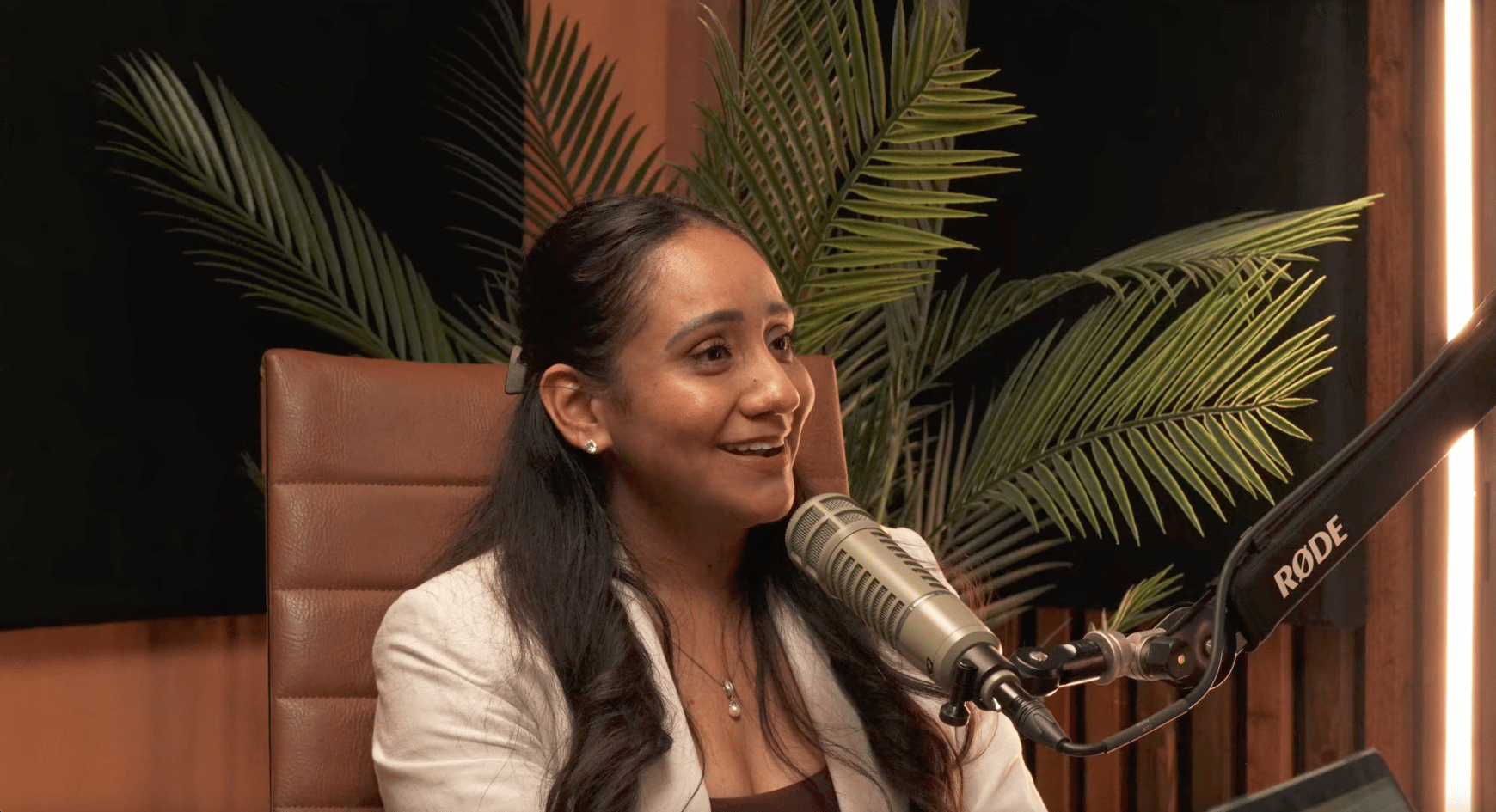
Breaking Financial Cycles: Andrea Arroyo on Financial Literacy, Money Habits, and Building Wealth
Episode Overview
In this episode of The Personal Side of Business, host Jet Bunditwong sits down with financial professional Andrea Arroyo to discuss the emotional, cultural, and psychological relationships people have with money.
Andrea shares her journey from working in the nonprofit sector helping underserved communities to becoming a financial professional focused on helping individuals and families build stronger financial foundations. She explains why financial literacy is often missing from education and family conversations, and how that gap leaves many people—especially first-generation Americans—trying to figure out money on their own.
Together, Jet and Andrea explore how habits, culture, and emotional patterns shape financial decisions, and they discuss practical strategies for building financial stability, protecting income, and creating long-term financial freedom.
Episode Summary
Andrea Arroyo’s path into financial education started with her own personal journey to understand money. After years working in nonprofit organizations serving low-income communities, she noticed something surprising: while many programs existed to support lower-income families, there was a major gap in financial education for middle-class individuals.
As a first-generation American, Andrea grew up hearing common financial advice like “save your money,” but rarely received guidance on how much to save, where to save, or how to grow money over time. That curiosity led her to research financial systems, explore investment strategies, and eventually work with financial professionals who helped her map out a long-term plan.
Today, Andrea helps individuals, families, and business owners build financial structures that support both stability and growth.
A key theme of the conversation is that money is not just numbers—it is deeply emotional and psychological. Many people avoid looking at their finances because it creates anxiety, shame, or fear. Others overspend because purchases temporarily relieve emotional stress.
Andrea explains that the first step toward financial improvement is awareness. She often begins by asking clients to imagine receiving a $50,000 tax-free check and asking what they would do with it. This simple exercise reveals their financial priorities and values, which then helps guide a strategy for budgeting, debt reduction, saving, and investing.
Jet and Andrea also discuss how social pressures—especially through social media—encourage people to spend money on appearances rather than long-term financial goals. Examples include expensive cars, luxury items, and lifestyle inflation that do not align with actual income levels.
Another important discussion focuses on financial discipline and habit building. Andrea shares a personal example of deleting the Starbucks app after realizing how small daily purchases were impacting her financial goals. That small behavioral change became a turning point in how she approached spending.
The conversation also covers generational patterns around money. Many families avoid talking about finances altogether, which creates cycles where younger generations repeat the same financial mistakes. Andrea describes herself as a “cycle breaker”—someone who challenges inherited financial behaviors and creates new habits.
For those seeking a practical framework, Andrea highlights three key pillars of financial well-being:
Protection – ensuring income and family security through tools like insurance and emergency funds.
Growth – investing money so it compounds and builds wealth over time.
Freedom – using financial stability to create options and opportunities in life.
By addressing both the emotional and practical sides of money, Andrea believes individuals can develop healthier financial habits and create lasting generational change.
Key Takeaways
Financial education is often missing
Many people grow up hearing that they should save money but never learn how to manage or grow it effectively.
Money is emotional
Avoiding bank accounts, overspending, or accumulating debt often stems from fear, shame, or stress related to money.
Awareness is the first step
Tracking spending for even one month can reveal patterns that significantly impact financial stability.
Social pressure influences spending
Lifestyle expectations—from luxury cars to status purchases—can lead people to prioritize appearances over financial health.
Discipline creates long-term results
Small behavioral changes, like eliminating unnecessary expenses, can compound into significant financial improvements.
Financial cycles can be broken
Generational habits around money can be changed through education, awareness, and intentional decision-making.
The three pillars of financial stability
Andrea emphasizes a financial framework based on protection, growth, and freedom to create long-term financial security.
Frequently Asked Questions
Why do so many people avoid looking at their finances?
Many individuals associate money with stress, fear, or shame. Avoiding bank accounts or financial statements becomes a psychological coping mechanism.
What is the first step toward improving finances?
Andrea recommends tracking spending for at least one month to clearly understand where money is going.
How much should people save for emergencies?
A common recommendation is three to six months of living expenses to provide a financial safety net.
Why do people overspend even when they want to save?
Social pressure, emotional spending, and lifestyle expectations often influence financial decisions more than logical planning.
What are the three pillars of financial stability?
Andrea’s framework focuses on protecting income, growing wealth through investments, and creating financial freedom through long-term planning.
Guest Bio: Andrea Arroyo
Andrea Arroyo is a financial professional dedicated to helping individuals, families, and business owners develop stronger financial foundations. Her work focuses on financial education, strategic planning, and empowering people to build healthier relationships with money.
Drawing from her background in nonprofit community work, Andrea is particularly passionate about helping underserved and first-generation communities gain access to financial knowledge and resources.
Through education, coaching, and personalized financial strategies, she helps clients protect their income, grow their wealth, and create long-term financial security.
Connect With Andrea Arroyo
Andrea can be found on:
LinkedIn
Instagram: riquezacolandrea
She is currently focused on financial education within the Latino community and helping families develop stronger financial habits.
If you enjoyed this conversation, be sure to explore more inspiring entrepreneur and expert stories on Watch & Subscribe on YouTube.
Watch Andrea’s full conversation about money, confidence and breaking inherited cycles.
Click to Expand Full Episode Transcript
Andrea Arroyo Full Episode Transcript
Jet Bunditwong: Hi, and welcome to The Personal Side of Business, where every business has a story. I’m your host, Jet Bunditwong, and today my guest is Andrea Arroyo. She’s a financial professional who helps individuals and businesses build financial security and growth. Welcome.
Andrea Arroyo: Thank you. Thank you for having me, Jet.
Jet Bunditwong: So tell us, how did we get here?
Andrea Arroyo: Whew, man. I’m pretty young, but I feel like I’ve lived many lifetimes and done a lot of things in my life.
Andrea Arroyo: But a little background on me, I was in the nonprofit world for a really long time, managing different programs, community building, partnerships, providing resources for the community from different groups within the community. I helped a lot of low-income families, provided a lot of resources for them. And throughout my career, I started noticing that there was a gap in help for a lot of middle class, and specifically when it came to financial education.
Andrea Arroyo: Well, I think just in general, our financial education system here in the United States isn’t very tailored to a lot of us. Specifically myself, in my case, I’m a first generation and I don’t come from a family with a lot of financial literacy. Everything that I’ve learned that I know is from my own research, from my own education, asking questions, looking up things, not because I learned it from somebody in college, in high school, not from a family member. All I ever heard from family was, put your money in the bank, save. But they don’t tell me how, how much, when should I be saving, you know? That was one thing that my grandma always just said, you need to save, you need to save. But nobody really taught us what that meant or how should I start saving, you know?
Andrea Arroyo: So little things like that I started noticing. So I started my personal financial journey wanting to reduce my debt. How can I afford a house? How can I buy a better car? How can I feel more stable and not so anxious every time I have to open up my bank account? So it started my personal financial journey and doing the research, going through my own relationship with money, figuring out my patterns, healing that money relationship and really dissecting the root cause of what money was doing to me. And from there, it just opened up the door of all the other possibilities and knowing, there’s other ways to manage my money, not just the way that my grandma was telling me how to do it.
Andrea Arroyo: So yeah, fast forward. Here I am now. I help families like myself, other professionals, businesses, helping them just have a better relationship with their money so that they can have structures in place so that they can grow and protect their money.
Jet Bunditwong: Yeah, you know, to your point, was something you mentioned that we don’t really get taught growing up how to put money away or strategy rather, right? I think a lot of us, especially from middle to lower income families, just get told put money into savings account. There’s no strategy, and it’s probably not the best use of the money overall, right? There’s probably better ways to make compound interest in other areas. And then I think we’re told you want to get the house, you want to get the car. And then now debt comes into play, and credit cards, and we don’t really know what to do, and we get into bad debt. When you’re teaching these middle to lower income families how to save and deal with debt, what’s one of the first strategies that you put in place?
Andrea Arroyo: So I always like to ask them to kind of see where they’re at and kind of what their goals are because everybody has different goals. You know, for me, it was I wanted to buy a car, I wanted to buy a house. For somebody else, it’s, I just want to have enough savings in case my car breaks down. So I always ask the question, imagine yourself going out to your mailbox, open up your mail, you open up an envelope with your name on it, there’s a $50,000 check to your name, tax free. What are you gonna do with that money? What’s the first thing that comes to mind?
Andrea Arroyo: And then from there, they start telling me what they wanna do. Oh, I’m gonna pay off my student loans, my credit card debt, or I’m gonna put it in investments, I’m gonna go buy Bitcoin, or whatever it is, whatever it is that they wanna do. And so it helps me understand where they’re at. And then from there, I could say, okay, so you like this, you want to travel, okay, you want to start up a business. All right, now I know what you want to do, what your aspirations are. And it helps people imagine too, because sometimes we are so stuck not knowing where to go, or we don’t even have a vision, we just know or we should be doing, we feel like we should be doing something. And we feel that money is what’s stopping us from actually creating a vision for ourselves.
Andrea Arroyo: So that helps me kind of gauge where they’re at. And then from there, then I start asking the questions of, okay, how much are you bringing in? What are your spending habits? And kind of do like a financial analysis of where they’re at and what strategies, what are the priorities before we can get there? And kind of setting up a map for them to get there. Because that’s how it was for me. When I sat down with the financial professional, I said, this is where I want to be. And then we took it back and said, okay, this is where you’re at.
Andrea Arroyo: You know, and it took me a couple years to be able to get to where I’m at, but at least I was able to build a solid foundation to get to where I wanna be, and now where I’m at, I feel a lot more stable. Obviously, now I wanna keep growing, but that’s how I kinda take it with my clients as well.
Jet Bunditwong: That’s great. And you know, there’s this stress that comes with someone’s current financial situation and the path that you wanna take them on, right? And do most people that you work with start to complain or have an issue? There’s no way I can get there. I’m literally going from day to day right now to try to make ends meet, and you’re telling me I wanna save money, we wanna do this for the future, I don’t wanna look past a month, I just wanna pay my rent and keep things going. What do you say to someone that’s speaking back to you like that?
Andrea Arroyo: Yeah, I do get some clients that are very like, there’s no way I can get there, right? Like, yeah, I live paycheck to paycheck. And so then I say, okay, let’s look at where your money’s going. And so I give them homework and I say, pull your spending bank statements. I think most banks now have like a spending budget. You can see where you’re spending your money. And I say, track your money for one month, one month. And I check in with them like halfway through the month and I say, show me where your money’s going.
Andrea Arroyo: And now it’s painting a bigger picture of them of like, oh yeah, I paid Hulu and I haven’t even opened up the app in months, you know? So sometimes it’s really little things like that where people are like, I just don’t want to do it and they don’t want to do the work. Because it’s hard, it’s hard. And then that tells me another pattern of where they’re at. They’re avoiding even opening up their bank account. So then I try to dig a little bit deeper and try to find the pattern that, where is the anxiety coming from? What is it that they feel? And how can we, I help them to overcome that challenge because I can only help people and kind of guide them. At the end of the day, they’re the ones that need to make the choice of, okay, I really do want to get there. And she’s telling me what I should do or how I can, what I can do to try to get there.
Andrea Arroyo: So I really try to be very patient with them and give them the tools that they need to be able to get there and offer suggestions of, okay, you really are living paycheck to paycheck. How can we bring in more money? How can we increase our income? Because right now, we’re very limited with our income, so then we start brainstorming on ideas of what they can potentially do to increase that income.
Jet Bunditwong: Yeah, and let’s dive in a little bit more to the emotional and psychological aspects of how someone deals with money, right? Because I always think of my own situation, you know, back when, especially when I was younger, in my 20s, I didn’t have money and I was hesitant and afraid the way, you know, what you’re talking about, to look at my bank account, which now looking at it where I have more money, I’m looking at it and I was like, I should have been more uptight about how often I’m looking at it and then try to track everything.
Jet Bunditwong: But now this is where, when you start to have money, you’re like, well, whatever, you know, whatever. It doesn’t really hurt me. But the same thing happens is there was a, I don’t name the company, but there was a company that was running my credit report multiple times a month. And I happened to see it last month. And I called my bank and I was like, how often is this happening? They’re like, it’s about four times a month. And I was like, so just these past couple months? She’s like, no, this goes back to January.
Jet Bunditwong: So I was, and then luckily my bank was good enough to give me all the money back, but I was like, why am I not paying more attention to that, right? That’s literally, it was I think a hundred and something dollars a month that was going out. So let’s dive into the emotional, psychological aspect of when someone is counting their, or should be counting their pennies, why they’re not looking at their bank account and then their finances all the time.
Andrea Arroyo: I think when they’re not looking at it, it comes from, I’m scared. I don’t want to see how much money is actually left over, if I’m overdrafted, if I’m negative. Because I was there too at one point, you know? I was like, my gosh, I think they just charged everything and I might have a $35 fee on there now, right? And if I don’t look at it, I don’t look at it.
Andrea Arroyo: But then you find that I also was in the same situation where I was getting charged for something. And I looked back and I said, I don’t know what that is. It’s $200 that put me in overdraft for something that I didn’t purchase. So we’re scared to look at what is left over, I think, from our money. We’re scared to see where we’re spending.
Andrea Arroyo: I forgot I went shopping because I was feeling heartbroken, you know? And so now you have that shame, that guilt of I did something because I was trying to make myself feel better and now I don’t want to like look at the consequences of it. So I think that’s the psychological part of it and sometimes we don’t realize it until later when we’re older.
Andrea Arroyo: Where you’re like, okay, I have a little bit more money, right? Let me not so much worry about it because I know there’s money in there. But then we start building even more habits of, I can go shopping now and I don’t need to worry about it because there’s more money in the bank. And that still means we don’t have the best relationship with money. And it’s just like having a relationship with a family member, with a friend. How much time are you spending on it? Do you text your friend every day? Do you give them a call once a month? How often are you talking? That’s how we should be treating our money as well. Personally, that’s how I think it should be.
Jet Bunditwong: You know what’s really helped me to your point are apps now, like AI apps that will notify me, one, if I’ve repeatedly spent on something that it’s like a duplicate charge, and two, it will let me know if large amounts of money have gone out or come in, which seems like a really minuscule thing, but in the big picture from month to month, it’s made me refocus it. If I’m getting a text or something every couple of days, just let me know what’s going on. And I think that’s one of the most important things that, thinking about now having more money than I did, especially in my 20s, try to think about those habits. I’m like, I should have done this back then. So I try to do them now, which is I felt like has helped me keep more money over time. Like, why am I spending on that?
Jet Bunditwong: And, you know, there was a point and maybe you can talk about this. One of the things that someone had said to me was one of the biggest financial downfalls of the United States of America is auto debt, right? We go buy cars. People spend twelve hundred dollars a month on a car they most likely can’t afford. They’re still living at home. It’s like, why are you in an Audi when you’re living in an apartment with your parents? You should be helping them or you should be trying to put that money away to do something else. Do you see a lot of that sort of frivolous spending in younger generations, you know, Gen X or millennials? Millennials too.
Andrea Arroyo: Yes, I do see that. And I, when I ask them, I say, so why are you driving this 2025 truck when gasoline is up the roof, but you’re still living at home, but you’re trying to save for a house? And so I’m like, help me paint the picture here. And yeah, there’s definitely, and I think it’s because we want to appear. It’s the appearance.
Andrea Arroyo: When I talk about Latino families, we talk a lot about the appearance of, in Spanish we say, que va a decir la gente, and it’s always like, what are people gonna say? Oh, well, they have a good job, so they should be driving a nice car. And I should be showing the world that I’ve made it, even though on the back end of things, we’re not making it. And I think it’s just pressure from society, and people follow people.
Andrea Arroyo: If they see, they got a new car and we work the same job, you know, we’re colleagues, I should go get a new car too. Even though my bank account is nothing what theirs looks like, right? So I think that’s where a lot of people fall into a lot also is the society expectations of what has been expected. Go to school, get a good job, you’re in your career and you made it, you buy the house and the car.
Andrea Arroyo: But that’s not the reality nowadays. Nowadays, we need to go back, start looking at our money habits. Where are we at? What are we doing? How am I actually going to get there? And having the discipline too. There comes a lot, I think, with discipline because you say you want to get there, but are you actually consistently making habits of not going to Starbucks? Starbucks for me was one of the hardest things to let go of.
Andrea Arroyo: And it’s been about three years now that I have not gone into a Starbucks. I deleted the app, I removed my card from it, and it took me a while. I’d be like, oh, let me re-download the app, and then I would re-download it. And then people are like, oh, we’re going on a Starbucks run, and then I’d be like, I wanna come too.
Jet Bunditwong: You’re like a familiar bar. You’re like, I used to have such a good time at Starbucks.
Andrea Arroyo: Yeah, you know? And then realizing, what was Starbucks doing for me?
Andrea Arroyo: And for me, it was just painting the, I’m going to Starbucks and I’m getting my venti coffee. That’s really what it was. And then I started making my coffee at home and now I love my coffee at home. But it was me realizing and realizing through the moment of, I’m about to download the app again. And then realized, I don’t need it. And now it’s completely off. I know it sounds really small and probably not to a lot of people, but to me, that was a big turning point for me when it came to letting go of Starbucks and deleting my app.
Jet Bunditwong: Yeah, because we’re not dealing with, I mean, this is not like 1960 where it was just money coming in and money going out, spending on whatever you need to spend. I think now we’re being influenced by social media, our friends who it seems like people, like to your point, people are younger and younger are getting nicer cars and then being flashier, you know, and then jewelry that we’re not sure if it’s fake or not, people just wearing them just to show off, and it’s becoming this society of can we keep up with what we’re looking at on all these different levels and platforms?
Jet Bunditwong: What’s the rule, I guess let’s start with someone who’s like in their 20s, right? What’s your advice for someone in their 20s, and we’re kind of work our way up to 30s, if we were to be in a normal situation, we’re just job, let’s put it at what do we want to give it like let’s say 20s, we’re making 55K, does that seem low or mid 20s?
Andrea Arroyo: Yeah, yeah, yeah.
Jet Bunditwong: Twenty-five years old, we’re just coming out of college and we’re first job, happy about it. What’s, if you can start fresh with someone, what would be your advice for them in their 20s?
Andrea Arroyo: Somebody in their 20s that’s just probably about to graduate college or just graduated and got their first big boy, big girl job, I would definitely tell them or ask them, what is your financial plan? What do you have already in place? Do you have a savings account? What kind of savings account do you have? How much in retirement are you willing to put down each month from your paycheck? What tools are you using for retirement? Are you sticking to just one of them?
Andrea Arroyo: And just introducing them to the different ways that they can be saving money, that they can be budgeting their money. Because at the end, my goal is for everybody to have a diversified portfolio, to be able to have just more of a stability in your financial life. So that would be my recommendation, my suggestion to a young person.
Andrea Arroyo: Start looking at the things that you don’t really want to look at because when we’re young, we want the money right now. I want to go shopping. I want to go on the vacation. I want to go to happy hours. You finally have money. You want to do all the things that you’ve been wanting to do. But that’s where the discipline comes in. You can do all those things, but there’s a smart way of doing it. And you also have to think about your future. One day you want to have a family. What are you doing right now to build a foundation for your family?
Andrea Arroyo: Because if you look, if you Google, how much does it take to raise a child in the United States? And that’s not including tuition. It’s almost, I think last time I checked, I think Google said it was like 380,000 to raise a child from birth to 18. That’s how expensive it is.
Andrea Arroyo: Telling people that’s how much money it’s gonna take for you to raise a kid. You’re responsible for a child from age one to 18. That’s how much money you’re gonna be spending. What are you doing to be able to have money in that bucket for your family? How much money are you putting in the bucket for expenses? How much money are you putting in your travel bucket, in your retirement?
Andrea Arroyo: So just really painting that picture because when I had my first big girl job, you know, I sat down with my HR person and they said, put money in your 401K. And then that was it.
Jet Bunditwong: Yeah.
Andrea Arroyo: That was it. I’m like, okay. So I’m just throwing whatever. I don’t even know how much I was putting at the time because they didn’t even know how much I should be putting. They’re like, well, how much do you want to save?
Jet Bunditwong: Well, I don’t want to save anything.
Andrea Arroyo: Yeah. So I think that’s what I would recommend. And I hope that more employers, educational systems can start putting these things into place to really help our future generations like our younger ones to avoid a lot of what we’re doing. We’re kind of doing the reverse engineer. We’re going backwards, right, to kind of fix our patterns, put things into place.
Andrea Arroyo: So that’s what I would tell somebody in their twenties. And there are some twenty-year-old, like mid twenty-year-olds that I’ve met with that I’m actually really impressed. They’ve reached out to me and, you know, and I’m impressed with where they’re at. And I’m like, where are you finding all this information? They’re like, you know, I’m going on YouTube or, you know, on TikTok and things like that. They’re like, but I wanted to talk to somebody in real person.
Jet Bunditwong: And then you do, because I’ve met those kids too that are getting influenced by the good side of social media coming in and like I’ve been listening and following this person, they’ve been giving advice to do this and at least they’re like reaching out and trying to learn because people will be like, I wanna understand if I invest into real estate or into life insurance policy or put it away for this compound interest somewhere, where can I find that?
Jet Bunditwong: Now that we have that person, that person in their 20s has done well, now they’re in their 30s. There’s that person in their 30s, what will change now to that person that is coming out of their 20s and saying, well, I’ve done what you’ve told me, what’s the adjustment now as I’m getting older?
Andrea Arroyo: So as they’re getting older, as families grow, right? At this point, your family’s probably growing. Now you have the kids, now you have the house expenses, or you’re planning to put a down payment down. So you want to start investing maybe, you know, in a business at this point, you know, you start evolving, you start growing. So as you start growing, more expenses come with that as well.
Andrea Arroyo: So being able to also kind of reassess, where are your goals now as your adult goals, right? Your family goals. You know, some parents, you know, want to put their kids in private education. Some parents want to homeschool. How much is that gonna cost you? Some parents want to start up a business, you know, and have their kids also play travel ball. So kind of seeing where they’re at and it goes back to, okay, what were you doing in your 20s? Can we do that now? And if we didn’t do that, okay, where can we move things around? Where can we sacrifice something? Something’s gotta go.
Andrea Arroyo: What other resources are available out there that can help you? How much debt do we have, you know? Can we, and then sitting down and looking at the pros and cons of like, okay, real estate, life insurance, what are your goals, what are your values too? What is it that you’re trying to build wealth for? Is it to pass down to your kids or do you wanna give it to an organization? Things like that.
Jet Bunditwong: Yeah, because my guess is now you’re getting into your 30s and you could be a single individual or you can be coupled with a spouse and then you’re trying to figure that aspect out. Now what are some percentages that you would suggest someone put away for X this or they should be spending on, let’s say car payment, mortgage or rent and then for other expenses that are necessary items for life?
Andrea Arroyo: So I always tell people, you have your paycheck and the first two things that you need to worry about is putting down five, ten percent into your savings because that is going to go into your emergency fund because emergencies happen all the time. Cars break down all the time. An accident in the house happens. A life crisis happens. What do you have in your savings? Because there are emergencies and emergencies happen all the time.
Andrea Arroyo: So having that emergency fund there and how much should be in your emergency fund. A good place to start would be three to six months of covering all of your expenses, which includes your mortgage, all of your insurances, car payment, everything that you pay for in a month.
Andrea Arroyo: Including maybe even like going out to eat, include that in your budget so that you’re not feeling like you’re tied up and you’re like it’s the end of the world. Include that in your savings and start building towards that. It takes time. But having that emergency fund, three to six months covering all of your expenses, is one thing to have.
Andrea Arroyo: And then the other part for some families or individuals, you know, they like to tithe or give back to an organization. And I say, okay, that’s a non-negotiable as well. We put that in there. What is another non-negotiable? Rent and mortgage, right? And then from there, we start breaking down. So really putting a priority list of your non-negotiables and then everything else at the bottom that is not so much of a priority, then we can play around with that.
Jet Bunditwong: Did that answer your?
Jet Bunditwong: Yeah, yeah, yeah. Now, let’s say a family is tight on, they’re like, I got $5 left at the end of the month. Do you start to chip away and see these are things we can cut out first? Is that normally the approach when someone is just like, we have nothing, we can’t have money to go anywhere?
Andrea Arroyo: So if we’ve already done like an analysis and they for sure know like this is all we have left, then we start saying, okay, where else? Like either revisit it, if it doesn’t feel, like if I ask them, say, you know, and that’s something that they have to be honest with themselves. And sometimes they’re not ready to give up certain things. So that’s where I said, okay, I’m just gonna ask you one more time, like where are your priorities? And they’re like, I don’t wanna give up, you know, my gym membership or, you know, I don’t wanna do workouts at home. And I say, okay, then that’s your priority. That’s what you value.
Andrea Arroyo: Or some people just don’t want to give up something because they worked so hard for it but they don’t even care to have it, you know? I’m like, okay, why do you have this expensive camera that you thought you were gonna be doing photography? Sell that equipment, you know how much that’s gonna give you. You haven’t used it, it’s collecting dust in there.
Andrea Arroyo: You know, there’s things that we can start letting go of. Go check your garage. Check your closet. What are valuables in there that you can get rid of that are going to help you start growing that money bucket?
Jet Bunditwong: Because that’s another emotional tie, right? Like you’re asking people to essentially get rid of stuff that they have connected to in some sort of way, even if they don’t use it. Because there’s like, you know, when people have like cars from family members that have passed away and they’re like, I want to hold on to this car. Like you don’t drive it, you know? Or there’s stuff in the house or sitting in the garage or where.
Jet Bunditwong: I remember when my mother was moving, my uncle had passed away and there was a lot of stuff that belonged to him and I remember going into the house and I was like, you know, it’s stuff that you can get rid of but I think a lot of family members didn’t want to do it because we’re like, oh, it reminds us of him. It’s not really, it’s a box of X, there’s nothing in there that’s really important.
Jet Bunditwong: So I think that emotional tie to it is such a big deal. And I think it comes from, this is just my speculation, because I’ve seen it working on the business side with a lot of different underserved minority-owned businesses, that I think part of gaining stuff starts to make you feel like you’re achieving things, especially in the United States. I’m first generation, well, when people come over here, I think especially with the Hispanic, Asian and black communities, you look at, I’ve got a business and I’m now buying things I don’t really need, but it’s making me feel like I’m growing in assets, right? And a lot of times those assets don’t really mean anything. They’re just stuff. Why do you need three cars? You know what I’m saying? Like you don’t need it.
Jet Bunditwong: Do you think that there is a lot of mental and emotional things you have to break through culturally in order to get them to at least start to get where you need to be?
Andrea Arroyo: 100 percent. 100 percent. I actually, I’ve been like telling people more I’m a cycle breaker because I realized there’s so many cycles I’ve been breaking.
Andrea Arroyo: You know, there’s some of us, you know, first generation, that we start realizing, man, there’s a lot of cycles I need to break or I’ve been breaking. The first cycle I broke in my family was I’m going to talk about money. We didn’t really talk about money. And now people are like I’m the money lady. Oh, here she comes. Get away from her. She’ll talk about money. You know, I’m the money lady.
Andrea Arroyo: And seeing how uncomfortable it makes my grandma talk about money, you know, and just realizing like her energy changes when we talk about money. My other grandma, same thing. What’s her perspective on money? And yes, there is 100 percent like generational things that we have to kind of look back at and patterns and roots that are within us and sometimes that’s why we don’t know.
Andrea Arroyo: Like, I’m holding on to that because my grandma wanted to hold on to everything that she bought, you know, when she first came here. And so we have that emotional tie and realizing it’s not even my emotional tie really. It was just what family members were saying, it’s emotional. But do I really care about this box of things?
Andrea Arroyo: So there’s definitely, yes, there is a lot of cycles that we have to go back in and look at and be honest and truthful with people in an empathetic way of saying, do you see the pattern? Like helping them see the pattern so that they can be the ones to decide, okay, I’m gonna let go of this or I really now I have awareness of this is a cycle that I want to break and empowering them to start taking action, to start looking at it, to just even have the awareness when it’s in your mind now of, I’m gonna make a change now and I’m gonna start noticing how I feel when it comes to money.
Andrea Arroyo: Like when I talk about money, how do I feel? Where do I feel it in my body? Do I feel anxiety? Do I feel scared? Do I get angry? Because some people have anger when it comes to money. So identifying where you are at personally when it comes to money, like what do you feel when you talk about money? What’s the first thing that comes up when you talk about money?
Jet Bunditwong: And, you know, we’ve been talking more on this, I guess like the everyday personal side, right? But now when it comes to business owners, what do you find, do you find the same patterns in business owners when it comes to money that they don’t want to discuss it, that they’re afraid to look at what’s really happening on the financial reports, P&Ls, what’s going on day to day, because they have to try to keep the business afloat. Is that something you see the same way?
Andrea Arroyo: Yes, with business owners, it’s similar. I think that they do have some of those generational patterns that they’re not aware of.
Andrea Arroyo: Sometimes it’s a little bit easier when it comes to a business owner because they’re like, I have, now I’m at the point where I’m gonna do whatever it takes to keep my business going. So they’re more willing to try to make a change or really just take a new strategy, see what’s working, what’s not working. All right, let’s redo it again depending on where they’re at with their business.
Andrea Arroyo: And sometimes they are afraid to look at their financials. They don’t want to look at it because they know that they’re overspending and, you know, having that partnership with that person delivering them all their supplies, but because they’ve had this friendship, but yet they can find a better rate somewhere else. So then I ask them, why do you keep working with them? Why are you still using their delivery services?
Andrea Arroyo: You know, let’s look at somebody else. They’re like, no, and it’s like this loyalty thing that they have to them. Once again, going back to emotion, right? We’re trying to tie, I don’t want to feel bad. I don’t want to make them feel bad. So it just keeps going in this cycle.
Jet Bunditwong: I think like it’s interesting because I felt that the older I’ve gotten, the less emotion I have attached to money. Like it’s based on financial decisions, right? Is it going to be good? Is it going to bring in more money or am I going to lose money? And I just look at it as numbers. And I think that’s one of the hardest things for people to do because we’ve been, you know, I don’t know, we were so tied into how much joy and pain money can bring us. And I think it takes such a long process to study that, read on things, listen to podcasts, watch people on YouTube. I’ve spent the past like five years doing that, and I felt like it’s made me see it in a different light.
Jet Bunditwong: What are some of your things that you want, you should tell people to go look and see they should read this, they should look at this to help them on an everyday schedule?
Andrea Arroyo: There’s definitely a lot of books out there, right, and podcasts and YouTube videos. I think if you’re first just starting to really have this internal conversation with yourself about where you are with your money and your finances and start just looking up a podcast, looking up audiobooks that talk about money, your relationship with money, the psychology of money, and start exploring different, because there’s so many creatives out there and authors that really just give so much valuable information. And whoever resonates with you.
Andrea Arroyo: For me, it was somebody from Mexico, actually, that was just bluntly talking about money and how we are like, you know, Mexicans don’t know how to manage their money. You know, we don’t know how to prioritize. We like to overspend. And she was just very truthful and raw and kind of harsh. But that was for me, that’s where I was like, I need to start following her and her work because I resonated with what she was saying.
Andrea Arroyo: And from there, it just starts opening up the algorithm. It’ll start working in your favor. It’ll start sending suggestions. And then from there, you’re gonna start to be able to now feel empowered to start making your own choices. It can be overwhelming, but it takes time. It takes time. You’re breaking patterns, you’re figuring out your relationship with money, and now you’re trying to take, okay, now I know what my emotions are with it, let me put them aside, now let me really look at the numbers. Does it make sense? Is it gonna help me grow? Is it not? Okay, that’s not for me and then move on to the next one now that you know your emotion.
Andrea Arroyo: And sometimes now that you’re aware of what emotional patterns you have now you can bring it into the table and say, okay, why is this, why is everybody advising me to do this but why doesn’t it feel good for me? Why, what is it that’s holding me back or why do I want to jump to the first thing that somebody tells me? Like just take that moment to have that conversation with yourself.
Jet Bunditwong: Yeah, and I think a lot of people tend to jump at the first thing that they hear and they’re like, just do a little bit more, let some more things soak in because that’s one person’s perspective of what money is to them and how they manage it because it’s interesting because I’ve listened, like what you’re saying, different podcasts and YouTube, read books, and you will see people value debt differently, right? So people want good debt, they’re like, this is good debt, and some people are like, you should never have debt. And you’re like, how can two people be so successful in whatever they’re doing, have such a different point of view on the spectrum of how money is? But I think it also goes into a part of risk and experience, right? What you’re willing to do with that money.
Jet Bunditwong: I know some people who have invested into real estate and are like I’m willing to invest a lot of money, take big risk and it has paid off. But then I’ve met those same people who have gone into real estate and were like, I invested a lot of money and nothing’s paid off, right? So it’s different. I wanted to kind of get to some stats so that I think people can relate and understand what’s going on with the United States currently, right?
Jet Bunditwong: So one of the things that you had brought up to me was there were over 60 percent of US adults live paycheck to paycheck, right? Which kind of is interesting because the federal minimum wage in the United States is $7.25. It’s been that way since 2009, which is crazy. And it can vary by states. But to think that that hasn’t even come close to what it costs to live in the United States. When someone comes to you and they’re like, I make $8 an hour, right? What is the approach with them? Or should they be looking at a second job? Should they try to get out of that job and upgrade into something that pays more? Or should they start to have, well, let’s look at what you’re spending it on and go backwards and then start to, or is it all of it?
Andrea Arroyo: It’s all of it. It’s all of it. It’s like, how long have you been at this job? When’s the last time you got a raise? What other skills do you have? What other, can you apply for a promotion? Does your job give bonuses? Weren’t you qualifying for bonuses? Just kind of seeing really like where they’re at because sometimes they’re like, I just don’t make enough money. And I’m like, okay, well, yeah, there and not do anything because they just feel so overwhelmed.
Andrea Arroyo: So for somebody that is in that situation is saying, have you applied for other jobs? What other jobs are you applying for? How much are they going to pay you? You know, can you get a second job? What other skills do you have that you can start doing on the side? Can you go walk dogs? Can you create graphic designs? I don’t know, whatever.
Jet Bunditwong: Drive Uber.
Andrea Arroyo: Drive Uber, exactly. At one point, I had three jobs. It sucked, but I knew that it was temporary and I knew that I was trying to pay off my debt in record time and I was willing to do that. And I also had the capability of doing that. I didn’t have all these other responsibilities, family responsibilities. It allowed me, and I had a conversation with myself and I said, I’m gonna do these three jobs for six months, just six months. That’s all I’m giving me. And every check, it’s going away to pay off my debt, every check.
Andrea Arroyo: So really having those conversations with people, what else can you do to bring in more income? What else can you do on the side? Nowadays, people are making money from home, you know? Just recording videos. There’s so many ways to make money nowadays, but people have to be willing to put in the work and do it and just start.
Jet Bunditwong: I think that’s the toughest part, right? Like trying to have a mindset of I’m gonna have to achieve and work more than what I’m doing now, going from a nine to five, getting X amount of dollars, and it’s temporary. And the temporary, I think for a lot of people, I think I always feel like that’s what scares people away. It could be this temporary might be for two years, and two years seems like a long time, but 15 years of debt is even longer, and that’s a stressful month to month.
Jet Bunditwong: I think one of the things that, I remember when I was in my 20s and came out of college, I was offered like three different credit cards from different banks, and I was like, this is amazing. And I went out and spent money, got into heavy debt, and I was looking back at it and I was like, that is the craziest few years of anyone’s life. So you’re coming out of high school. You’re now getting into a massive loan with a college. And then right out of college, you’re like, you want more debt? We’re going to give you a credit card. And you get more and you’re like, I can now spend whatever I want, and there’s no one really to regulate that.
Jet Bunditwong: And I know I’ve spoken to families and I feel like parents are starting to get better at it. But when I was growing up, it was just like, no one knew. Literally none of my friends, I don’t think we’ve had one conversation on investing, debt, or use of money. It was just like, we’re gonna go out, we’re gonna do it. And then I remember going out on the weekends and I had friends that would spend like hundreds of dollars on drinks. And I remember thinking there was one point, I was like, that doesn’t quite make sense to me. Like whatever is happening right now, so I need to adjust something.
Jet Bunditwong: And there was, I had a client, it was a personal trainer when I was coming out of college and I asked him, I was 20, I was about to be 22 years old and I asked him, what advice would you give to someone my age? And I think it was in his late 30s at the time and he was doing well with money and he was like, go buy property. Take all your money, save it, just buy anything. It could be a condo, could be a smaller property and just figure it out from there and at least you’re ready to put your foot in.
Jet Bunditwong: I did not do that and I went to travel to Thailand and spent a lot of money and I was like, why didn’t I listen? Literally I asked a question, someone that was successful told me and I was like, I’m gonna do something different. And I think about that moment a lot because if I would have done that, I think my life would have been financially dramatically different because I probably would have been heavy into real estate investing or put that money towards something else that can grow because I didn’t start to learn. I mean, I’m learning all the stuff now, you know, late in the game, but it’s still possible to do that.
Jet Bunditwong: Now, you had also brought up that there were three pillars that you feel like people should stick to, right? Protection, growth, and freedom. Could you explain those more?
Andrea Arroyo: Protection. So protection on your income. So imagine you have a printing machine at home. It prints money every day. Every day it prints money. Are you going to buy the warranty or the insurance on it in case it breaks down? Yes or no? Most people are going to be like, heck yeah, if it’s printing me money every day, I’m going to buy the insurance.
Andrea Arroyo: Well, why aren’t you buying the insurance on you? You’re the moneymaker. You’re the machine at your house that’s printing the money. You’re the one paying the bills. Why isn’t your income protected? So having that protection of, am I protecting my income in case something happens to me? I get a chronic illness. State’s only gonna give me X amount of dollars. They’re not gonna cover all of my expenses if I even qualify for that. Social Security is not gonna give me enough money. It’s probably gonna expire at this point.
Andrea Arroyo: Having those thoughts and knowing that you need to protect your money in case something happens for the long run. How is your family gonna be protected when you’re no longer here because things happen all the time?
Andrea Arroyo: The more I work with families and finances, I see it, should have bought the life insurance. Or I see it, they call me and they’re like, can I buy it now? And I said, we can try, but it’s probably gonna be too late. I’m gonna do everything I can. But we had this conversation two years ago and we didn’t do anything and now you’re calling me and it might be a little too late.
Andrea Arroyo: Why? Because now you were diagnosed with a chronic illness or a terminal illness and insurance companies aren’t going to want to cover anybody. There’s other alternatives that we can still try to help people with. But at that point, it’s a little too late.
Andrea Arroyo: Personally, when I first started learning about life insurances and how they work and the different types of life insurances and that it’s another way of protecting your money, not just, you know, I used to think, oh, it’s only for wealthy people or it’s for when I die, you know, I didn’t know. That’s all I knew about life insurance. And then I started educating myself on what is life insurance? Why is there life insurance? Why don’t they make us buy life insurance? They make us buy auto insurance and you probably have insurance on your cell phone. But what about life insurance on yourself? So having those conversations.
Andrea Arroyo: And then when I told my mom, we need to get you this. We need to all get this. Three months later, my mom was diagnosed with a chronic illness and I was able to use her living benefits with it. And that, just having the first notice of your mom has cancer and then the next thing that came to my mind was how am I gonna pay for it? Like how am I gonna pay for it? And then I remembered, she has a life insurance policy with living benefits. And my shoulders just dropped. I was like, I think I’m okay. There was a little bit more peace of mind. And mom, what do you need? Do you need medication? Do you need this and that? Are we traveling somewhere to get a second opinion? I had that. I had that option to have there.
Jet Bunditwong: And what about the growth part?
Andrea Arroyo: The growth part. How is your money growing? Where are you investing your money? Do you have a high-yield savings account or is it a regular account where you’re getting 0 percent interest on your money? And the different types of accounts that can make your money grow and which ones are more safe. Are you in the stock market? Are you risking everything? Are you investing in other options? So that is the growth.
Jet Bunditwong: And what about the freedom?
Andrea Arroyo: The freedom. Now that your money is protected and it’s growing, now you have the freedom to choose what you want to do with your money. Do I want to pull out from my investment to go open up a business? Do I want to just go travel? Do I want to buy the car now? Do I want to put a down payment on a home or a second home? Now you have the freedom to do that, and you have the peace of mind that your money is protected. So I think those are the three pillars to help not just with the numbers, but also internally with that peace of mind and that emotional fulfillment.
Jet Bunditwong: Nice, great. Now, if there’s someone that is interested to get into the finance world and helping people in that, whether it be for personal or business, what is your advice to them as they’re starting out?
Andrea Arroyo: Where is your personal relationship with money first? I believe that true leadership comes when you can be an example for others. And we all have different stories and different backgrounds, but have you done the work for yourself? How can you go and help somebody when you haven’t fixed your finances, your relationship with money? Are you in a good place? Are you ready to start helping people and guiding people? Have you done some of the work, you know, to get to now to be like, I want to help people too.
Andrea Arroyo: You know, for me it was I needed to help myself first and then I started realizing I want to help other people. I’m a natural helper. So where are you with your finances and what direction do you want to help people in? Where is it with debt management? Is it with the psychological part of money? Do you want to help actually people invest? Are you educating people? And I think right now we are in a time where education is crucial. It’s super important. People make better choices when they have clarity. And when they’re clear on something, they’re more confident in doing it. Versus when they’re like, I don’t know what that is, I’ve heard about it, but I haven’t done the research on it.
Jet Bunditwong: Yeah, I think research is really, I’ve learned from my own personal experience how important research into something is, and it’s not just reading an article or listening to one podcast, literally diving into something for months on end so that you understand so many different aspects of what someone or multiple people are talking about and in finding. I like to do this on my end too, is go look at the other side of it, right? If someone’s like this is how you should do this and you go, I want to hear the other side of it and how that’s worked, right? And see which one connects to me emotionally and to what makes sense for me financially as a person for what I wanna do for my future goals.
Jet Bunditwong: You’re great. And where can people find you?
Andrea Arroyo: People can find me. I’m not really big on social media, but I am starting to get back on social media. I’m on LinkedIn and I am on Instagram. My Instagram is riquezacolandrea. Right now I am very, very focused on helping the Latino community. So you can find me on there. And those are my two socials that I have currently right now.
Jet Bunditwong: Awesome. Thank you so much, Andrea. And this is The Personal Side of Business.
Andrea Arroyo: Thank you for having me. It’s been great. Thank you.
Related Episodes
Explore a powerful conversation on discipline, leadership, mindset, and personal transformation as Don Weber shares lessons from his journey through high-stakes work, reinvention, and coaching others toward stronger lives and businesses.
This episode dives into personal growth, self-awareness, and breaking limiting patterns—making it a strong companion to Andrea Arroyo’s insights on emotional habits, internal narratives, and creating lasting change.
If you enjoyed the discussion around mindset, values, and long-term decision-making, this episode adds another layer on how people can build lives and businesses that align more closely with who they truly are.