
Kalei’s Kitchenette Story | How Andy & Khara Built a Beloved Restaurant Brand
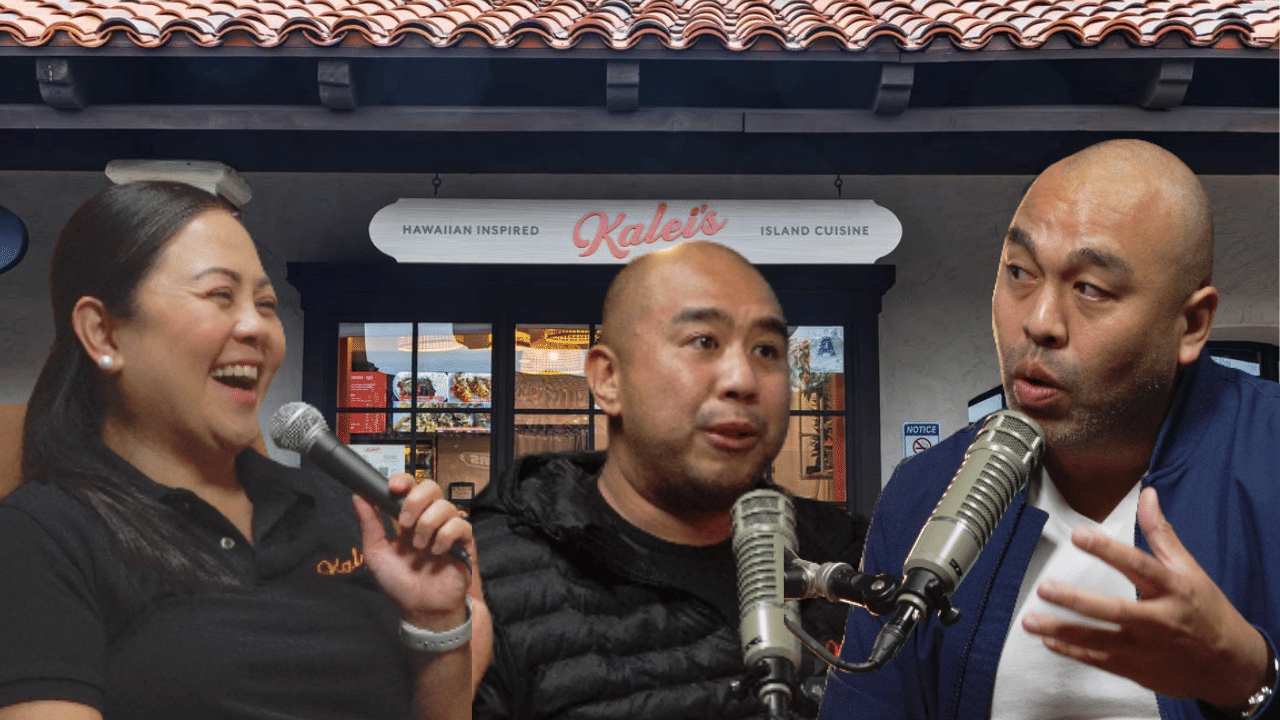
Learn how Andy and Khara built Kalei’s Kitchenette into a local favorite, sharing their journey, challenges, and what it takes to run a restaurant.
Episode Overview
In this episode of The Personal Side of Business, Jet Bunditwong sits down with Andy and Kara, the husband-and-wife team behind Kalei’s Kitchenette, a Hawaiian restaurant in Rancho Peñasquitos, San Diego.
Their journey started with farmers markets and catering in 2018, evolved through the uncertainty of the COVID-19 pandemic, and ultimately led to opening their brick-and-mortar restaurant. Along the way they learned hard lessons about restaurant economics, business planning, hiring the right team, and building a brand rooted in hospitality and community.
Their story highlights the importance of patience, preparation, and staying connected to your local community.
Summary
From Farmers Markets to Brick-and-Mortar
Andy and Kara began Kalei’s Kitchenette as a catering and farmers market business in San Diego. When COVID hit, they paused their plans to open a physical location and instead focused on business planning, forecasting, and financial preparation.
Rather than rushing into a lease, they waited until they found a restaurant with an existing kitchen, which saved significant time and money on permitting and build-out costs.
Why Planning Matters
One of their biggest lessons was the value of creating a detailed business plan.
Their plan covered everything from:
Menu strategy
Equipment needs
Operating hours
Marketing strategy
Financial buffers for unexpected expenses
This planning process helped them anticipate operational challenges before they opened.
The True Cost of Opening a Restaurant
Andy explained that opening a restaurant from scratch can be extremely expensive due to:
Grease traps and plumbing
Ventilation hood systems
Equipment purchases
Permitting delays
These costs can easily add tens of thousands of dollars and months of delays if the space is not already built for food service.
That’s why they recommend looking for existing restaurant spaces whenever possible.
The Importance of Culture and Experience
For Kalei’s Kitchenette, the goal was never just great food—it was creating an Aloha experience.
Their restaurant philosophy includes:
Greeting customers with warmth and hospitality
Creating a welcoming atmosphere
Paying attention to sensory details like music, lighting, and cleanliness
Andy and Kara believe that customer experience is just as important as food quality.
Building the Right Team
The couple emphasizes hiring people with the right attitude, not just technical skills.
Skills can be trained, but kindness and hospitality cannot.
Their leadership philosophy is simple:
Lead by example
Treat employees like family
Focus on serving customers well
Community and Giving Back
Community involvement is central to their business.
When the Maui wildfires devastated Lahaina, Andy and Kara organized a donation drive through their restaurant that collected hundreds of boxes of supplies for affected families.
The response from the San Diego community was overwhelming and reinforced their belief that restaurants can serve as community hubs.
Marketing Beyond Walk-In Customers
Another key lesson from their journey is that restaurants cannot rely solely on walk-in traffic.
Successful restaurants diversify revenue streams such as:
Catering
Party trays
Corporate partnerships
Delivery platforms
Event partnerships
For Kalei’s Kitchenette, catering has become one of their most profitable business segments.
Key Takeaways
1. Start Small and Learn First
Operating farmers market booths helped Andy and Kara understand operations, customer behavior, and product demand before opening a restaurant.
2. Always Know Your Numbers
Cash flow, operating costs, and financial planning are critical for survival in the restaurant industry.
3. Experience Beats Theory
Working inside an industry teaches lessons no book or online guide can provide.
4. Customer Experience Matters
Restaurants succeed not just because of food, but because of atmosphere, service, and hospitality.
5. Build Multiple Revenue Streams
Catering, partnerships, and events can stabilize revenue beyond daily walk-in customers.
Opening a restaurant is one of the most challenging businesses in the world. In this episode of The Personal Side of Business, Jet Bunditwong interviews Andy and Kara, the founders of Kalei’s Kitchenette — a Hawaiian restaurant in Rancho Peñasquitos, San Diego. They share how they grew their business from farmers markets and catering into a brick-and-mortar restaurant, along with lessons about restaurant startup costs, business planning, marketing, hiring, and building a community-driven brand rooted in the spirit of Aloha.
FAQ
What is Kalei’s Kitchenette?
Kalei’s Kitchenette is a Hawaiian restaurant located in Rancho Peñasquitos, San Diego. The restaurant is known for authentic Hawaiian flavors, warm hospitality, and a strong connection to the local community.
How did Kalei’s Kitchenette start?
Andy and Kara started Kalei’s Kitchenette as a catering and farmers market business in 2018. After several years building their brand and learning the business, they opened their brick-and-mortar restaurant.
What advice do Kalei’s Kitchenette owners give new restaurant entrepreneurs?
They recommend building a detailed business plan, understanding cash flow and startup costs, gaining industry experience before opening a restaurant, and focusing on customer experience and hospitality.
Why is catering important for restaurants?
Catering provides predictable revenue and often higher profit margins than relying only on walk-in customers, making it an important revenue stream for many restaurants.
Guest Bio
Andy and Kara – Owners of Kalei’s Kitchenette
Andy and Kara are the founders of Kalei’s Kitchenette, a Hawaiian restaurant in San Diego inspired by Andy’s Maui roots and their shared passion for hospitality.
With backgrounds in the hotel and food service industries, they built their business from the ground up through farmers markets, catering, and community engagement before opening their restaurant.
Today they continue to serve authentic Hawaiian dishes while creating a welcoming space rooted in Aloha spirit, family values, and community connection.
If you’re in San Diego, visit Kalei’s Kitchenette in Rancho Peñasquitos to experience authentic Hawaiian food and hospitality.
And if you enjoy hearing the stories behind entrepreneurs and business owners, be sure to subscribe to The Personal Side of Business Podcast for more conversations that explore the human side of building a business.
Click to Expand Full Episode Transcript
Kalei’s Kitchenette – Full Podcast Transcript
Kara: Thank you.
Jet Bunditwong: Hi and welcome to the personal side of business podcast where every business has a story. Today we'd like to introduce Andy and Kara. They're the owners of Hawaiian restaurant Kalei's Kitchenette in Rancho Penasquitos and opened up in 2018 and are now thriving. Welcome both.
Andy: Aloha. Aloha. Thank you for having us, Jet.
Jet Bunditwong: Hey, welcome. So tell us a little bit about your story of the journey from when you first opened up. You guys started out as a catering business, correct?
Andy: Correct. We started in 2018 as a catering slash farmers market business all over San Diego. We did a lot of events as well, specialty events like PIFA and others. During 2018 and 2019 we were looking for a brick and mortar. At that time we were ready to pull the trigger and then 2020 happened with COVID. So we stepped back and reassessed.
Kara: That was very adventurous because when we were talking about opening a restaurant, we didn't know if we'd even be here tomorrow. Restaurants were closing and people were scared. But it was always our dream to open a brick and mortar. So we started looking while studying the business and planning different scenarios.
Andy: It's like preparing for the worst of the worst. You have to be ready for that.
Kara: Exactly. We tried to plan A, B, and C so if plan A didn't work we already had backup plans.
Andy: We drove all over North County — Mira Mesa, Miramar, Escondido Valley — calling leasing offices and realtors looking for restaurant spaces.
Kara: And it was difficult. Places would already be taken or landlords didn't want another restaurant tenant because so many restaurants had closed during COVID.
Andy: Also I knew from experience that we didn’t want to do a full ground-up restaurant build. That means starting from an empty retail space and installing everything.
Kara: There's a whole new world if you're building from the ground up.
Andy: Exactly. You have to install grease traps, ventilation hoods, plumbing, equipment, permits — everything.
Kara: Permitting is very hard with health departments and city building permits. That can take months or even years.
Andy: During COVID the permitting backlog meant building from scratch could take six months to a year just to start construction.
Kara: Some friends waited two years before they could open.
Andy: That's why we decided to wait for an existing restaurant kitchen.
Kara: Eventually we found a location just two blocks from where we lived. It was the perfect size and location.
Andy: The previous bakery owner actually called me and told me they were closing and asked if I wanted to take a look.
Kara: What was beautiful was that the previous owners wanted another family to take over the space. Even when others offered cash, they kept their word to us.
Jet Bunditwong: What were the top things you were looking for when choosing the location?
Andy: The first thing was an existing grease trap and hood system. Installing those costs a lot of money and requires permits.
Kara: The second thing was square footage. We wanted something smaller to keep overhead manageable.
Andy: Equipment alone can cost around $50,000 if you're buying new grills, fryers, refrigerators and other items.
Kara: That's why buying an existing restaurant with equipment already installed can save a lot of money.
Andy: Business planning was also important. You have to know what type of restaurant you're operating and how much buffer money you need.
Kara: We worked with a professional business plan writer and spent six months building our plan.
Andy: It forced us to think through everything — menu, hours, equipment, operations.
Kara: Even your menu affects equipment, pricing and staffing.
Andy: And besides the kitchen, the front of the house matters too. The customer experience matters.
Kara: Exactly. The feeling when customers walk in — the lighting, the smell, the music — everything contributes to the experience.
Jet Bunditwong: I've noticed that when visiting restaurants. You can tell when something feels right.
Kara: In hospitality they talk about the five senses — what customers see, hear, smell, taste and feel.
Andy: The goal is to create the aloha spirit.
Kara: And that means hospitality and kindness from the whole team.
Andy: Hiring the right people is very important.
Kara: Skills can be trained, but attitude cannot.
Andy: Our staff serves customers, not us. Customers are the ones paying the bills.
Kara: We also emphasize kindness and respect among the team.
Andy: Leadership sets the tone. If the leader stays calm, the team stays calm.
Kara: We also balance work and family life. When we go home we focus on our kids.
Andy: Sunday is family day for us.
Kara: Community is important too. We live where we work and want our neighborhood to thrive.
Andy: After the Maui wildfire we organized a donation drive at our restaurant.
Kara: The community response was incredible. Hundreds of boxes of donations were collected.
Andy: Many people helped organize shipping and distribution to Maui.
Kara: It showed how many kind people exist in the community.
Andy: Running a restaurant is hard work with low margins, but the connections with people make it worthwhile.
Kara: Hospitality is part of our culture. Food brings people together.
Andy: One thing restaurant owners must remember is to find multiple income streams.
Kara: Catering is one of our biggest revenue sources.
Andy: Relying only on walk-in customers is risky.
Kara: Marketing is also critical. If people don’t know you exist, they can’t support you.
Andy: Business owners should always track their numbers and understand cash flow.
Kara: Cash flow is your buffer for unexpected expenses.
Andy: Inflation affects restaurants heavily, especially food costs.
Kara: Business owners must constantly adjust pricing, portion sizes and strategies.
Jet Bunditwong: What advice would you give new entrepreneurs entering food and beverage?
Andy: Know your numbers and build a strong business plan.
Kara: Keep your day job while starting your business and gain industry experience.
Andy: Hard work comes first. Luck follows later.
Kara: Identify your strengths and learn from people who already have experience.
Jet Bunditwong: How can people support Kalei’s Kitchenette?
Kara: You can find us on Google, Yelp, Instagram and Facebook.
Andy: Our restaurant is located at 9926 Carmel Mountain Road, Suite F, San Diego, California 92129 in Rancho Peñasquitos.
Related Episodes