Teton Valley Brands: Kyle and Amy Nehring
From Basement Startup to Potato Chip Brand: The Story of Teton Valley Brands
Episode Overview
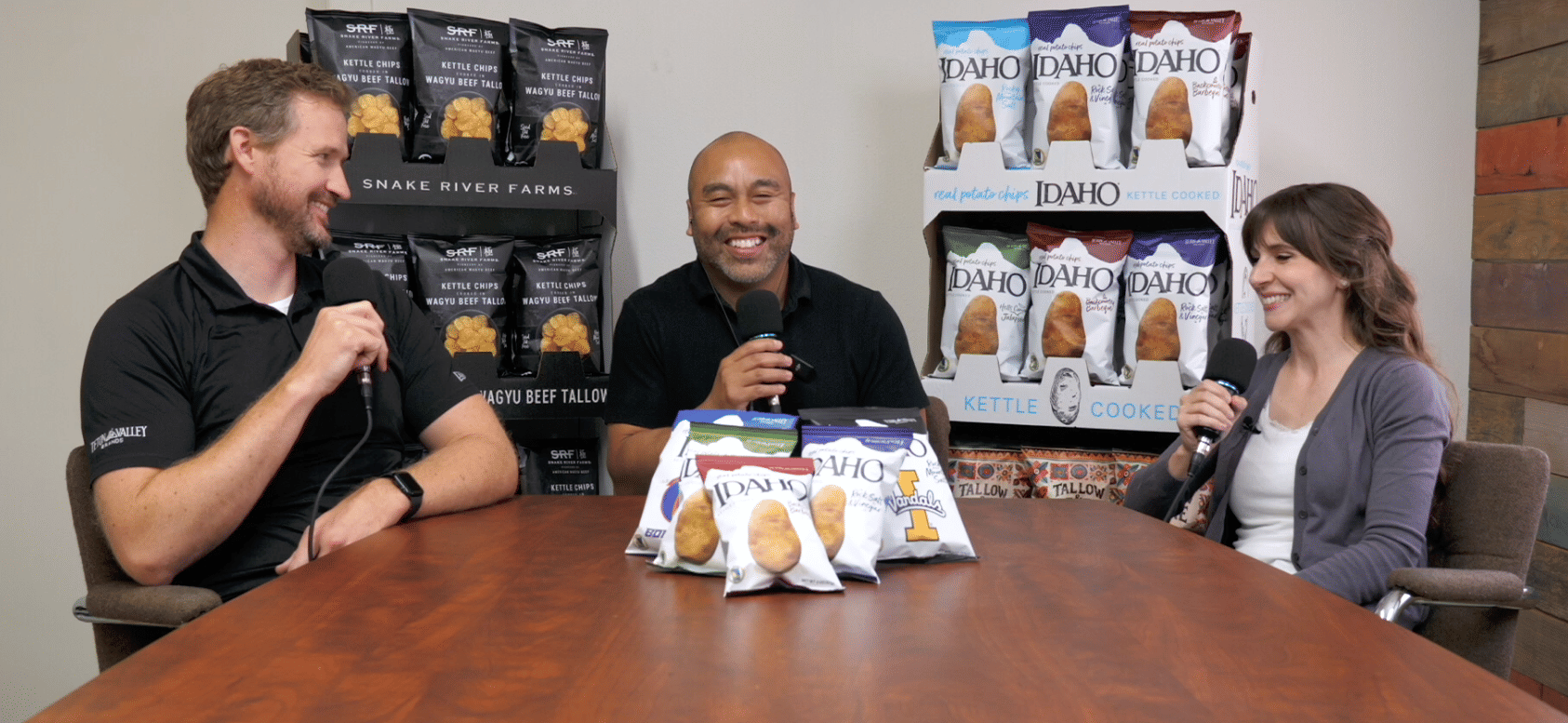
In this episode of The Personal Side of Business, host Jet Bunditwong visits Boise, Idaho to sit down with Kyle and Amy Nehring, the founders behind Teton Valley Brands, a rapidly growing kettle-cooked potato chip company.
What began as a simple idea during Kyle’s college years eventually turned into a full-scale manufacturing operation producing potato chips across multiple markets. Kyle shares how the business started with only $10,000 in startup capital, packaging chips in their basement late at night while raising a young family.
Amy offers a powerful perspective on the unseen sacrifices behind entrepreneurship—from raising four children during the company’s earliest years to helping design the brand and packaging. Together, they share the reality of building a consumer packaged goods (CPG) brand, navigating funding challenges, supply chain disruptions, and the emotional toll of entrepreneurship.
This episode highlights the perseverance, faith, and teamwork required to transform a small idea into a growing food brand.
Episode Summary
The story of Teton Valley Brands began with a simple observation. While attending college in Idaho, Kyle wondered why there were no potato chips in stores that prominently used the Idaho potato identity—a symbol recognized across the country.
Years later, while working for a plant-based nutrition company called Sunwarrior, Kyle gained exposure to the consumer packaged goods industry. He learned about manufacturing, retail distribution, marketing, and supply chains. That experience gave him the confidence to launch his own product in 2017.
With only $5,000 from Kyle and $5,000 from his brother, they launched the company as a side project.
The early days were far from glamorous.
Instead of producing chips themselves, they shipped potatoes to a chef in Missouri who cooked them and sent them back in bulk. Kyle then built a homemade packaging machine using a garage door motor so they could package chips in their basement at night.
Their first year generated roughly $30,000 in sales, confirming there was real demand for the product.
Over the next several years, the company doubled in revenue annually. Eventually they reached a turning point: if the brand was going to grow, they needed to control the entire manufacturing process—from raw potato to finished bag of chips.
That decision required enormous risk.
Kyle and Amy sold their home, invested their savings into equipment, and went nearly two years without a paycheck while building their first manufacturing facility.
At the same time, Amy was raising four young children while supporting the business behind the scenes—helping with branding, packaging design, and even production when needed.
The company faced repeated financial crises, supply chain challenges, and moments where bankruptcy seemed likely. But through persistence and faith, they pushed forward.
Kyle often returned to one key entrepreneurial principle he learned in business school:
Cash is king, and the company must not die.
As long as they could keep the company alive, there was still a chance to figure things out.
Eventually the business began attracting outside investors, many of whom were local Idaho farmers. This funding allowed them to build a larger facility and significantly expand production capacity.
Today, Kyle and Amy Nehring are leading Teton Valley Brands into its next phase of growth, including innovative products such as Wagyu beef tallow potato chips through a partnership with Snake River Farms.
Key Takeaways
Great Businesses Often Start With a Simple Observation
The entire company began with a basic idea: why weren’t Idaho potatoes represented in the potato chip aisle?
Side Hustles Can Become Real Businesses
Teton Valley Brands started as a small evening project producing chips in a basement before growing into a full manufacturing operation.
Entrepreneurship Requires Extreme Risk
The founders sold their home, invested their savings, and went years without consistent income to build the company.
Strong Partnerships Matter
Kyle and Amy credit their strong marriage and shared mission as one of the biggest reasons they survived the toughest years.
Cash Flow Determines Survival
One of the most important lessons Kyle learned was that businesses must maintain funding and avoid running out of cash.
Questions Answered in This Episode
How do you start a potato chip company from scratch?
What does it take to launch a consumer packaged goods (CPG) brand?
How much money does it take to start a food product business?
What are the biggest risks in starting a snack food brand?
How do entrepreneurs scale from a side hustle to manufacturing?
What challenges do food startups face with distribution and shelf life?
How do founders raise capital for a manufacturing business?
What role does branding play in a food product company?
How do couples successfully run a business together?
What keeps entrepreneurs going during the hardest years of building a company?
Topics Covered in This Episode
How Teton Valley Brands started with just $10,000
Turning a side hustle into a consumer packaged goods (CPG) brand
The early days of packaging potato chips in a basement
The challenges of launching a food manufacturing company
The role of branding and packaging in retail products
Building a product around the Idaho potato identity
Raising capital and funding a startup food business
Surviving financial pressure and potential bankruptcy
Balancing entrepreneurship with family life
Lessons in persistence and long-term vision in business
Expanding production capacity and building a manufacturing facility
Partnering with brands like Snake River Farms
Innovating with Wagyu beef tallow potato chips
Scaling distribution in the competitive snack food industry
Who Should Listen to This Episode
This episode is especially valuable for:
Entrepreneurs
Anyone building a startup will relate to the realities Kyle and Amy share about risk, perseverance, and financial uncertainty.
Food and CPG founders
If you’re building a product brand, this episode offers real insights into manufacturing, retail distribution, and scaling production.
Small business owners
The story highlights the grit required to grow a company from a side hustle into a serious operation.
Couples building a business together
Kyle and Amy share the realities of navigating entrepreneurship while raising a family.
Anyone interested in how products are built and scaled
From basement packaging to a full manufacturing facility, this episode shows the behind-the-scenes journey of building a brand.
FAQ
When did Teton Valley Brands start?
The company officially launched in 2017, although the idea for the brand began years earlier during Kyle’s college years.
How much money did they start with?
The founders initially invested $10,000 total, with $5,000 contributed by Kyle and $5,000 from his brother.
What were their first-year sales?
The company generated approximately $30,000 in revenue during its first year, operating as a side hustle.
What makes their chips unique?
The brand celebrates Idaho’s heritage by pairing chip flavors with iconic Idaho locations and highlighting the state’s agricultural identity.
What new products are they launching?
One of their newest innovations is a Wagyu beef tallow potato chip developed through a partnership with Snake River Farms.
Guest Bio
Kyle Nehring – Co-Founder, Teton Valley Brands
Kyle Nehring is the co-founder of Teton Valley Brands, a Boise-based potato chip company focused on high-quality kettle-cooked chips inspired by Idaho’s agricultural heritage. After working in the consumer packaged goods industry, he launched the company with a small investment and grew it into a full manufacturing operation.
Amy Nehring – Co-Founder and Brand Development
Amy Nehring played a critical role in the early development of Teton Valley Brands, helping design the brand identity, packaging, and marketing concept while supporting the business through its most challenging years. She also balanced raising four children during the company’s startup phase.
Show TranscriptHide Transcript
Teton Valley Brands — Kyle & Amy Nehring (Full Transcript)
Jet Bunditwong: Hi and welcome to The Personal Side of Business where every business has a story. I'm Jet Bunditwong. Today I'm here with Kyle and Amy Nehring. We are at the Teton Valley Brands Potato Chips here in Boise, Idaho. Welcome to the podcast guys. Thanks. So tell us how did we get here?
Amy Nehring: Thank you.
Kyle Nehring: How did we get here? Oh my goodness. That is, how much time do you have? Whatever time. So the quick story. Yeah, so back in 2010, I was attending college and I had this random idea. I was here in Idaho and I had an idea for a brand. Why does no one use the Idaho logo on the potato chip aisle? Why are there no Idaho potato chips out there?
Jet Bunditwong: We did.
Kyle Nehring: At the time I was a broke college student. had no idea what I was studying business. I was studying entrepreneurship. I didn't know how to run a business. I didn't know anything about food manufacturing. And so that's the genesis of the idea. Fast forward five years, I find myself working for a plant based protein supplement company. It's actually called Sun Warrior. Shout out to Sun Warrior and they're a fantastic company.
Kyle Nehring: But I started to learn all of the ins and outs of how a food product, a CPG product comes to market. I learned about the manufacturing and the operations, sales and marketing and distribution and margin and what's acceptable for retailers. And I just started getting into it. And so in 2017, I decided I knew enough to launch my own thing.
Kyle Nehring: I was wrong, by the way. I didn't know enough. But that's how we got started. And it was my brother and I, and our wives were involved too, but it mostly my brother and I. And we had heard about a snack bar company that started with $11,000, and so we wanted to beat them. So we each put in five grand a piece and said, let's go for it. So yeah, that was 2017, and it's been a wild ride since then.
Kyle Nehring: That's how we got started. Fast forward. Today we have a pretty decent operation going.
Jet Bunditwong: Yeah, absolutely. Now were you guys ready together with 2017 when you guys started?
Amy Nehring: Yeah, so 2010 is when we met. so about the same year that he had the idea is when we started our relationship. to be fair, he did warn me that he wanted to be an entrepreneur, which I had always heard the joke that entrepreneur is French for unemployed. And so our very first conversation is we were getting to know each other. The what's your major conversations and what do you want to do with that? He told me he wanted to be an entrepreneur.
Amy Nehring: I've heard a lot of people who have big dreams like that, then, you know, they have the family, they get the nine to five, and it's too comfortable to chase those dreams. But Kyle is not a normal person, Andy. Yeah, he's very adventurous, very creative. And so a lot of this is just going on faith and going at it together.
Jet Bunditwong: When did you feel like you were confident in what Kyle was doing? There's probably a point where you were like, this is kind of a little bit of a joke until it becomes real.
Amy Nehring: No, that's a good question. He's had ideas for businesses our whole marriage. And so it's kind of just a joke of, hey, you know, it'd be a good idea. And then he just pitches me something. And so we talk business all the time. so, but this was an idea that I guess out of all his ideas, he just couldn't let go of. And so as we're at Sun Warrior, I remember he came to me and he was like, I just can't.
Amy Nehring: stop thinking about this and I think I really want to try it. And so we started it out of our basement. We had somebody making the chips for us. So we would ship, you know, potatoes to Missouri and a chef would cook them up for us, send them in bulk to our home where Kyle built this contraption out of a garage door motor. But it would package 12 bags at a time. And so we would work through the night and package.
Amy Nehring: cases of chips out of our home and just to prove concept and see, you know, does this sell, does this brand work? So we came up with the packaging design and we just slowly just started proving the concept and then it started working.
Jet Bunditwong: What were sales like that first year?
Kyle Nehring: Yeah, so our first consecutive year, I think we did, oh, I want to say about $30,000 in sales. And so at this point in time, was very much a side hustle. Yeah, just something we were doing in the evenings. And we took it really slow. My brother, my business partner at the time, he was very cautious. I'm not that way, which I don't know if that's good or bad. I think you kind of have to be not that way if you're an entrepreneur. And that's part of reason why we're not doing it together anymore is because we did have very different mindsets. But yeah, so no, about $30,000, I think. That was our first year.
Jet Bunditwong: And what were sales like going from the end of first year to second year? How much of a growth did you guys have?
Kyle Nehring: Yeah, we pretty much doubled for the first several years. And so, yeah, 30 to 60, 60. And then we launched our new facility. That was actually a huge step for us, was manufacturing the chips ourselves 100% from raw potato all the way to complete bag of chips. And so that was when I went on full time. That's when things got really intense. It turned from a fun hobby, playing around with it, to we're going for this. Yeah, and we did. We went all in.
Jet Bunditwong: Now, what were some of your sourcing for the potatoes? Was that easy to find sourcing for it and then work with you, or did you have to figure out a whole strategy in order to get that?
Kyle Nehring: Yeah, absolutely. Sourcing potatoes just in general is a pretty tricky thing. It sounds simple and Idaho is known for potatoes. They do grow the most potatoes in the United States by far. Some people say it's Washington. I don't know why they say that. It's not true at all.
Kyle Nehring: But either way, you would think that wouldn't be too challenging. But these are all lessons that we had to learn along the way. For example, we thought we wanted to do a Russet potato chip. That's kind of your classic Idaho potato. It doesn't turn into a chip very well. It does turn into a great chip about 10% of the time. The rest of the time, it's just a pain to deal with.
Kyle Nehring: And so that's why almost none of the major players use them. And eventually we realized this wasn't working. We couldn't deliver the quality of product that we wanted to for our customers. And so we had these really difficult lessons along the way that we had to learn. And that was one of them.
Kyle Nehring: Yeah, potato sourcing. I can talk a long time on nerdy potato topics. I don't know where you go there, but it has to do with the starches and the way they're stored and the type of potato variety, all kinds of stuff.
Jet Bunditwong: So yeah, nice. And so Amy, during this time where the business is starting to take off, what was your role in the support and involvement in the business?
Amy Nehring: Yeah, so brainstorming a lot when we came up with the design for the packaging, I have crystal clear memories of us sitting in our bed at night, just brainstorming and coming up with, you know, well, what do we want it to look like?
Amy Nehring: Wouldn't it be interesting if we just put a giant potato on the front? Like that would stand out on the shelf. And so we just start playing around with that idea.
Amy Nehring: And what if every flavor on the back highlighted a different scenic place in Idaho? And so we started looking at artwork and the barcode on the back is actually the shape of Idaho. And that was one of our ideas. And how about we print on the back where the potatoes are coming from and which part of Idaho so they know. And so a lot of that was just brainstorming and helping with design.
Amy Nehring: And then I would also help package the potato chips in our basement during that time. But we had three young children and I was pregnant with our fourth when all of this was going down and we were getting ready to start manufacturing ourselves.
Amy Nehring: So, yeah, that was a whole story there too. But when we were in our very first facility, when I had help with the kids, I would come out and help clean or help season, help inspect, help bag getting potatoes washed and ready to be fried and cut and feeding potatoes into the slicer. Just, yeah, every aspect of it. Hair net, all the things. Wherever I kind of was needed, I would be there.
Jet Bunditwong: I'm always curious about that aspect with mothers and businesses because I think that's part of the unseen heroes in the business. I'm not taking anything away from you as a father, right? But I think there's this crucial time when mothers have to be really involved with the children in order to raise them.
Jet Bunditwong: And I think to jump into business mode, it's probably a long day stressful and you're just trying to concentrate on moments at a time instead of thinking long picture, cause it could drive you crazy. What were some of the things that got you by going from mother mode into business mode? Like what was your mindset like?
Amy Nehring: I think for me, it was not so much that I'm the professional here, but I am his support. And this is his dream. This is his livelihood. This is how he's providing for our family or hoping to.
Amy Nehring: We did go once we took on our own manufacturing. We went about two years without a paycheck. And that was hard. It's hard with a young family to sell your home and use that equity to live on watching that slowly dwindle down and the company's out of money. So you put your last little bit of savings in there and you don't really know. There's a lot of uncertainty and there's I think as a mother a lot of ideals that we have of what we want our children's childhoods to look like. And it was very different.
Jet Bunditwong: Having a fourth kid was I mean that's financially that's a scary place for you guys to be.
Amy Nehring: Yeah there is a lot of uncertainty.
Kyle Nehring: Let me kind of paint a picture of where we were at because this really saying that she was the unsung hero, it's the perfect statement because that's exactly what Amy went through. But I mean, we're talking, we know we need to go full time. We know we need to bring in our manufacturing. We know it's very expensive to buy industrial equipment. So we're starting to scrap together equipment across the country.
Kyle Nehring: We bring in a pretty good investment from my parents. And we are I mean she's literally eight months, eight and a half months pregnant when we list our house. We sell the house and we move to a rental and we are no longer receiving income. I mean it is the most stressful environment you could possibly imagine. And of course as we get the facility built it's way more expensive than what we realized.
Kyle Nehring: Our savings, you know, we were pretty poor even back then. And we were living off of the income of our house. And that was just dwindling and dwindling and dwindling and dwindling. And yeah, I mean, for Amy to be so stoic through all that, you know, raising children and not say that it was, you know, anyone was perfect. We all stumbled at that time. We're all wondering what in the heck are we doing? Like, why are we, it's a potato chip company. Come on. Like, why are we doing this?
Kyle Nehring: And anyway, a lot of hard years. I always said if I was going to write a book, I would call it blood, sweat and years because it just takes a long, hard time.
— Transcript continues —
If you enjoyed this episode of The Personal Side of Business, make sure to subscribe and follow for more conversations with entrepreneurs who share the real stories behind building their businesses.
🎧 Listen to the full episode
📺 Watch the interview and factory tour
🌐 Explore more episodes at personalsideofbusiness.com