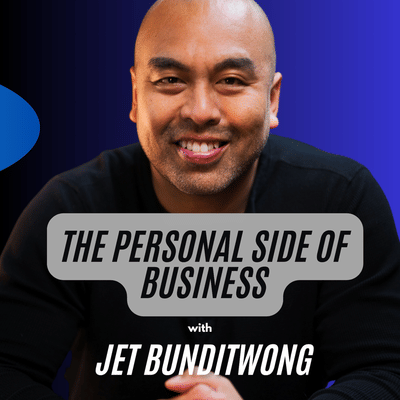
Veterans & Entrepreneurship · Guest Story & Episode Recap
Lindsay Hinger: Building a Business That Fits Your Life
Lindsay Hinger joins Jet Bunditwong to discuss the businesses she built, the one she sold, and the one she closed. Her story connects the practical challenges of sourcing and fulfillment with the personal realities of ownership—and the lessons she now brings to other entrepreneurs.
From Air Force logistics to care packages
After studying at UNC-Chapel Hill, Lindsay served in the Air Force in logistics and later worked in commercial logistics. In 2016, she started a subscription-box business for military spouses: a monthly care package for the people supporting someone in uniform. She wanted the contents to come from veteran-owned and military-spouse-owned businesses whenever possible.
That supplier network became the foundation for a second company in 2018, creating custom gift boxes in bulk for business customers. Along the way, a veterans’ business association introduced her to the SBTDC. She became a client through both companies before eventually moving into advising herself.
Designing the experience—and doing the work behind it
Lindsay designed each subscription box around a theme and a mix of useful, enjoyable items. Customers provided their military branch and shirt size, while leftover boxes could be purchased individually. Her process began with imagining the experience and then finding the products to make it happen.
Small suppliers needed advance notice, which made planning essential. During the pandemic, vendor closures and supply disruptions added pressure. A major corporate customer also moved toward requiring products made entirely in the United States. Lindsay describes responding proactively, finding suppliers closer to home and communicating potential delays.
Sales are only part of the business model
Lindsay preferred selling to businesses over managing individual consumer orders, but both models exposed an operational challenge: every sale created more fulfillment work. Outsourcing that work looked appealing until she examined how much of the margin it would consume.
Looking back, she would have thought through fulfillment more carefully before launching. She also identifies marketing as a gap in her subscription business: she had not established a marketing budget or reached the volume she felt the model needed. The conversation with Jet returns to a practical distinction between the satisfaction of making sales and building an operation that rewards the work involved.
The difficult conversation she wishes she had
Lindsay sold her first company, but ultimately closed the second in 2023. She was already working as an advisor, had lost some of her enthusiasm for the business and was struggling with a contractor relationship. Rather than directly addressing the misalignment, she let it become part of her decision to stop.
She also had one major customer and did not feel she had the bandwidth to prepare the company for a sale. That experience still stings. Her lesson is to have difficult conversations earlier, revisit shared expectations and think about an eventual exit while there is still time to create options.
Military families need plans that can move with them
Military experience can build strong teamwork habits, but Lindsay describes how different entrepreneurship can feel after a structured environment. Finding a new network matters. She encourages veterans to use their ability to work with others instead of assuming they must build alone.
For military spouses balancing children, relocation and a business, she suggests quarterly goals and a simple one-page plan that gives direction when circumstances change. She also discusses preparing for deployment and identifying who can keep a business running. The goal is to anticipate disruption rather than figure everything out in the middle of it.
The person behind the business needs support too
Lindsay speaks openly about a period when her mental health kept her from responding to business emails for several months. When she returned, many subscribers were gone. It is a candid example of how closely an owner’s wellbeing and a small business’s continuity can be connected.
Jet emphasizes that her wellbeing matters beyond the business outcome. Together, they discuss the value of having people to turn to, both for practical guidance and for the personal demands of ownership. Lindsay’s willingness to share her mistakes now helps inform her work with other founders.
Business takeaways from the conversation
- Think through fulfillment costs and workload before growing sales.
- Communicate early when supplier changes could affect a customer’s order.
- Address a strained working relationship before it dictates the future of the business.
- Plan an exit while you still have time and energy to develop options.
- Use quarterly goals and a simple plan to navigate relocation and other disruptions.
- Build support around both the business and the person running it.
Frequently asked questions
Who is Lindsay Hinger?
In this episode, Lindsay is an Air Force veteran, former business owner and business advisor with the Chapel Hill SBTDC.
What businesses did Lindsay build?
She started a subscription-box company for military spouses and later a business creating custom gift boxes in bulk, drawing on veteran-owned and military-spouse-owned suppliers.
Why did she close her second company?
She describes a combination of limited bandwidth, lost enthusiasm, a difficult contractor relationship and reliance on one major customer. She had already begun working as an advisor.
What does Lindsay suggest for military spouses running a business?
She recommends quarterly goals and a simple business plan to maintain direction, alongside planning for relocation or other interruptions.
What is her lesson about exit planning?
Consider how ownership might end before you are ready to leave. Her experiences selling one business and closing another made the value of planning more tangible.
Explore the full conversation
This page summarizes the episode. Listen for the full story in Lindsay Hinger’s own words.
Learn more: Lindsay Hinger on LinkedIn.